
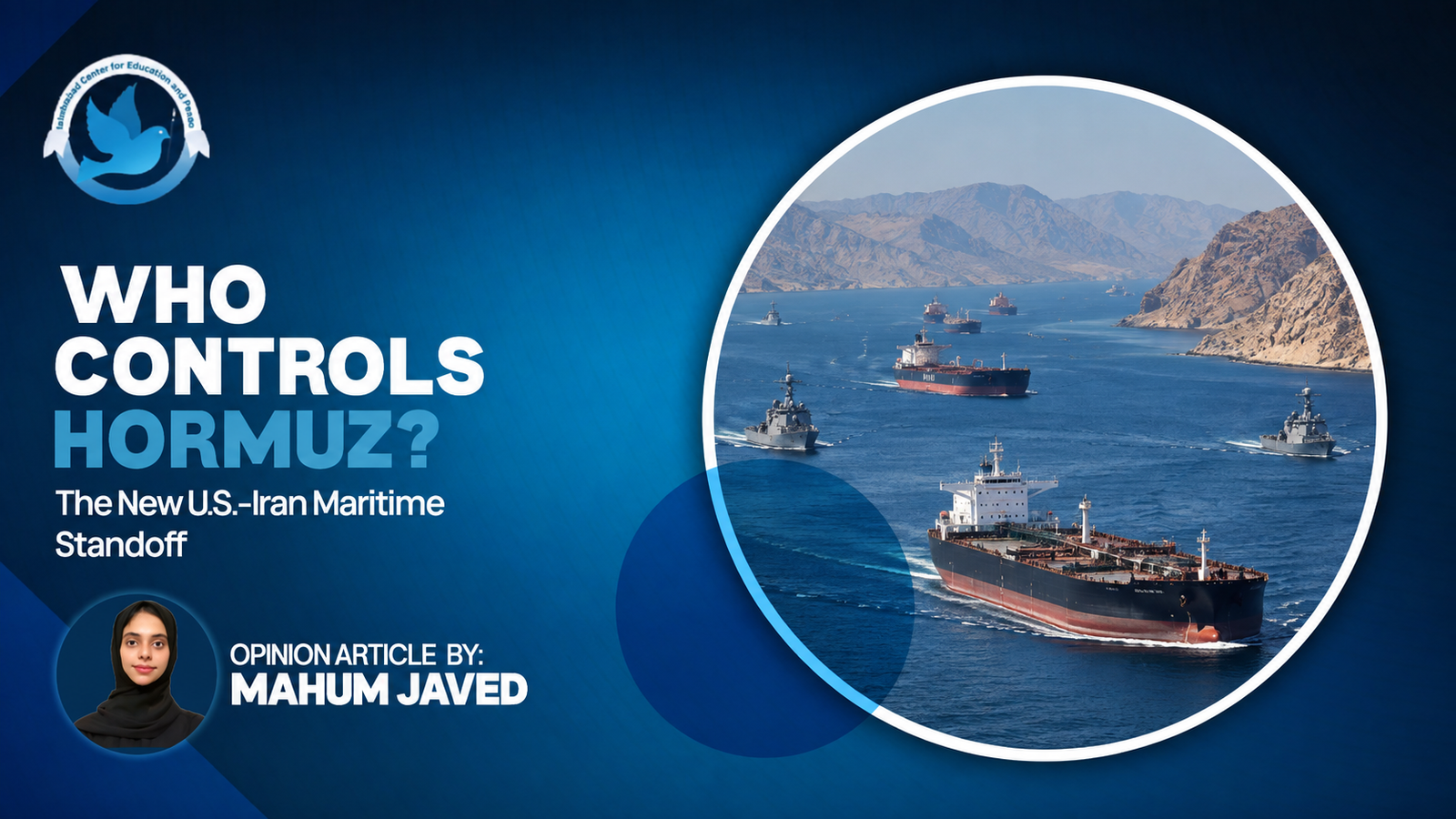

The Strait of Hormuz is
not a mere trickle of water. It is a strategic choke point for energy security,
naval power and regional deterrence. In 2024 approximately 20 million barrels
per day (about 1/5 of global consumption of petroleum liquids) passed through
the strait, and about 1/5 of global LNG trade also passed through. The present
crisis is however one that is different as Iran is not only attempting to
influence the passage, but it is also attempting to determine the conditions of
passage. This article discusses the events that took place in the period
between the Islamabad Memorandum of Understanding (MoU) signed between Iran and
the United States on June 17, 2026 and August 31, 2026. Military action in the
region by the United States, Israel and Iran started on February 28, and
commercial shipping was significantly disrupted in the Hormuz waters. The June
MoU was meant to turn around that escalation. It was a 14-point “framework
agreement” that laid the groundwork for an indefinite halt to military
operations on all fronts, granting the negotiators 60 days (with mutual
extension) for an agreement and requiring Washington to remove its naval
blockade within 30 days, and Iran to open safe and unimpeded commercial passage
for 60 days without charging any fees. It also ordered Iran to negotiate with
the other Gulf coastal states on maritime services and administration in the
future. The post-MoU talks have so far been hampered by that clause.
The strait is no longer a
denial but a leverage point for Tehran in negotiations. Iran's wishes include
having a role in controlling the incoming and outbound shipping and the right
to intervene when it deems it necessary. This is an asymmetrical approach. The
Iranians of course are inferior in terms of conventional military capabilities
and therefore such a bargaining chip as their geographic position is beneficial
for them. Freedom of navigation within the strait is not guaranteed by being
superior on the water outside the strait. That is the reason for the proposed
transit fee. This isn't just a business dispute; Reuters has reported that Iran
is asking for 5-7 percent of the cargo's value, while Oman has talked about a
charge nearly identical to 3 percent and Washington insists there shouldn't be
any charge. A compulsory charge would become an ever-present economic and
political problem for security reasons. It may also have an impact on the
current maritime order.
Under UNCLOS Article 26,
a foreign ship may not be prosecuted if it transits the territorial waters.
Shipping and insurance actors have highlighted the potential for sanctions,
insurance and legal issues. Thus, Oman's role is more of a traditional mediator
than ever before. Muscat is a diplomatic bridge and a coastal state whose
waters make up the strait. This is middle-power diplomacy: Oman is trying to
reconcile Iran's security interests with its desire for unfettered access to
the seas, a proposal that is supported by the Gulf. Omani officials have also
said that efforts are also under way to establish a joint mechanism
corresponding to the objectives of the MoU on freedom of navigation.
The problem is the
original agreement has fallen apart to a very large extent. The interim deal
was declared “over” by President Donald Trump on July 7 and later suspended by
Iran. Tehran claims Washington did not lift the blockade and release frozen
assets, Washington claims that Iran did not open up the promised free passage.
By August, Iran had tied reopening to an end to sanctions and threats of military
action, the release of assets, and reparations for war damage. Compensation and
regional security have joined navigation and sanctions as part of the
decades-long dispute with the Trump administration, and Iran is also adding its
claim for reparations for deaths and damages caused over the years.
The sea-related impacts
are noticeable. There are eight Hormuz transits in one tracking service on
August 12 compared to approximately 130-140 a day prior to the war, and Trump
says the U.S. has “total control” of the strait. In maritime strategy control is
not simply about striking it's about shipping's safe, predictable and
cost-effective movement. If it's that standard then it is a draw. The best hope
to get out of the predicament is neither Washington's nor Tehran's symbolic
victory. It is a set of rules that constitute a maritime agreement with Oman as
a lead which has been supported by the nations of the Gulf and is based on
international shipping rules. Iran would receive payment for legitimate sea
services without any political conditions and without discrimination. The June
MoU needs to be further implemented, with Iran restoring safe navigation while
nuclear and compensation issues are carried out separately. One conflict which
is sure to remain unresolved between the U.S. and Iran is the Hormuz issue As
long as this strait is a flashpoint for every U.S.-Iran conflict it will be a
source of insecurity for the world economy. The real competition after the MoU
isn't about who will close Hormuz but who will establish the post-war maritime
order.

_6784.jpg)