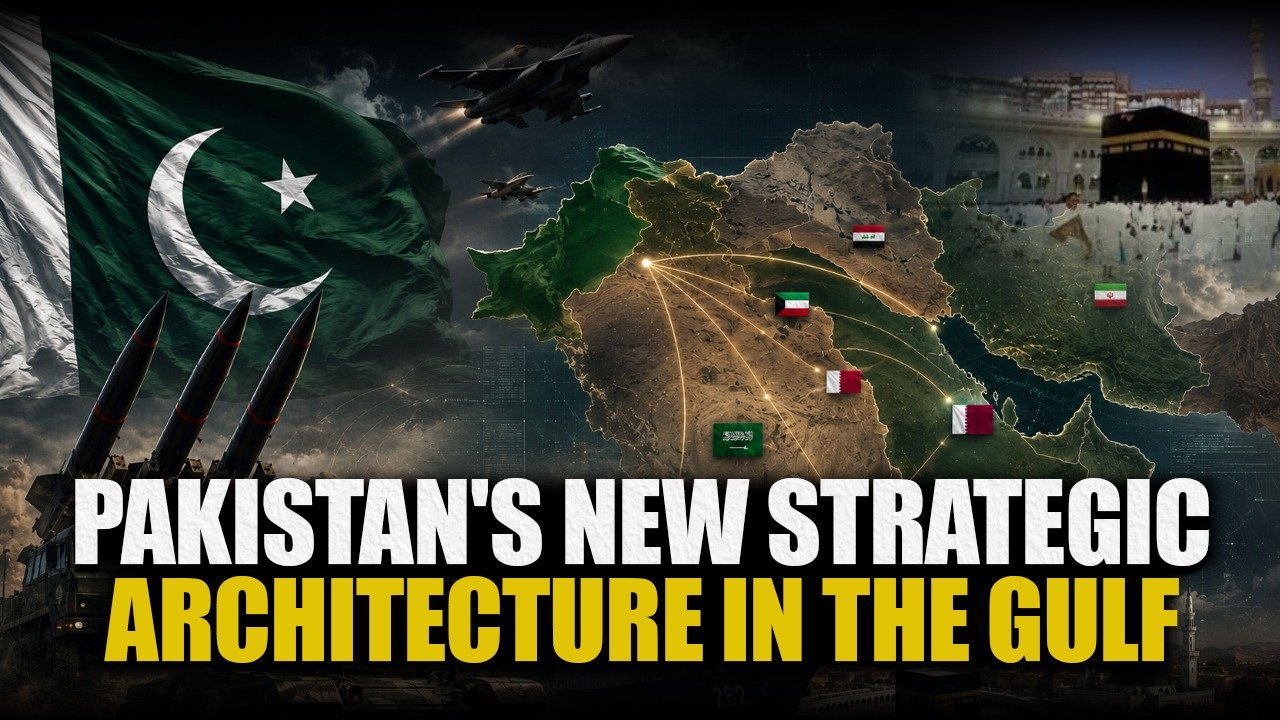
Pakistan's relationship with the
Gulf has been limited and based on specific pillars for many years: bilateral
defence cooperation, military training assistance, Pakistanis going to the Gulf
for work and strong political relationships with a few Arab countries. But a
series of recent developments indicate that Islamabad is now pursuing more
systematic strategic engagement in the Middle East in the form of defence
diplomacy, regional peacebuilding and maritime security connections. This
development is not yet formalization of a security bloc. However, what is
evident is that Pakistan is building a reputation as a viable actor in the
region's security landscape that can help to ensure stability amidst the
volatile Middle East. Kuwait's recent signing of an all-encompassing defense
cooperation accord, continuing talks for advanced defense cooperation with
Qatar, Pakistan's longstanding strategic alliance with Saudi Arabia and
Islamabad's diplomatic efforts during the recent Iran-U.S. crisis all indicate
a more institutionalized and coherent Gulf policy.
Rationing of defense cooperation
pact with Pakistan is one of the most important developments in bilateral
relation that took place in recent years in Kuwait. The pact is an
institutionalized cooperation in the field of military training, professional
exchanges, joint exercises, defence consultations and wider security
consultations, as Kuwaitis have expressed their confidence in Pakistan's
military professionalism and its ability to make a constructive contribution to
the security of the Gulf. The importance of the agreement goes beyond military
sphere for Pakistan. It enhances Islamabad's strategic significance in the
changing security landscape of the Gulf and provides a new platform for
continued defense diplomacy and institutional connections.
Meanwhile, there have been
reports of continued talks on strengthening defense ties with Qatar, which
constitute another facet of Pakistan's Gulf policy. However, any envisaged pact
would be subject to formal negotiation and approval but the talks highlight
Doha's continued interest in enhancing its security cooperation with Islamabad.
Pakistan already has close military engagement with Qatar, in training and
professional exchange programs. The creation of a wider institutional
arrangement would further solidify Pakistan's position as a trusted security
ally of the GCC countries of the Persian Gulf.
The persistent defense
partnership between Pakistan and Saudi Arabia cannot be ignored while
discussing Pakistan's Gulf policy. The long-lasting defense ties between
Pakistan and Saudi Arabia cannot be overlooked while discussing Pakistan's Gulf
policy. The two countries have maintained close military ties and cooperation
for decades, including military training programs, strategic consultations,
joint exercises and military institutions. For years, Pakistan's military has
played a significant role in the Saudi Kingdom in the area of defense
preparedness and both the countries are closely coordinating in the security
affairs in the region. In contrast, Pakistan's recent treaties with Kuwait and
its growing relations with Qatar seem to support and enhance its existing
strategic partnerships in the Gulf. It also showed the rise in the importance
of Pakistan in the international arena during the recent escalation between
Iran and the United States. Islamabad has consistently appealed for restraint,
dialogue and de-escalation throughout the crisis, keeping the lines of
communication open with regional capitals. Pakistan aimed to prevent a larger
regional conflict from escalating into a potential threat to regional
stability, energy supplies and maritime trade.
A number of external observers
said that Pakistan is playing a balanced game as it was trying to engage all
the regional actors in constructive manner instead of joining any one side of
the regional polarization. The de-escalation process saw several actors playing
their part in reducing tensions, with Pakistan's participation considered a
positive factor in the de-escalation process.
One of the other developments
that caught regional attention was the Houthis in Yemen making a public
statement that they would not target a Pakistan-flagged oil tanker despite
other oil tankers being attacked in the Red Sea. The Houthis had made public
their connection of maritime activities with their political and military
agenda, but some regional experts had seen this moderation as a sign of
Pakistan's independent diplomatic position in the current regional climate.
These interpretations should be taken with a grain of salt because an official
determination of the direct cause and effect relationship has not been made.
However, the episode added to the general impression that Pakistan still has some
working relations with various regional actors despite the growing polarization
in the region.
All these developments indicate
that Pakistan's foreign policy in the Middle East is gradually moving from a
bilateral approach towards a multidimensional approach which can be broken down
into several interconnected components, namely:
v Institutionalized defense
partnerships
v Military training and
professional cooperation
v Maritime security engagement
v Regional diplomatic outreach
v Crisis de-escalation
v Strategic neutrality paired with
constructive engagement
Pakistan does not seem to be
concerned with projecting military strength but it is showing a focus on
professionalism, credibility, and low-cost security cooperation and balance in
diplomacy. For many international security analysts, middle powers are becoming
a force in the security of the region via strategic partnerships and diplomatic
legitimacy, rather than military power. Institutional experts as well as
analysts from the International Institute for Strategic Studies (IISS) and the
Middle East Institute have highlighted Pakistan's long history, its experience
in the military sector, and its long-standing ties with the Gulf countries, and
its ability to contribute to regional stability through defense cooperation and
training initiatives. Despite this, many experts warn that Pakistan's success
will depend on its capacity to remain neutral between the regional rivals and
not be drawn into a deadlocked “geopolitical camp” that it might become part
of. Gulf states are also diversifying their security relations outside
traditional parameters, regional observers add. In this changing scenario,
Pakistan's military strength, geographical location and decades of defense
cooperation makes it an asset for some of the Gulf countries.
The recent diplomatic and
defence efforts of Pakistan reflect a maturing of the Gulf policy. The defence
cooperation agreement with Kuwait and talks to pursue further cooperation with
Qatar, in combination with the long-standing strategic partnership with Saudi
Arabia, represent a growing role in the region. Meanwhile, Pakistan's
even-handed approach in the Iran–US tensions and its capacity to work
cooperatively with a variety of actors in the region has bolstered the image of
Islamabad as a credible and responsible player in the Middle East security
arena. To say Pakistan is becoming the main force in the Gulf in the strategic
arena would be an exaggeration, but at the rate it's going, it's definitely a
significant player in Pakistan's military and diplomatic diplomacy. If
Islamabad moves forward with institutionalized defense cooperation, maritime
security efforts, and a more balanced regional diplomacy, Pakistan might
further strengthen its role as a key player in shaping the Gulf's security framework.
In conclusion, Pakistan is pursuing a policy of “defence diplomacy”, “strategic
partnership” and “perseverance towards regional stability”, a policy that will
shape its future in the Middle East for many years to come.
_6784.jpg)