Top Stories
Building Bridges Through Words Understanding Militant Ideologies in Modern Contexts Security: Beyond Walls and Weapons Upcoming Events: Connecting Ideas and People Previous Milestones: Reflecting on Our Journey Fatwas: Reclaiming the Spirit of Ethical Guidance Role of NATO in Conflict Resolution Washington Peace Deal Between Congo and Rwanda Social Justice and Equality in the Qur’ān: Implications for Global Peace The Qurʾānic Concept of Human Equality: An Analysis against Racism and Ethnic Discrimination in Contemporary Societies Reinterpreting Dhimmitude: A Reconsideration of Its Social and Political Functions in the Modern Context How China Is Playing the Long Economic War Ukraine Peace Efforts Advance Cautiously Despite Partial Alignment Among Parties How Pakistan-Libya Military Relations Strategic Outreach, Economic Stakes and Geopolitical Implications Aleppo Clashes as Syria and Kurdish-Led SDF Agree to Ceasefire Across the Border, Pakistani Ulema Stand Against Afghan Girls\' Education Ban Pakistan announce 500 fully-funded scholarships for Bangladeshi students in 8 programs How theTaliban regime threat for reginal peace Women Left Behind in Khyber Pakhtunkhwa’s Education System Sudan’s Civil War: Anatomy of the World’s Largest Humanitarian Crisis Changing Security Architecture in Central Asia Pakistan Leads India on Economic and Peace Indicators in 2026 : Gallup Survey Submerged Classrooms, Long-Term Learning Loss Pakistan Security Report 2025: Terrorism Trends and the Peace Deficit HEC’s MAKTAB Initiative Signals a New Era for Higher Education Southern Yemen Faces Tensions and Urgent Need for Peace IUT Strengthens Education Integrity in Bangladesh Pakistan’s Arms Sales Contracts (2024–25) and the Peace Dimension Pakistan\'s Contribution to UN Peacekeeping Operations for Global Peace Pakistan Enhances Educational Cooperation with Sri Lanka through Scholarship The Growing Defense and Economic Nexus of the Muslim World Charter of Trump’s Board of Peace Pakistan & Myanmar Prioritize Education Strategic Saudi defense agreements are redefining the Middle East\'s security architecture What would be the consequences of the U.S.–Iran Conflict on Pakistan? How Indian Cricket Politics Affect Regional Peace The Kashmir issue remains a central peace and stability in South Asia American Weapons in Afghanistan Are Destabilizing Pakistan Global Education Coalition sixth annual meeting A New Chapter for Pakistan’s Universities: Leadership, Stability, and Vision under the New HEC Chairman The Evolution of the IMCTC into a Global Security Pillar Reintegration Initiative: Analyzing the 2026 IMCTC Engagement in Pakistan Psychosocial Warfare and the IMCTC Peace Journalists Initiative (2026) The Concept of ‘Ummah’ in the Qurʾān: Transcending Race, Tribe, and Ethnicity HEC Reforms Regulation, Defends Academic Freedom Pakistan’s Evolving Role in Fostering Peace and Security on the African Continent Recontextualizing Pakistan’s Role in the Board of Peace War in the Middle East: Measuring the Cost The Silent Bridge: Pakistan’s Strategic Neutrality and the Quest for Middle Eastern Stability The Geography of Escalation: Living in an Age of Permanent Crisis Mapping the Educational Crisis in the Middle East Conflict The Blind Alley of “Epic Fury”; A War with no End game A Pakistani Voice Against Digital Islamophobia: A Landmark Academic Contribution World Eye on Pakistan for Middle East Peace Leading with Truth, ICEP’s Analysis Outlasted the Skeptics on Middle East Crisis World Powers Push for Deal U.S. Presents 15-Point Plan and Iran Responds with 5 Conditions Pakistan and Türkiye Open New Chapter in Academic Cooperation with Strategic Initiatives Pakistan at the Crossroads of Global Trade as a Logistics Revolution Unfolds Why Ethical Dialogue necessary in a Diverse Pakistan for a Peacebuilding Initiative Pakistan\\\'s Game-Changer Role for World Peace Entrepreneurship Education Is Shaping Pakistan\\\'s Economic Future Dr. Jamil Akhtar Featured in Prestigious Brill Encyclopaedia (2026) A Milestone in Global Interfaith Scholarship Peace Light in a Dark Night WAR RESHAPES PAKISTAN’S ECONOMY AND OPEN DOORS FOR INTERPRENEURS From Gaza to Lebanon: ICC, UN, and the Unanswered Duty to Prosecute Can Pakistan turn a temporary ceasefire into lasting middle east peace? Bridging the Gap: Confronting Education Inequality in Pakistan Hierarchical Culture In Pakistani Organizations \"How It Kills Innovation — and What Leaders Can Do About It\" Can Diplomacy Survive the Iran Crisis? Peace Efforts in an Age of Permanent Escalation Why are Peace Talks a US strategic priority? Features of Intellectual Property in the Age of Artificial Intelligence (In the Context of World Intellectual Property Day) A Global Forum for Peace, Governance, and a Better World (France\'s Landmark Contribution to International Dialogue) IS UAE WANT A \\\'CURRENCY SWAP\\\' WITH THE USA Energy War by Sea: The Hormuz Blockade Proves Oil is Still a Weapon The End of Strategic Dependence In Europe? Pakistan\'s Strategic and Structural Evolution from Crisis to Consolidated World Peace Silent Deterrence: Hangor-Class SSP-2800 and Undersea Strategy of Pakistan Inside the $9 Billion Prediction Market Revolution Pakistan at the Crossroads: Between Fragile Stability and the Weight of Structural Crisis WHY DIALOGUE FAILS IN CONFLICT ZONES; A LESSON FOR POLICY MAKERS The Crisis of American Legitimacy in the Post-Unipolar Era THE OIL CLUB UAE JUST QUIT Inside OPEC’s Biggest Defection in Decades — and What It Means for the World The Kashmir Dispute: International Institutional Failure and Humanitarian Consequences The $100 Billion Event the World Refuses to Understand How is Eid-ul-Adha A School of Peace? 250 Million Children Classrooms Zero Learning Ethical Dialogue: The Art of Speaking with Intention Ethical Dialogue: The Moral Weight of an Honest Word Skills in Their Hands, Books in Their Bags Ethical Dialogue : Honoring the Voice of the Other HEC Honors Top Pakistani Scientists and NRPU Grant Recipients at Punjab University What\'s the 14 Point of Peace deal that will be signed in Geneva When Words Carry Power: The Unequal Conversation Why Humanitarian Crises Gain Attention Only When Politicized : An International Law Perspective The Ethics of Saying Nothing The Strait of Hormuz Crisis: Energy Security in an Era of Regional War Ethical Dialogue: The Forgotten Half of Every Conversation Why is Homework Still a Thing In Modern Education Peace Beneath the Red Lines Ethical Dialogue: The Wisdom of Not Being Certain HEC\'s 47th Commission Meeting Charts Reform Path for Higher Education Sector PERIDOT: Franco-Pakistani Research Collaboration Program WINDS OF CHANGE Ethical Dialogue: Persuading Without Deceiving HEC Conducts Scholarship Test Across Bangladesh The significance of the \"same DNA\" statement Phone-free campuses could become the next step in education reform Ethical Dialogue: When Dialogue Becomes a Weapon HEC hosted a Quality Leadership Session in Faisalabad Women\'s Role in Peace-building in Somalia Modernizing the Indus Waters Treaty for the Climate Change Era How Will Pakistan Prevent Another \"Ever Given\" at Bab al-Mandab? HEC Chairman Leads Strategic Higher Education Engagements in Lahore and Karachi
Peace

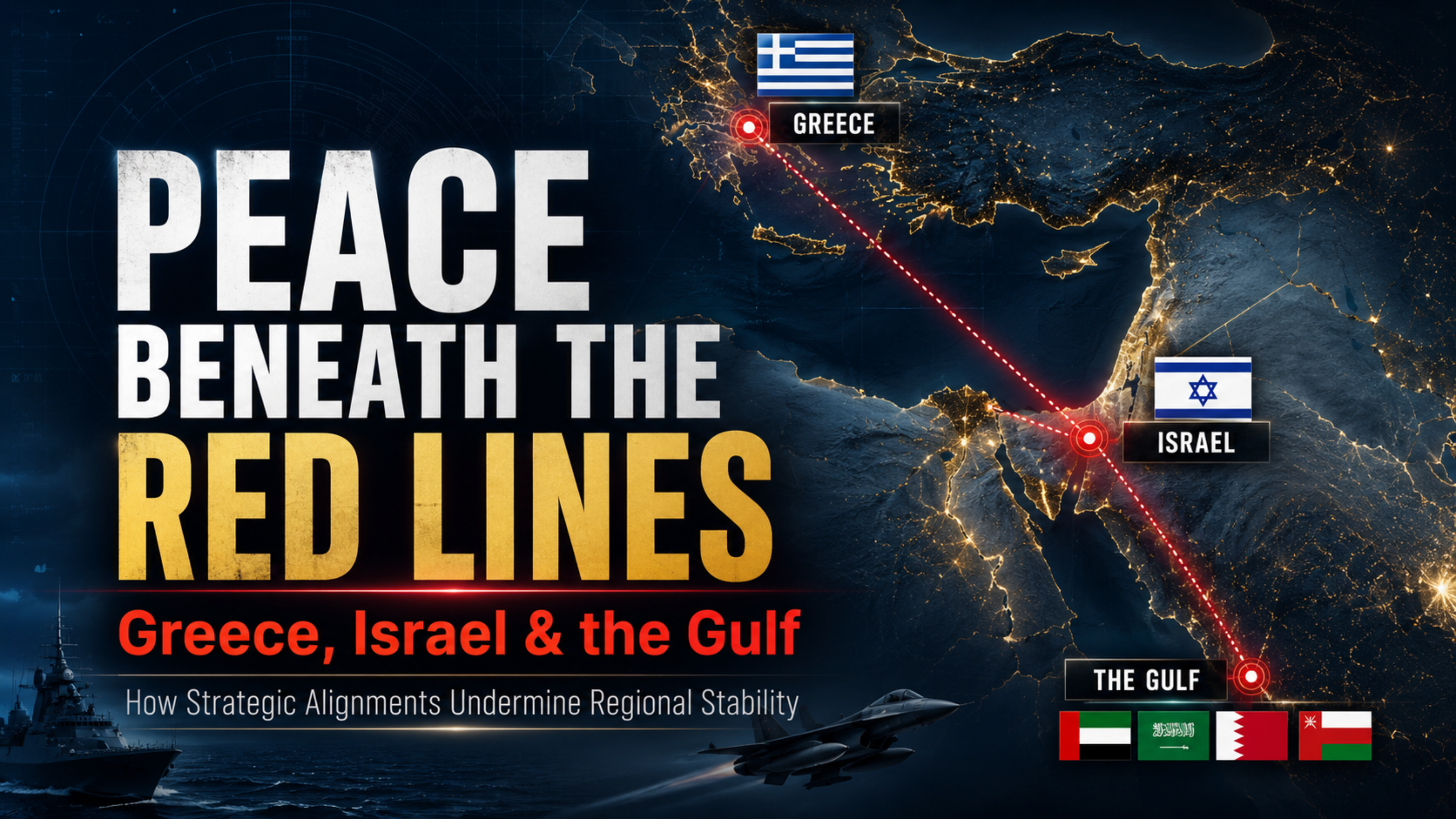
Peace Beneath the Red Lines

Greece, Israel, and the Gulf: How Strategic Alignments Undermine Regional Stability

A fundamental shift is reshaping the Eastern Mediterranean and Gulf security landscape, one where the pursuit of tactical advantage threatens broader regional stability and the possibility of meaningful peace. Athens has transformed itself into an instrument of Israeli regional policy with unprecedented depth, integrating defense systems, doctrines, intelligence networks, and military personnel to a degree no other European state approach. This fusion of strategic identities comes at a critical moment: when the international community faces mounting pressure to establish frameworks for lasting peace in a region fractured by war and mistrust.

Between 2016 and 2021, Greece first engineered an anti-Turkey coalition drawing together Israel, Cyprus, France, Egypt, Saudi Arabia, and the UAE. The architecture crumbled when its premise did: the 2017 Gulf crisis resolved, and regional powers normalized ties with Ankara. Yet from 2023 to 2026, Athens launched a second, more aggressive push, positioning Greece as a bridge extending Israeli security interests into the Gulf and simultaneously countering Turkey's emerging strategic weight in the region.

Greece's Achilles' Shield air defense programme a $3.5 billion effort, integrates three Israeli systems into a multi-layered network. An additional $750 million commitment for precision rocket artillery from Israeli firm Elbit Systems positions advanced weapons along Greece's Turkish frontier. Israeli companies train Greek fighter pilots. Israeli Aerospace Industries' acquisition of the Greek firm Intercom Defense facilitates local production and technology transfer. Military officers rotate through each other's command structures—a level of integration that suggests fusion rather than partnership.

When a nation becomes a major customer of another's weapons systems, hosts its training facilities, absorbs its doctrine, integrates its officers into command hierarchies, and openly coordinates defense policy against a third party, its own foreign policy begins carrying its ally's imprint. Information, access, and political weight move reflexively between the two capitals. What lands on a Greek desk does not necessarily stay there?

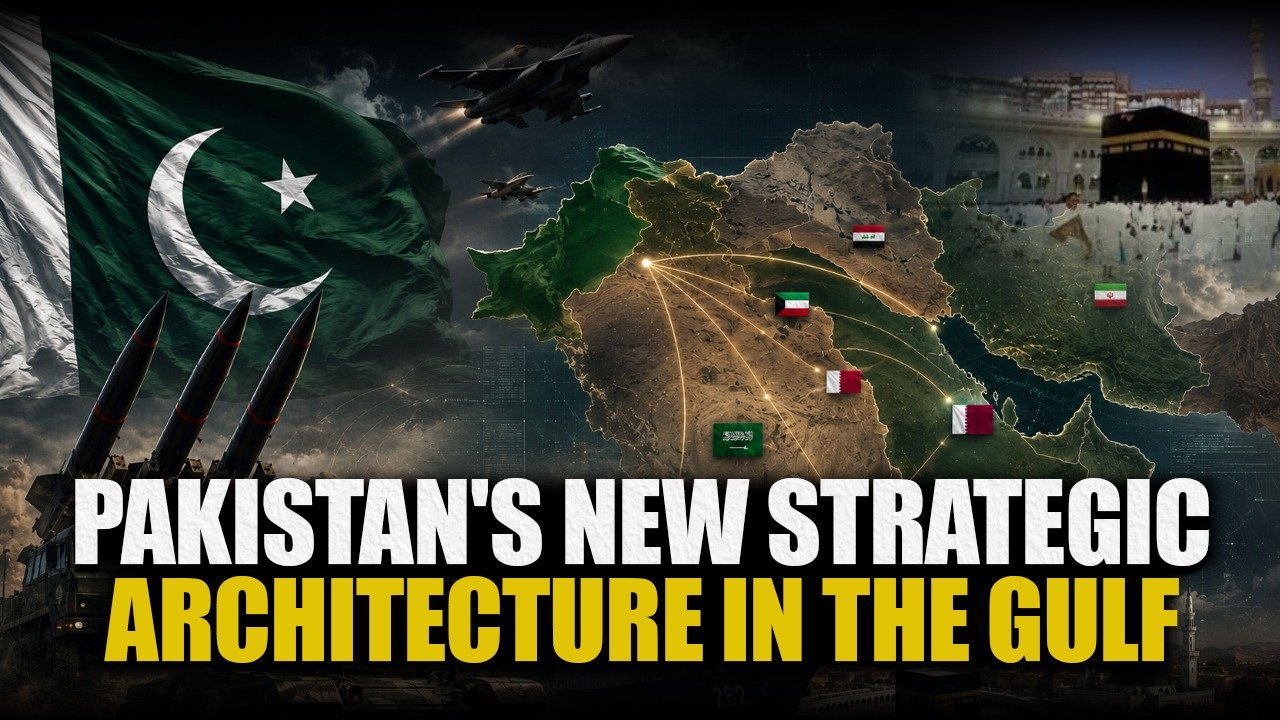
Amid this strategic realignment, Pakistan emerges as a counterweight. Turkey, emerging from the Gaza conflict with credibility across Arab and Islamic constituencies, now positions itself as a serious regional actor. Netanyahu's publicly declared hexagon of alliances comprising Greece, Cyprus, India, and Israel explicitly defines itself against an opposing alignment of Saudi Arabia, Turkey, Pakistan, and Egypt. This configuration directly implicates Pakistan in a geopolitical contest fundamentally about the region's future orientation.

Pakistan's strategic role as a potential mediator for regional peace becomes more critical and more complicated—when major powers are building competing blocs. Turkey's proposed axis of stability, grounded in regional ownership and coordination among Saudi Arabia, Pakistan and Egypt directly contradicts the Greece-Israel architecture designed to constrain Turkish influence and extend Israeli reach into the Gulf.

When the US-Israel-Iran conflict erupted in February 2026, Greece rushed to offer Gulf states defense and security assistance. Greek Defence Minister Nikos Dandies toured the UAE and Qatar in March and April, followed by visits to Saudi Arabia—timed alongside a conflict in which Greek military facilities served as logistical conduits for strikes that triggered Iran's retaliatory missile attacks.

A nation dependent on Israel for its own air defenses, now posturing as a security provider for the Gulf during regional war, appears to offer something it does not truly possess—unless what is being offered is, in effect, connectivity with another state's systems, intelligence, and strategic agenda.

The contradiction is sharp: Greece and Israel define their alliance explicitly by whom it is designed to contain. Meanwhile, Gulf states are quietly moving toward the very power that alliance aims to constrain. When officials in Riyadh and Abu Dhabi sign cooperation accords in Athens, knowing these same officials are defining anti-Turkish defense arrangements in Jerusalem, a critical question emerges and the answer reveals itself in the fine print.

The emerging configuration suggests that genuine regional peace cannot be built through military blocs, integration of defense systems around a single strategic vision, or alliances defined primarily by opposition to other powers. Instead, peace requires frameworks grounded in inclusive dialogue, mutual recognition of legitimate security concerns, and institutions where all major regional actors have voice. Turkey's proposal for an axis of stability while imperfect, at least gestures toward this principle regional ownership, coordination among key powers including Pakistan, and an architecture not explicitly designed to contain any single state. Whether Gulf decision-makers recognize this distinction will determine not merely the balance of power, but whether the region moves toward durable peace or toward the multiplication of red lines that make conflict increasingly inevitable. The fine print matters. Gulf capitals should read it carefully before the next round of handshakes.

Analysis Note: This article examines the strategic shifts in the Eastern Mediterranean and Gulf regions between 2016 and 2026, focusing on how alliance architectures impact the possibility of durable peace. Pakistan's positioning as a potential mediatoralongside Turkey, Saudi Arabia, and Egypt remains central to any future regional stability framework.