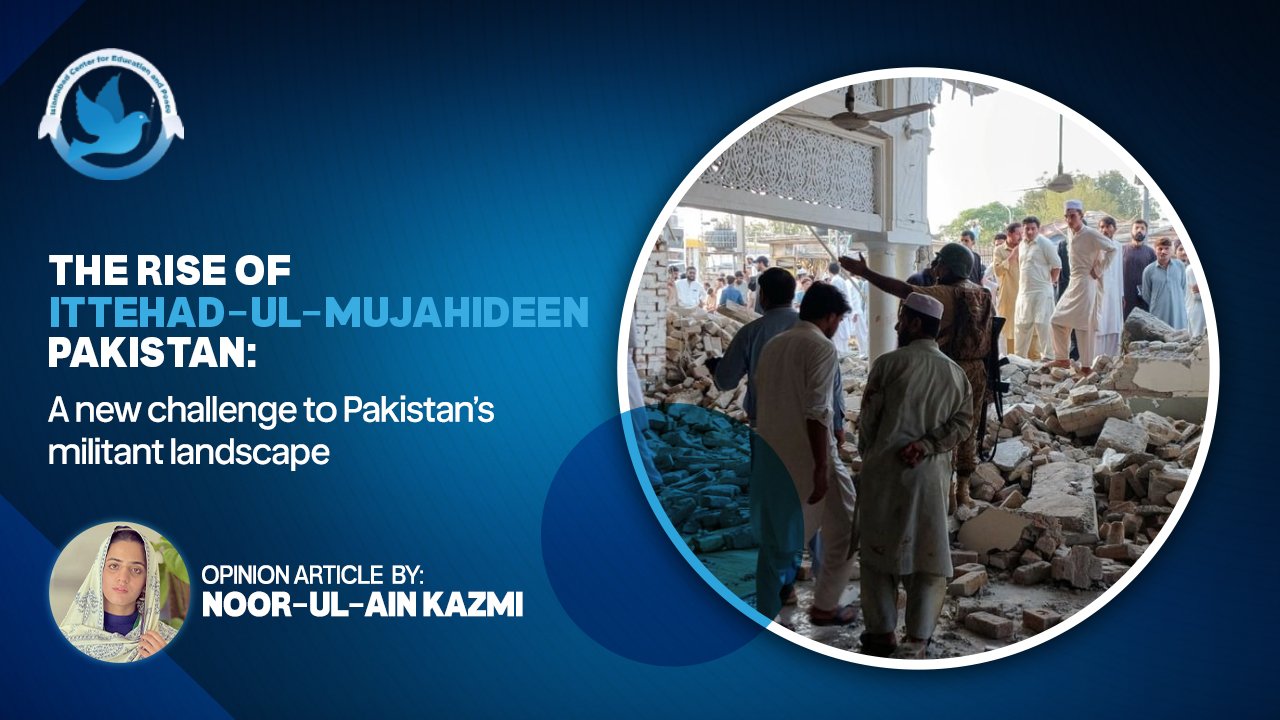

Pakistan
has confronted diverse militant challenges for decades. In recent years,
significant shifts have been observed within this landscape, characterized by
the formation of new alliances and the fragmentation of existing factions. A
notable development is the emergence of Ittehad-ul-Mujahideen Pakistan (IMP) an alliance formed by three distinct militant outfits: the Hafiz Gul Bahadur
Group (HGB) Lashkar-e-Islam (LeI), and Harkat Inqilab-e-Islami Pakistan
(HIIP). The three groups formally announced their coalition through their media
wing, positioning the entity as a potential rival to the Tehreek-e-Taliban
Pakistan (TTP) and marking another evolution in the regional security dynamic. The
formation of IMP brings together three militant groups with overlapping
operational interests. By pooling their operational capabilities propaganda
apparatus, and recruitment channels onto a unified platform, they seek to
amplify their regional footprint. The emergence of IMP poses a serious
challenge to Pakistan's ongoing counterterrorism operations and broader
stabilization initiatives in affected areas.
Background
and Operational Footprint
Ittehad-ul-Mujahideen
Pakistan was established through the joint coordination of HGB, LeI, and HIIP
under a unified operational umbrella. The alliance named Mahmood-ul-Hassan as
its central spokesperson, with propaganda materials released via its media
outlet, Sada-e-Ghazwa-e-Hind. IMP’s primary operational footprint encompasses
Khyber Pakhtunkhwa (KP), particularly the merged tribal districts of North and
South Waziristan. Historically, these areas have served as critical operational
corridors for militant factions due to their rugged terrain and the porous
border with Afghanistan.
Ideology
and Operational Strategy
The
narrative framework of IMP relies heavily on radical and anti-state rhetoric,
misusing religious terminology to legitimize its subversive activities and draw
recruits. A primary objective of the alliance is the propagation of hostility
against Pakistan’s state institutions, security apparatus, and government. Beyond
conventional militant activities, IMP places substantial emphasis on digital
information warfare. The group actively utilizes social media platforms and
encrypted messaging apps to disseminate propaganda, circulate disinformation,
and mobilize sympathetic sentiment among vulnerable segments.
IMP
and the TTP Dynamic
The
TTP has historically operated as the most prominent militant faction in KP and
the merged tribal areas. The rise of IMP introduces further complexity into
this domain. While both entities share ideological roots and historical ties
within the broader Pakistani Taliban movement, the emergence of IMP could
trigger competition over territorial control, recruitment networks, resources,
and influence. However, the creation of IMP does not necessarily guarantee
overt conflict with the TTP; the two networks may simultaneously vie for local
dominance without engaging in direct armed confrontation. Regardless of
internal rivalries, the presence of multiple militant factions with overlapping
operational nodes complicates the overall security and counterterrorism matrix
for law enforcement agencies.
Evolving
Tactics and Modern Technology
IMP
has increasingly integrated modern tools and unconventional methods alongside
traditional militant tactics. These include the deployment of commercially
available quadcopters and drones for reconnaissance, intelligence gathering,
and remote monitoring of security installations. These technological adoptions
are combined with conventional asymmetric warfare tactics, such as ambushes,
advanced improvised explosive devices (IEDs), and rocket assaults.
Concurrently, the group’s digital outreach aims to soften its public perception
and mask its violent activities.
Implications
for Pakistan’s National Security
The rise of IMP presents critical security implications:
·
Enhanced Counterterrorism Measures:
Neutralizing this
new alliance requires intelligence-based operations (IBOs), advanced surveillance
capabilities, and rapid-response mechanisms across vulnerable districts.
·
Human Security & Local
Grievances:
The local
population in Khyber Pakhtunkhwa continues to bear the socioeconomic brunt of
militancy. A sustainable approach demands a robust "hearts and minds"
strategy focused on civilian protection, infrastructure rehabilitation, and
proactive governance.
Counterterrorism
Policy Imperatives
Addressing
this evolving threat necessitates a comprehensive counterterrorism approach:
·
Technological Superiority:
Security and
intelligence institutions must continue integrating artificial intelligence
(AI), aerial surveillance, and advanced signal intelligence to preempt militant
activities.
·
Counter-Propaganda:
State and civil
society platforms must actively dismantle anti-state narratives and expose
militant recruitment tactics in the digital sphere.
·
Border Management:
Sustained
surveillance along border regions remains crucial to curbing cross-border
movement and logistical supply lines.
Conclusion
The long-term viability of IMP remains uncertain. The faction operates in a crowded militant environment where established networks like the TTP already hold deep operational footholds, and internal fissures within the three-group alliance could eventually weaken its cohesion. If Pakistan’s security forces and intelligence agencies maintain sustained operational pressure, the alliance's capacity to expand its operational footprint will be significantly constrained.


_6784.jpg)