
China’s rise is
usually analyzed through the prism of economic expansion military
modernization or structural superpower competition. Yet one of its most
consequential strategic tools is often overlooked the deliberate
transformation of culture into an asset of statecraft.
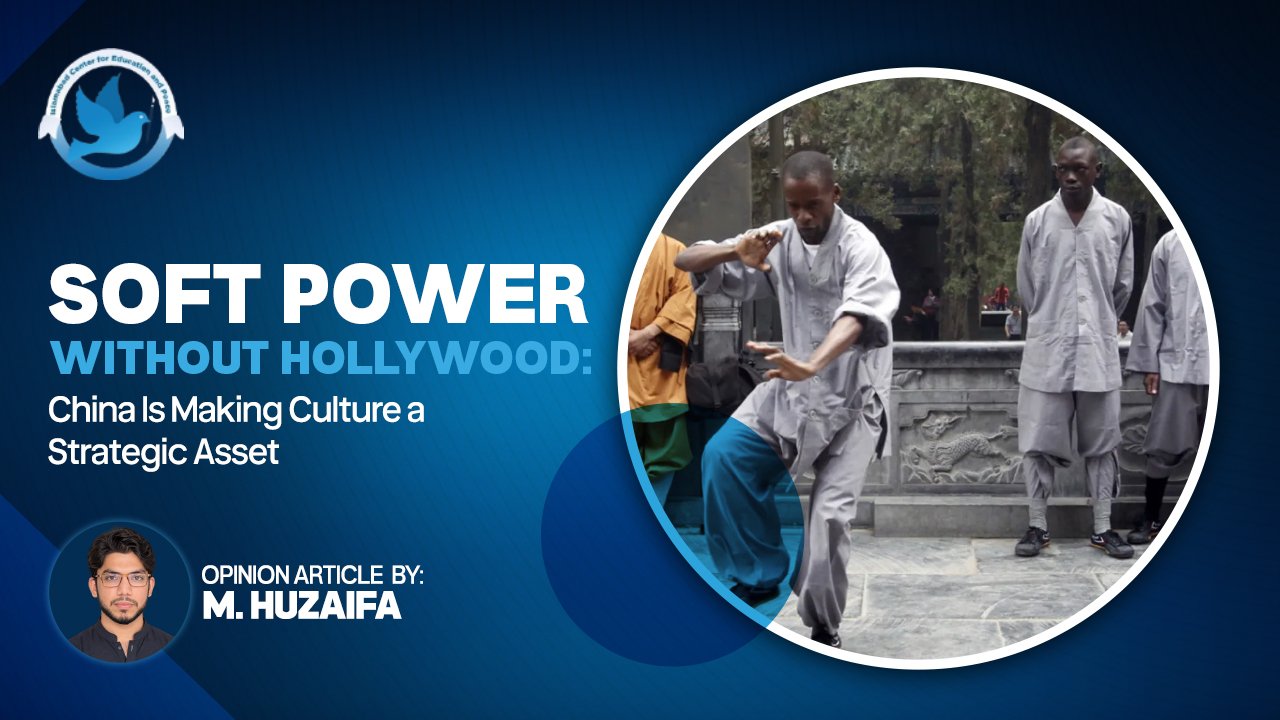
For decades, global soft power a concept defined by political scientist Joseph Nye as the ability to affect others through attraction rather than coercion has been dominated by Hollywood Western mainstream media and the English language. Recognizing that it cannot easily replicate a model built on Western liberal ideals Beijing rejects competing with Hollywood on its own terms. Instead China is forging an alternative soft-power paradigm anchored in civilizational identity state backed digital ecosystems, educational diplomacy and targeted storytelling for the Global South.
This strategy was formally codified under President Xi Jinping’s Global Civilization Initiative (GCI) which advocates for respecting the diversity of civilizations and national development paths over Western value universalism. The foundation of Beijing’s strategy is its deep historical identity. While Western soft power frequently emanates from pop culture and entertainment China projects itself as a 5,000-year-old civilizational state. By leveraging Confucian philosophy, traditional arts language, and historical continuity Beijing seeks both domestic cohesion and international appeal. Confucius Institutes despite facing regulatory shifts in parts of the West remain widely accepted across Asia, Africa, the Middle East and Latin America. By offering scalable language training and vocational programming, Beijing embeds Mandarin across the developing world, ensuring future foreign professionals view China through familiarity and partnership.
China’s investments in digital platforms and cultural exports reflect a similar geographic and technological pivot. Rather than crafting film blockbusters solely designed to win over Western box offices Chinese historical epics, period dramas and digital entertainment aim for regional resonance and digital integration. Streaming platforms like QIYI, Tencent Video and Bilibili export narratives celebrating technological ambition alongside traditional values. Simultaneously the global success of Chinese video games such as Genshin Impact and the record-breaking AAA title Black Myth Wukong demonstrates how Chinese folklore and aesthetics can engage global pop culture organically through interactive media.
Concurrently digital
distribution platforms serve as China’s most effective cultural infrastructure. Byte Dance's TikTok exports global aesthetic trends and social norms at scale.
While TikTok operates commercially its algorithmic dominance increases global
familiarity with Chinese digital ecosystems. In an era defined by artificial
intelligence and algorithmic delivery, controlling the platform carries
strategic weight equal to producing the content itself.
Educational exchanges and media outreach complement this digital footprint. China has emerged as a primary destination for international students from developing nations, offering generous scholarships paired with technical and professional training. Unlike Western academic models that often condition engagement on specific governance norms, Chinese educational diplomacy emphasizes technical skills, industrial development and state-led economic growth. It offers tangible opportunities alongside a policy of mutual respect a proposition that strongly resonates with nations seeking practical development partnerships. State media outlets like CGTN, Xinhua and China Daily reinforce this by framing China as a reliable partner championing non-interference and a balanced, multipolar world order.
Nevertheless, Beijing’s soft-power strategy navigates distinct structural dynamics. As soft power fundamentally relies on organic cultural resonance, state-supported cultural initiatives must continually adapt to diverse regional perceptions and evolving geopolitical environments. Furthermore balancing regulatory frameworks with the rapid expansion of modern creative industries remains an ongoing process. Moreover international political analysts note that expanding digital infrastructure and cultural outreach is a long-term journey that requires continuous engagement to build lasting global affinity.
Yet Beijing understands these dynamics. Rather than pursuing global uniformity, China focuses its cultural statecraft on regions where its diplomatic and economic footprint is already expanding. By presenting itself under the GCI framework as a respectful civilizational partner rather than an ideological judge, China fosters a receptive environment for major international initiatives like the Belt and Road Initiative (BRI) and the Global Development Initiative (GDI). In an era where strategic narratives matter as much as material capabilities, China’s cultural strategy is not mere decoration; it is a vital pillar of national power in a multipolar world.


_6784.jpg)