
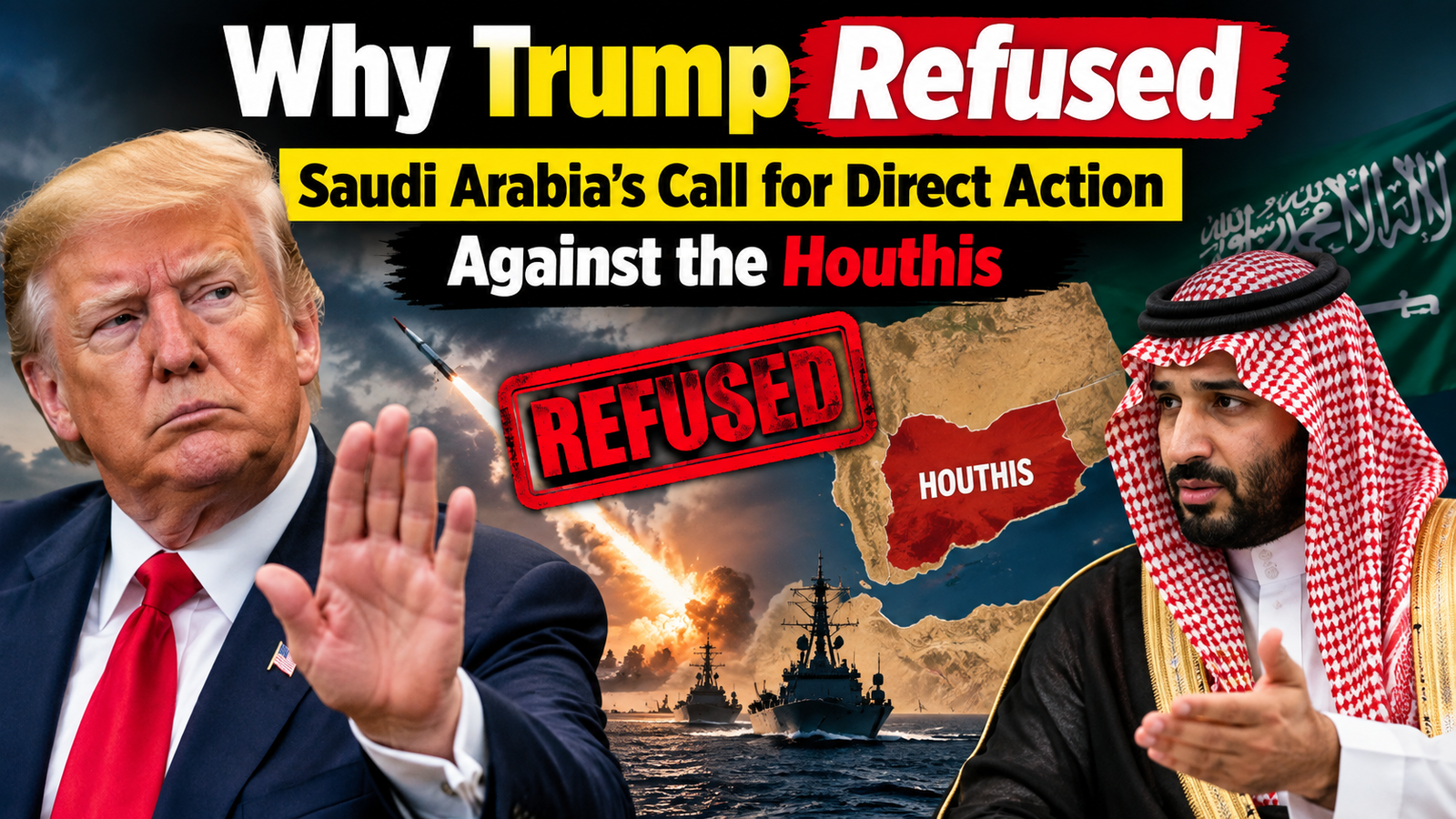

The latest escalations in Yemen
highlight a crucial change in Washington's security dynamic with Riyadh. Saudi
Crown Prince Mohammed bin Salman is said to have made a desperate appeal to
U.S. President Donald Trump on Thursday for direct U.S. military strikes
against the Iran-backed Houthis. Trump refused to consider the request and U.S.
officials said there are no plans for direct U.S. military action against the
group at this time.
It coincides with a critical
period in Saudi Arabia's history. On Yemen's west coast the Houthis have come
into possession of crucial territory such as Mokha and Mayun Island which is
close to the Bab al-Mandab Strait. Their achievements have made them closer to
one of the world's most vital maritime choke points and added to the dangers
for Saudi Arabia's energy supplies and foreign trade.
1. Strategic prioritization is the first explanation. The Trump
administration is preparing to shift its military resources to Iran and the
Strait of Hormuz, and not to Yemen, U.S. officials say in the latest reporting.
Washington seems to not want to escalate the current battle to a more
widespread regional conflict.
2. The second is that of the previous U.S. campaign against the
Houthis. The United States has already found that airstrikes can inflict some
costs on the movement without killing its capacity to fight. In the last
campaign, Washington finally struck a ceasefire deal with Houthis in 2025. It
showed Trump that he favored an exit over military action if the situation
doesn't provide him the strategic victory he desires.
3. Avoiding another open-ended Middle Eastern commitment is the
third factor. If the Saudi and Houthis fight turns into another U.S. military
intervention in Yemen, American direct assistance could prove to be the
difference in Saudi Arabia. Trump is likely to figure that supporting the
ability of the Saudi government to fend off the Houthis and keeping the sea
routes open is more valuable to Washington than taking on the responsibility
for fighting the Houthis on land.
In addition, there is an issue of
burden sharing. Saudi Arabia is a well-developed regional military power, has a
well-developed defence relationship with the United States and is a very rich
country. Perhaps Washington will look to Riyadh to take on a heavier burden in
defense when the country's immediate territory and interests are at risk.
This reescalation is one of the
most significant since the 2022 truce. The Houthis have advanced toward
strategic points along the Red Sea shoreline and found more ground to maneuver
in Bab al-Mandab a chokepoint in between the Red Sea and the Gulf of Aden. The
Houthis also have proven their capability in using missiles and drones against
Saudi interiors. Houthi forces attacked the Saudi cities of Abha, Jizan, Najran
and Khamis Mushait toward on September 8. The attacks reportedly targeted oil
and economic infrastructure, injuring over 70 persons.
Riyadh's military response has
included airstrikes in Yemen against Houthis' positions including one on Mokha
airport following the Houthis' seizure of it. The Saudi response shows that the
Saudi leaders have calculated that if they do not stop the Houthis' advance, it
will eventually pose a threat to Saudi territory, oil infrastructure and sea
lanes.
However, air power is a tough
one. Saudi Arabia has a wide array of military forces but the Yemen war of the
past showed how difficult it was to conduct an air campaign primarily against
the Houthis. The movement has withstood years of Saudi military pressure and
gained considerable experience in asymmetric warfare, drones, missiles and
dispersed military infrastructure.
Trump's refusal does not
necessarily mean that the United States is leaving Saudi Arabia. Washington is
still worried about the situation and is still coordinating with the Saudi
capital, U.S. officials have said. Admiral Brad Cooper commanding U.S. Central
Command (CENTCOM), has been briefing in Saudi Arabia. U.S Central Command
(CENTCOM) chief Admiral Brad Cooper has been in Saudi Arabia for talks.
Washington can provide support to
Saudi Arabia without engaging in a battle on Saudi Arabia's behalf against the
Houthis. This could be a key hallmark of the changing U.S.-Saudi security ties.
Riyadh can still get American intelligence, arms, diplomatic and defensive
support and Washington puts an end to any offensive military action that would
put American troops at risk of a broader regional war. But the situation is not
the same for Saudi Arabia. The kingdom has been investing in military
modernization and developing its relations with the big powers over the years,
but this most recent crisis has shown that security partnerships do not
necessarily equate to automatic military intervention.
In this case Iran is the main player in the
crisis. The Houthis are Allegedly allied with Tehran and have been given
considerable political and military backing from Iran. As they gain more sway
along the Red Sea, they have ramifications that extend beyond Yemen's conflict.
But by directly attacking the Houthis, Washington could create yet another
battlefield in the broader U.S.-Iran conflict. Riyadh, however, would want the
Houthis to be weaker to have less leverage to use against Saudi Arabia.
For Riyadh it’s a tough call.
Ramping up the airstrikes could stall the Houthi advance, but could also fuel
the conflict. A negotiated deal might bring an end to the violence at the
moment, but it may give the Houthis more strength. More pressure on Washington
can be achieved by asking for increased American involvement but there is the
risk of revealing the boundaries of the U.S. security commitment.
The key one isn't just why Trump didn't strike the Houthis. It's about the implications for Saudi Arabia's future security strategy. The episode indicates that Riyadh might have to enhance its military and diplomatic capability in autonomy, while preserving its strategic ties with Washington. The focus for the U.S. seems to be how to keep the Red Sea crisis from turning into another open-ended conflict and how to safeguard vital sea lanes and curb the broader regional one. Trump's rejection can, then, be interpreted not as a rejection of Saudi Arabia, but as a warning about the extent to which U.S. will intervene on the country's behalf. If the Houthis are making progress towards the Bab al-Mandab and Saudi airstrikes are ongoing, then that may be one of the most pivotal moments in the evolving security landscape of the Middle East.

_6784.jpg)