Achieving peace goes
beyond just laws and policies; it’s also about fostering education, compassion,
and trust. Education has a remarkable ability to unite people and bridge gaps
in understanding, especially in a diverse country like Pakistan, where individuals
come from various socio-economic backgrounds, cultures, and languages. Among
all the fields of study, Medical Education stands out for its role in shaping
future healthcare professionals who are committed to serving everyone without
bias. By instilling empathy, strong moral values, and encouraging community
involvement, medical education can help pave the way for a more peaceful and
healthier Pakistan.
Pakistan continues to
face several public health challenges, including infectious diseases,
non-communicable diseases, maternal and child health issues, mental health
problems, and unequal access to healthcare. Addressing these issues is
particularly challenging in communities where social tensions, poverty, or low
health literacy are prevalent. In these circumstances, medical practitioners
develop into educators, communicators, and dependable members of society in
addition to being doctors. The World Health Organization (2024) states that
improving health outcomes and attaining universal health coverage in Pakistan
depend on bolstering the health workforce.
Medical Education is not
limited to learning Anatomy, Physiology,Pathology,or Pharmacology. It also
teaches professionalism,ethics,teamwork, communication skills and respect for
human dignity. These principles aid aspiring physicians in building rapport with
patients from various racial, religious, and cultural backgrounds. Patients are
more likely to seek medical attention, adhere to treatment regimens, and take
part in preventative health initiatives when they feel valued and understood.
Such trust promotes social cohesion and fortifies links within groups.
The province of Sindh
provides an excellent example of how medical education can influence community
health. Institutions such as Liaquat University of Medical & Health
Sciences (LUMHS), Dow University of Health Sciences, Jinnah Sindh Medical
University, and Chandka Thousands of physicians, nurses, and other healthcare
workers who work in both urban and rural areas have received training at
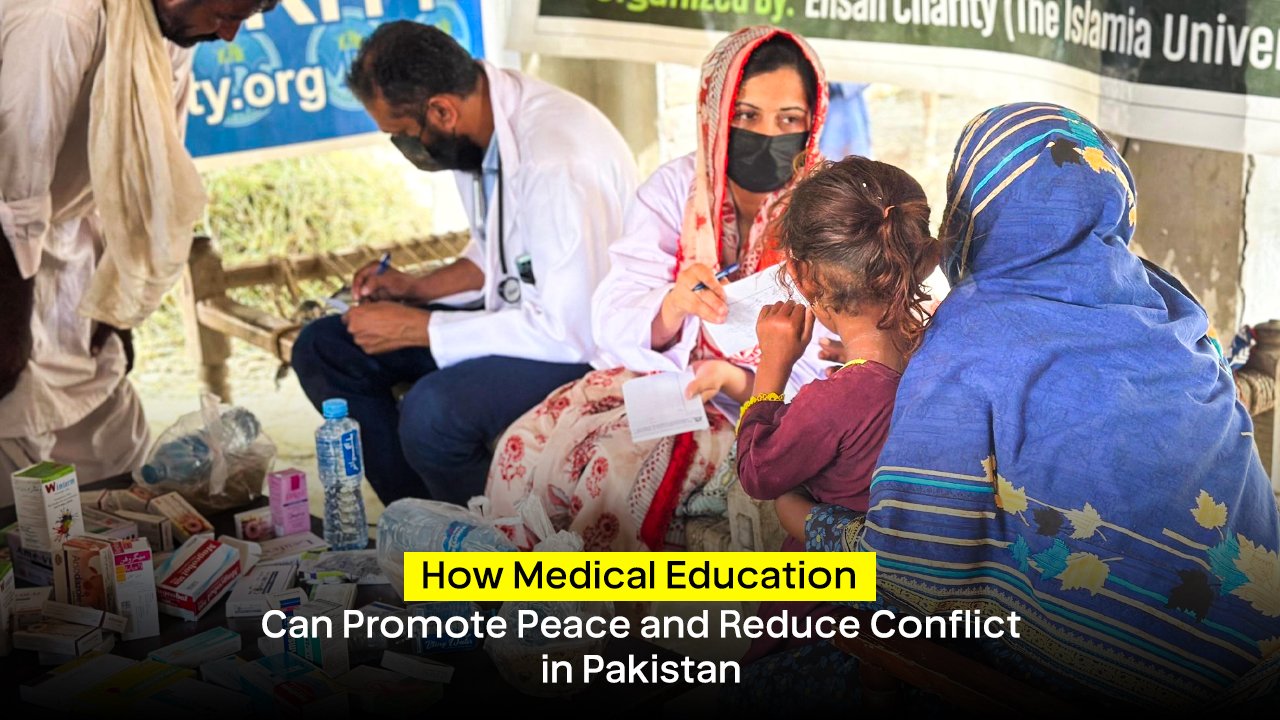
Medical College. Numerous students take part in blood drives, immunization
campaigns, community health camps, and health awareness initiatives. These
initiatives foster collaboration between local communities and medical
professionals while increasing health literacy.
The dissemination of
false health information is one of Pakistan's worst problems. Fear and
bewilderment are frequently caused by false information about vaccinations,
infectious diseases, diet, and mental health. By employing evidence-based
information to educate people via schools, community programs, and social
media, medical students can significantly contribute to the solution of this
problem. Improved health literacy lessens needless conflict brought on by myths
and misconceptions and gives people the power to make educated decisions.
Another crucial area
where medical education may foster harmony is mental health. them young people
in Pakistan suffer from depression, anxiety, stress, and substance abuse, yet
stigma keeps them from getting the care they need. Medical schools should keep
improving their mental health curricula so that aspiring physicians can
identify early indicators of mental illness, treat patients with compassion,
and promote prompt referrals when necessary. Healthcare professionals can lead
public awareness efforts that lessen stigma and promote understanding among
families and communities..
Additionally, medical
education promotes innovation and research. Students gain knowledge about how
to recognize health issues, gather scientific data, and create workable
remedies. Policymakers and healthcare organizations can make well-informed
decisions with the aid of research on communicable illnesses, maternity health,
nutrition, environmental health, and mental health. Medical universities in
Sindh and throughout Pakistan can enhance healthcare services while addressing
regional health needs through community-based research.
Universities should also
encourage inter-professional education, in which students studying public
health, medicine, nursing, and pharmacy collaborate. Collaborating in
interdisciplinary teams fosters mutual respect, communication, and cooperative
problem-solving. These characteristics are crucial in hospitals as well as in
society, where collaboration is required to address social issues and public
health crises.
Ultimately, investing in
medical education is an investment in Pakistan's future. Future medical
professionals can enhance public health while fostering empathy, trust, and
peaceful coexistence provided they possess scientific competence, ethical
responsibility, and social awareness. Pakistan can create resilient healthcare
systems and better populations by bolstering medical education, increasing
community involvement, and funding research.
Medical education in Pakistan has the power to be a strong force for peace. It can aid in mending the nation's social wounds by fostering compassion, offering young people hope, and uniting disparate groups. A divided nation needs the values of medicine, which include helping others, saving lives, and serving humanity. Recognizing and investing on this potential is a challenge for Pakistan's communities, schools, and leaders. This entails expanding medical education, enhancing training, retaining physicians in the nation, and safeguarding healthcare in times of conflict. It also entails teaching medical students to view themselves as peacemakers in addition to physicians.
Healing begins long before a patient enters a hospital. It begins in the classroom, where aspiring medical professionals are taught service, ethics, and compassion. Reducing false information, enhancing health literacy, fostering harmonious connections between individuals from different origins, and strengthening communities are all possible outcomes of medical education. In addition to improving healthcare outcomes, investing in high-quality medical education particularly in areas like Sindh will help Pakistan achieve sustainable development and become a more resilient, peaceful, and cohesive country.


_6784.jpg)