
Internet is an essential tool in life. It
influences our learning process, communication with others, and our
understanding of the world. The internet has become an important part of the
lives of the youth in Pakistan as they use it for learning, entertainment and
socializing. While digital platforms have offered wonderful opportunities, they
have also been responsible for misinformation, hate speech and extremist
content. Digital literacy is then much more than a skill but rather a mandate
to build an informed and peaceful society.
Digital
literacy is more than the ability to use a smart phone or the Internet. It
involves critical thinking about the information one encounters, knowledge of
where information is obtained, safeguarding personal information, and
communicating responsibly. These features provide people with the ability to
make careful decisions rather than be misled or misguided by negative online
content. The internet has been a blessing to Pakistan as it has taken millions
of people in this digital world. However, with information out there, so is the
false information. Fake news, fake videos and false social media posts can
become viral in minutes, leading to confusion and at times intolerance. There
are people who spread incorrect information which means misinformation is
propagated further.
This
rise in digital platforms and the dissemination of the extremist groups'
narratives is one of the biggest issues. Not all of the time do they personally
go to people, but instead they may attempt to reach them via emotional
messages, bogus declarations, or deviously produced web pages. It is important
to remember that some tactics may be difficult for students who do not have
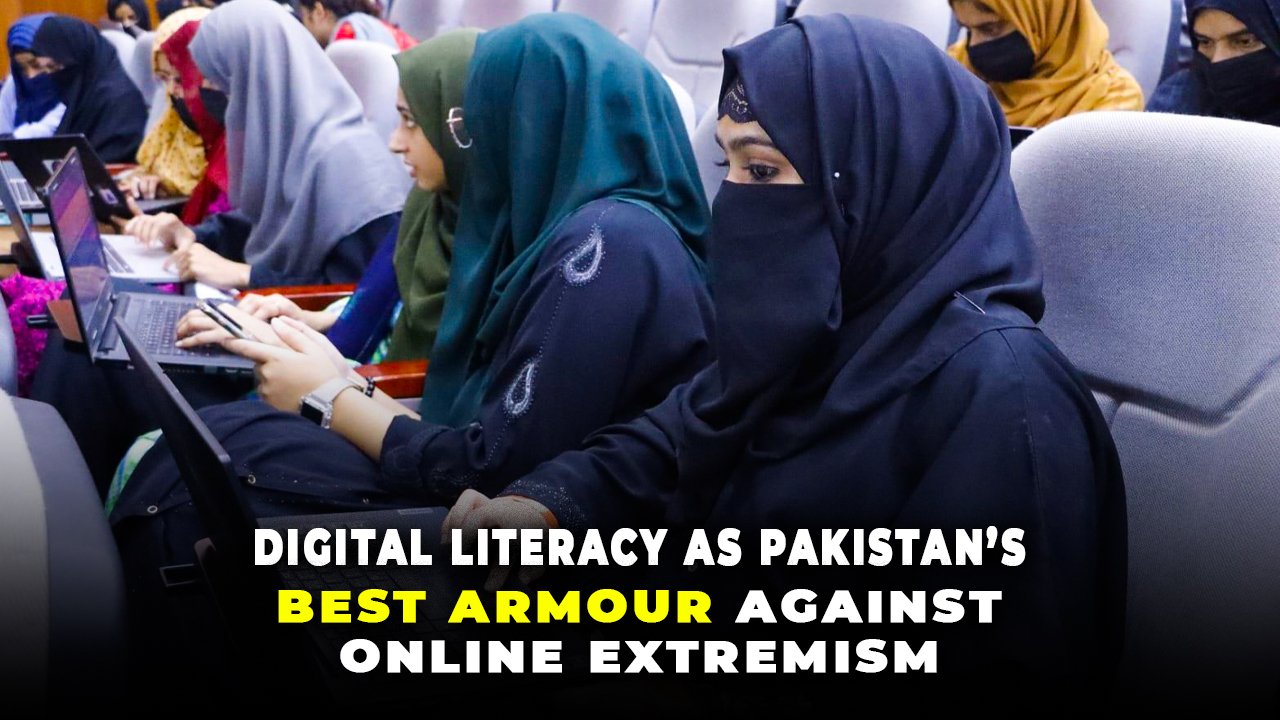
critical thinking skills to recognize. Digital literacy enables them to ask
questions, check information sources and prevent being manipulated by
information. The school plays a critical role towards addressing this issue.
School and University must educate children to evaluate information retrieved
from the Internet, to identify misinformation, and to behave respectfully
online. Media literacy, fact checking and responsible online behavior
instruction can help students to be informed citizens and active, responsible,
members of society.
It
is also important that teachers receive regular training to keep themselves
updated on the ever-evolving digital environment. Teachers who are aware of the
newest issues and trends in the online environment will be able to support
students in their safe and responsible use of technology. Parents have a
significant role to play, too. Discussions about online safety, responsible
social media usage and safe internet use should start early; fostering healthy
online habits. Digital literacy is learned outside of the classroom, too.
Partnerships between the government institutions, schools and universities,
technology companies and civil society need to be established for conducting
awareness campaigns, availability and accessibility of learning resources and
responsible online behavior. But citizens can also learn to prevent the spread
of false information through fact checking programs and community events.
Digital
literacy promotion does not mean the reduction of freedom of expression.
Instead, it encourages critical thinking, listening to opposing views and
discussing issues on the basis of facts, not rumors. Emphasis on evidence and
respectful discussion can minimize the danger of division and extremism in
society. Although the government has made efforts in Pakistan to improve the
use of Internet and Digital services, now time has come to educate the people
about responsible use of these services. Invest in education, national security
and lasting peace of society. A critical minded population is able to address
online issues better and capable of contributing to the development of the
country.
Therefore,
digital literacy can be considered as one of the best tools to mitigate online
extremism and contribute to the promotion of peace in Pakistan. It empowers
individuals to recognize factual information, distinguish fact from fiction,
and to contribute responsibly, and with informed decisions, to online
discussions. To make Pakistan's youth responsible citizens, Pakistan must aim
to make Pakistan safer through digital education in its schools and families,
government initiatives and community partnerships. Peace in our world of
interconnectedness begins with informed and critical minds.


_6784.jpg)