
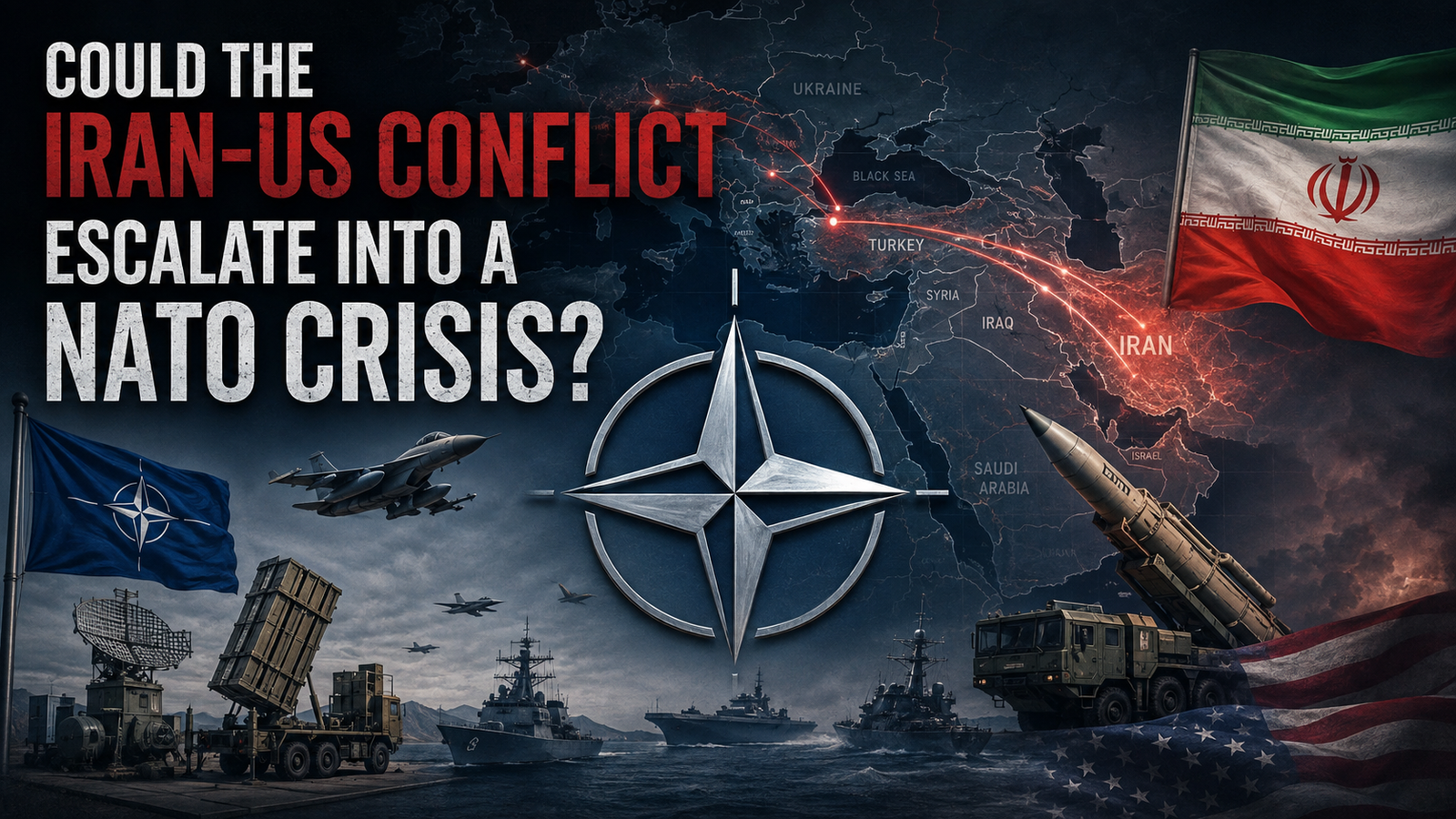

In response
to a Financial Times report, a NATO official said on Wednesday (August 19,
2026) that NATO is ready to respond to any threat and will respond as necessary
to protect all allies. NATO's deterrence and defense posture is "strong
and effective," and the alliance has intercepted four ballistic missiles
from Iran that were en route to Turkey this year, the official said, citing the
organization's experience. The statement
was made after a Financial Times report citing two sources close to the Iranian
government stated Iran has been thinking of attacking military targets in
Europe if it escalates the current conflict with President Trump.
Iranian
forces were calculating potential attacks on the US presence in southeastern
Europe, including Bulgaria, where the US had agreed last month to allow its
refueling aircraft to use the Bezmer Air Base, the FT sources said. Cyprus was
separately mentioned as potential target in case of a renewed US offensive, as
a British air base in Cyprus was targeted by a drone in March. This is a
publicly stated policy of the Iranians that has been reported here. In a new
major war, Iran would move beyond Middle Eastern U.S. targets to its
infrastructure elsewhere, the Islamic Revolutionary Guard Corps (IRGC) warned
last month in response to Britain's request to protect its bases. This was
restated by Iran's UN ambassador in Geneva in March, who stated that Iran's
military has declared that any facility or base that attacked Iran would be
legitimate targets, stating that it does not exclude this from being in Europe.
The report
can be traced back to changes in the regime's ranks. Last week, hardline
security and military officials were promoted by Iran's Supreme Leader to
prominent positions, and regime figures are more convinced than ever that war
with Washington is imminent, not likely. One source noted Tehran was getting
ready for the extension of the war if Trump follows through with threats to
attack Iranian infrastructure, while another suggested Iran would "not have
any limits" on its response to the US military action.
In June,
Iran and the US inked the Islamabad Memorandum of Understanding on ending the
war, but the pact ended up getting bogged down in accusations of breach and war
resuming. Since then, diplomatic efforts toward reopening the Strait of Hormuz
or further diplomatic negotiations have failed to yield any progress, and Trump
said Tuesday that he has no plans for talks with Tehran. In addition to Europe
the Iranian military has studied attacks on subsea fiber-optic cables in the
Strait of Hormuz should the situation deteriorate.
There are
doubts among independent analysts about Iran's true capabilities. Meanwhile,
military experts told the FT that Iran has missiles capable of hitting parts of
southern and southeastern Europe, but they would likely lack the same
effectiveness and accuracy at greater ranges. A Royal United Services Institute
security analyst in London said the threat was “real but limited” as the IRGC
might be able to launch medium-range ballistic missiles at targets in
southeastern Europe with ease, but would face difficulty if they wanted to
launch them at the United States and other longer-range targets, in which case
the missiles would have to be lighter in order to travel further.
The political
threat is also a factor to consider for Iran targeting a NATO member directly –
last year, for example, analysts pointed out that despite the combat, Iran
refrained from targeting the U.S., a NATO country, which would be much more of
a strategic gamble than targeting a non-NATO regional country. Bulgaria and
Cyprus, however, are both EU members which changes the calculus somewhat from a
strike on Turkey. The report comes on
the heels of other indications of escalation. The UAE said it suspended trade
and financial ties with Iran following two reports of ballistic missiles being
fired towards its territorial waters, which were reported to have fallen into
the sea without causing any injury or damage. The head of Iran's armed forces'
general staff, meanwhile, threatened to consider those Gulf nations that helped
US forces as actors in the US military operations.
The reported plans have not been officially confirmed in Iran, nor have they been attacked. The reporting is part of a long trend in which Iranian authorities have issued numerous warnings, it is true, but sometimes explicit, that any place where American troops are present may be a target if the United States does escalate. NATO's public response was measured – reassurance that they are ready, not a declaration of any specific new defensive measures.


_6784.jpg)