If
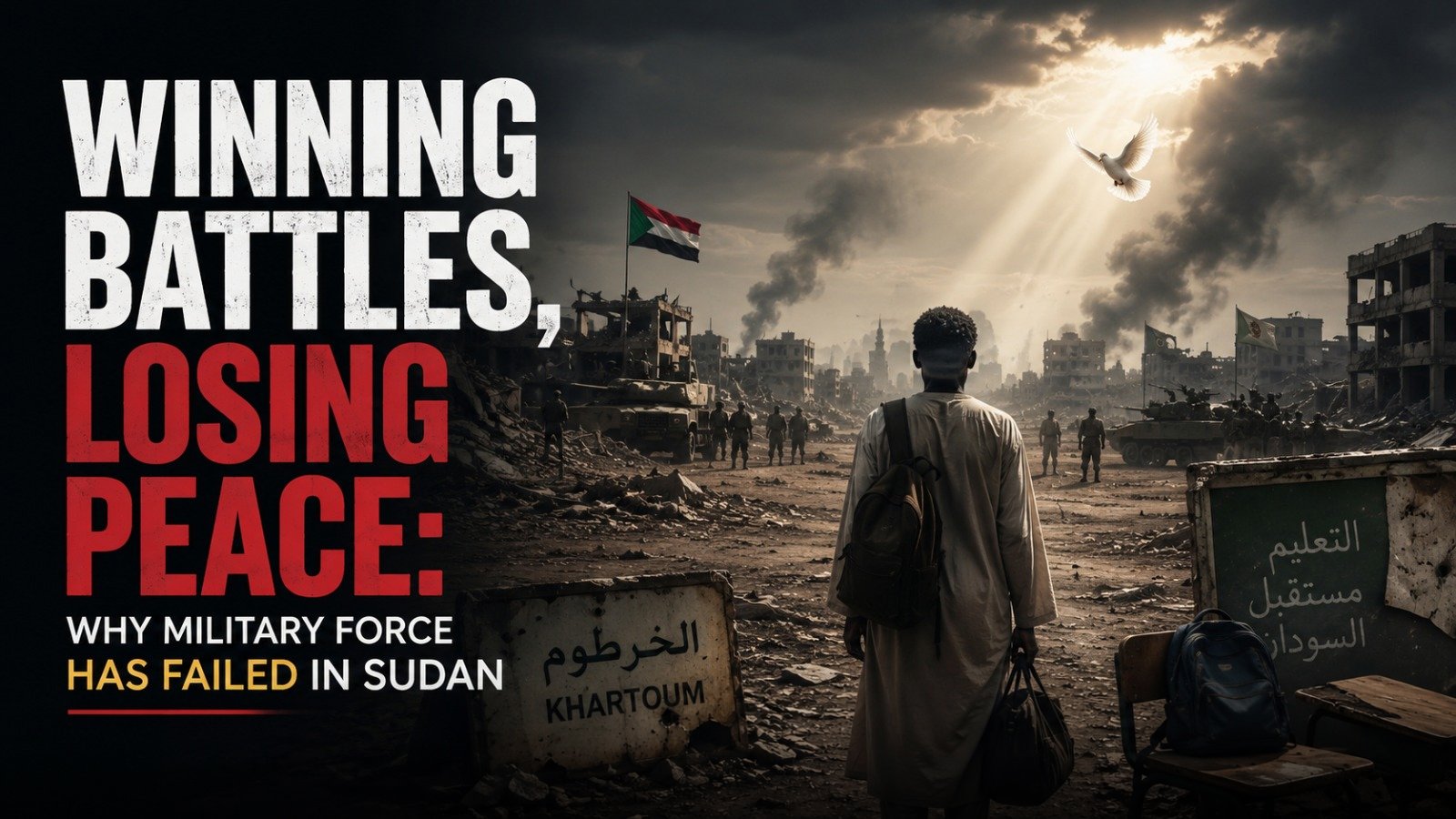
military force could truly secure peace, why does Sudan continue to bleed? For
the third year in a row, Sudan tragically stands as the country most at risk of
new or worsening humanitarian crises in the IRC emergency watch list. Before
the war started in April 2023, the country was already experiencing a severe
humanitarian crisis and now the three years of war has worsened the conditions.
The removal of long-time authoritarian leader Omar al-Bashir in 2019 sparked
great optimism for civilian rule in Sudan. As part of Sudan's transition to civilian
rule, there was a plan to unify all armed forces under one national military.
This meant the integration of the Sudanese Armed Forces (SAF) led by general
Burhan and the paramilitary Rapid Support Forces (RSF) led by Mohamed Dagalo in
Sudan but neither side wanted to lose power and tensions escalated. Those
tensions erupted into open conflict in April 2023, plunging Sudan into one of
the world's most severe humanitarian crises resulting in the displacement of
nearly 13 million people. More than 21 million people in Sudan are facing acute
food insecurity and over 70% of hospitals are destroyed. Sudan's conflict
demonstrates that while military force may shift the balance of power, it
cannot establish lasting peace. Sustainable security can only be achieved
through inclusive dialogue, political compromise, and a commitment to
protecting civilians.
Although
military action seems the quickest way to restore peace but in Sudan it has
failed to resolve the crisis. The reason for this lies in the internal power
politics of Sudan that is deeply rooted in military rivalry. The military in
Sudan is not a neutral institution but a dominant force. Despite years of fighting, both factions RSF
and SAF view victory as the only way to avoid annihilation. The conflict didn’t
stem only because of land control but it rose due to political rivalry,
distrust and weak corrupt institutions. Even if one side gains military
victory, the under-lying issues will remain unresolved but neither of the
armies has enough military superiority to deliver a quick knock-out blow. The
failed transition has turned to a horrible crisis and both the political system
and military share equal blame for this. All this use of force that is taken
for synonymous victory has only created violence and instability. Instead of
reaching to a decision, this prolonged warfare has caused the lives of
civilians a living hell. The greatest victims are civilians who are bearing the
greatest costs of war.
Beyond
the battlefield, Sudan's conflict has evolved into one of the world's most
severe humanitarian crises, and it is only the civilians who have to bear the
consequences of this conflict. People have lost homes and livelihoods and
families are forced to flee and 13 million people are displaced. Sudan can’t be
considered as a secure state. The conflict has disrupted supply chains leading
to food insecurity and even famines in some areas. At the same time healthcare
system has collapsed as hospitals are damaged, paramedics fled and extreme
shortage of medicine. Any disease outbreak is difficult to control. Schools all
over the country have been either damaged or forced to close. Peace cannot be
achieved if an entire generation remains illiterate. The human security in Sudan has been
completely denied just because government thinks of security traditionally e.g.
military strength, territorial control. But these military victories mean
nothing if people do not have access to basic life necessities. Force has only
prolonged and worsened the crisis, therefore peace will require a stable
approach.
Military
force can suppress the ongoing war but won’t be able to end it permanently,
sustainable peace requires dialogue. Dialogue is the only way to address the
underlying causes of this conflict. Although many efforts such as The Jeddah
peace talks, African Union mediation, IGAD-led effort, have been done to solve
the ongoing conflict in peaceful ways but failed due to the core reasons of
mistrust and advantage. In some cases external influence of countries have also
complicated the peace processes. But this does not mean that dialogue is
ineffective. Previous peace negotiations focused almost entirely on armed
groups and political elites rather than civil society, its civilians,
humanitarian organizations, women groups and marginalized groups. These groups
know the daily realities of conflict and inclusive dialogue will provide a
foundation for lasting stability.
Apart
from Sudan, some other countries have also experienced prolonged conflicts
driven by political divisions and armed violence. For example South Africa
required years of dialogue to overcome decades of division. Sudan must
prioritize negotiation to build a stable and inclusive future.
Thus,
the ongoing conflict in Sudan exposes the limitations of force and explains
that military victories are temporary. It is a reminder that territorial
control cannot be regarded as human security. In order to put an end to this
conflict sustained negotiations must be facilitated and inclusive dialogue must
be prioritized. The true lesson from Sudan is already clear; while force may
win battles, only dialogue can win the peace.
_6784.jpg)