Top Stories
Building Bridges Through Words Understanding Militant Ideologies in Modern Contexts Security: Beyond Walls and Weapons Upcoming Events: Connecting Ideas and People Previous Milestones: Reflecting on Our Journey Fatwas: Reclaiming the Spirit of Ethical Guidance Role of NATO in Conflict Resolution Washington Peace Deal Between Congo and Rwanda Social Justice and Equality in the Qur’ān: Implications for Global Peace The Qurʾānic Concept of Human Equality: An Analysis against Racism and Ethnic Discrimination in Contemporary Societies Reinterpreting Dhimmitude: A Reconsideration of Its Social and Political Functions in the Modern Context How China Is Playing the Long Economic War Ukraine Peace Efforts Advance Cautiously Despite Partial Alignment Among Parties How Pakistan-Libya Military Relations Strategic Outreach, Economic Stakes and Geopolitical Implications Aleppo Clashes as Syria and Kurdish-Led SDF Agree to Ceasefire Across the Border, Pakistani Ulema Stand Against Afghan Girls\' Education Ban Pakistan announce 500 fully-funded scholarships for Bangladeshi students in 8 programs How theTaliban regime threat for reginal peace Women Left Behind in Khyber Pakhtunkhwa’s Education System Sudan’s Civil War: Anatomy of the World’s Largest Humanitarian Crisis Changing Security Architecture in Central Asia Pakistan Leads India on Economic and Peace Indicators in 2026 : Gallup Survey Submerged Classrooms, Long-Term Learning Loss Pakistan Security Report 2025: Terrorism Trends and the Peace Deficit HEC’s MAKTAB Initiative Signals a New Era for Higher Education Southern Yemen Faces Tensions and Urgent Need for Peace IUT Strengthens Education Integrity in Bangladesh Pakistan’s Arms Sales Contracts (2024–25) and the Peace Dimension Pakistan\'s Contribution to UN Peacekeeping Operations for Global Peace Pakistan Enhances Educational Cooperation with Sri Lanka through Scholarship The Growing Defense and Economic Nexus of the Muslim World Charter of Trump’s Board of Peace Pakistan & Myanmar Prioritize Education Strategic Saudi defense agreements are redefining the Middle East\'s security architecture What would be the consequences of the U.S.–Iran Conflict on Pakistan? How Indian Cricket Politics Affect Regional Peace The Kashmir issue remains a central peace and stability in South Asia American Weapons in Afghanistan Are Destabilizing Pakistan Global Education Coalition sixth annual meeting A New Chapter for Pakistan’s Universities: Leadership, Stability, and Vision under the New HEC Chairman The Evolution of the IMCTC into a Global Security Pillar Reintegration Initiative: Analyzing the 2026 IMCTC Engagement in Pakistan Psychosocial Warfare and the IMCTC Peace Journalists Initiative (2026) The Concept of ‘Ummah’ in the Qurʾān: Transcending Race, Tribe, and Ethnicity HEC Reforms Regulation, Defends Academic Freedom Pakistan’s Evolving Role in Fostering Peace and Security on the African Continent Recontextualizing Pakistan’s Role in the Board of Peace War in the Middle East: Measuring the Cost The Silent Bridge: Pakistan’s Strategic Neutrality and the Quest for Middle Eastern Stability The Geography of Escalation: Living in an Age of Permanent Crisis Mapping the Educational Crisis in the Middle East Conflict The Blind Alley of “Epic Fury”; A War with no End game A Pakistani Voice Against Digital Islamophobia: A Landmark Academic Contribution World Eye on Pakistan for Middle East Peace Leading with Truth, ICEP’s Analysis Outlasted the Skeptics on Middle East Crisis World Powers Push for Deal U.S. Presents 15-Point Plan and Iran Responds with 5 Conditions Pakistan and Türkiye Open New Chapter in Academic Cooperation with Strategic Initiatives Pakistan at the Crossroads of Global Trade as a Logistics Revolution Unfolds Why Ethical Dialogue necessary in a Diverse Pakistan for a Peacebuilding Initiative Pakistan\\\'s Game-Changer Role for World Peace Entrepreneurship Education Is Shaping Pakistan\\\'s Economic Future Dr. Jamil Akhtar Featured in Prestigious Brill Encyclopaedia (2026) A Milestone in Global Interfaith Scholarship Peace Light in a Dark Night WAR RESHAPES PAKISTAN’S ECONOMY AND OPEN DOORS FOR INTERPRENEURS From Gaza to Lebanon: ICC, UN, and the Unanswered Duty to Prosecute Can Pakistan turn a temporary ceasefire into lasting middle east peace? Bridging the Gap: Confronting Education Inequality in Pakistan Hierarchical Culture In Pakistani Organizations \"How It Kills Innovation — and What Leaders Can Do About It\" Can Diplomacy Survive the Iran Crisis? Peace Efforts in an Age of Permanent Escalation Why are Peace Talks a US strategic priority? Features of Intellectual Property in the Age of Artificial Intelligence (In the Context of World Intellectual Property Day) A Global Forum for Peace, Governance, and a Better World (France\'s Landmark Contribution to International Dialogue) IS UAE WANT A \\\'CURRENCY SWAP\\\' WITH THE USA Energy War by Sea: The Hormuz Blockade Proves Oil is Still a Weapon The End of Strategic Dependence In Europe? Pakistan\'s Strategic and Structural Evolution from Crisis to Consolidated World Peace Silent Deterrence: Hangor-Class SSP-2800 and Undersea Strategy of Pakistan Inside the $9 Billion Prediction Market Revolution Pakistan at the Crossroads: Between Fragile Stability and the Weight of Structural Crisis WHY DIALOGUE FAILS IN CONFLICT ZONES; A LESSON FOR POLICY MAKERS The Crisis of American Legitimacy in the Post-Unipolar Era THE OIL CLUB UAE JUST QUIT Inside OPEC’s Biggest Defection in Decades — and What It Means for the World The Kashmir Dispute: International Institutional Failure and Humanitarian Consequences The $100 Billion Event the World Refuses to Understand How is Eid-ul-Adha A School of Peace? 250 Million Children Classrooms Zero Learning Ethical Dialogue: The Art of Speaking with Intention Ethical Dialogue: The Moral Weight of an Honest Word Skills in Their Hands, Books in Their Bags Ethical Dialogue : Honoring the Voice of the Other HEC Honors Top Pakistani Scientists and NRPU Grant Recipients at Punjab University What\'s the 14 Point of Peace deal that will be signed in Geneva When Words Carry Power: The Unequal Conversation Why Humanitarian Crises Gain Attention Only When Politicized : An International Law Perspective The Ethics of Saying Nothing The Strait of Hormuz Crisis: Energy Security in an Era of Regional War Ethical Dialogue: The Forgotten Half of Every Conversation Why is Homework Still a Thing In Modern Education Peace Beneath the Red Lines Ethical Dialogue: The Wisdom of Not Being Certain HEC\'s 47th Commission Meeting Charts Reform Path for Higher Education Sector PERIDOT: Franco-Pakistani Research Collaboration Program WINDS OF CHANGE Ethical Dialogue: Persuading Without Deceiving HEC Conducts Scholarship Test Across Bangladesh The significance of the \"same DNA\" statement Phone-free campuses could become the next step in education reform Ethical Dialogue: When Dialogue Becomes a Weapon HEC hosted a Quality Leadership Session in Faisalabad Women\'s Role in Peace-building in Somalia Modernizing the Indus Waters Treaty for the Climate Change Era How Will Pakistan Prevent Another \"Ever Given\" at Bab al-Mandab? HEC Chairman Leads Strategic Higher Education Engagements in Lahore and Karachi
Conflict

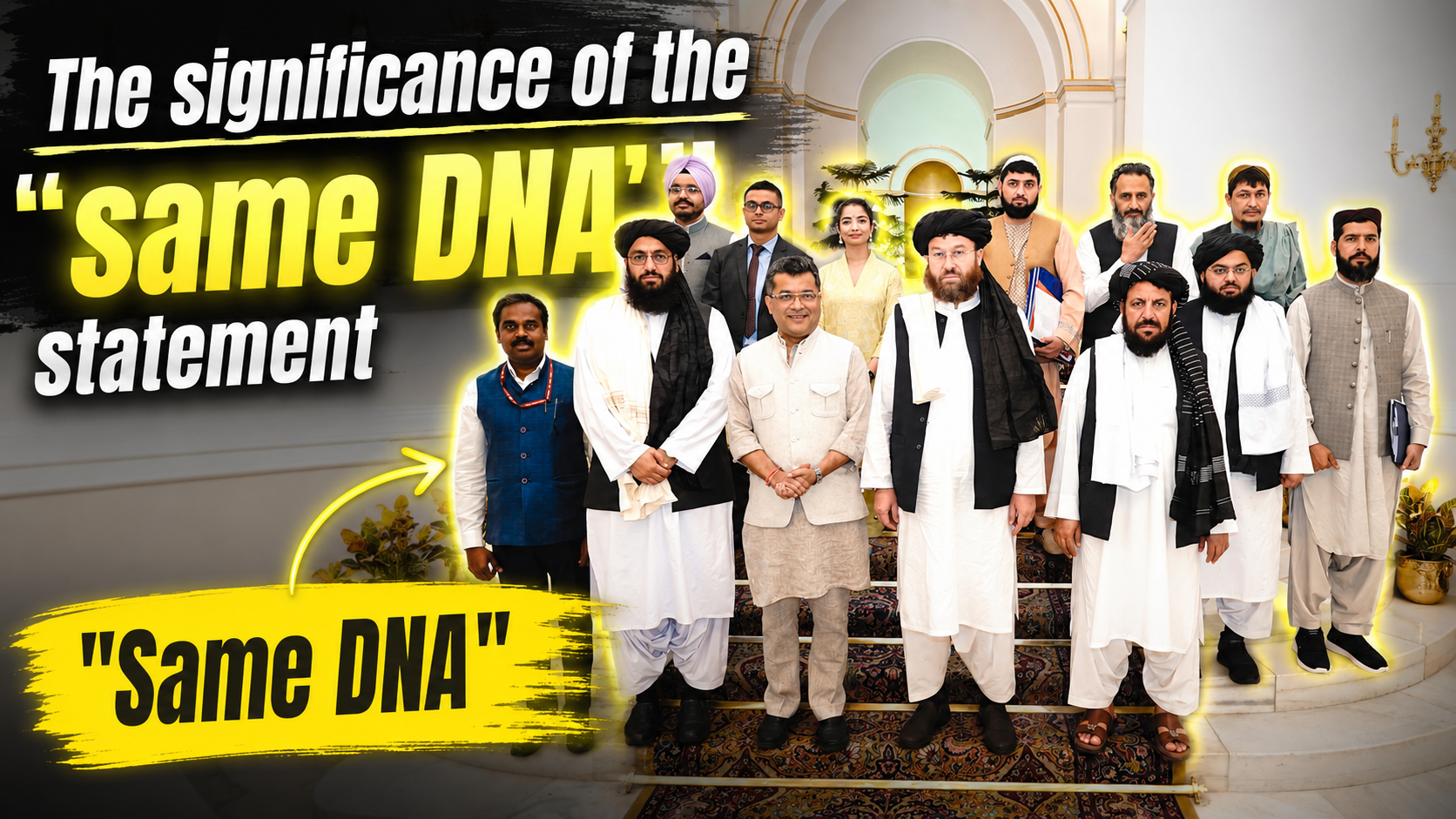
The significance of the \"same DNA\" statement

The assertion that Afghanistan and India "have the same DNA" is just a diplomatic measure, sometimes, when a minister of agriculture, irrigation and livestock Mawlawi Attaullah Omari makes it in front of a trade audience in New Delhi this week. The words are heard differently when read from Pakistan a nation on the border with Afghanistan where the border has seen decades of instability and refugee movements and where a resurgent TTP insurgency is sweeping through.

The underlying purpose of Omari's visit, his first to India was agricultural cooperation, in the fields of wheat seeds modernization of livestock and the fact that 80 per cent of the Afghan population was dependent on agriculture for their livelihood. He met the Minister of Agriculture of the Union Government Shivraj Singh Chouhan twice and the two discussed a broad range of bilateral cooperation on connectivity trade education and healthcare among others. On the surface this appears as a typical neighborly affair. In reality it was the newest and most publicly emotional sign of a relationship that New Delhi has been cultivating with the Taliban regime over the past few months despite refraining from officially recognizing the government.

That seeming paradox is something to meditate on. India has not acknowledged Taliban as the legitimate government of Afghanistan, which is followed by majority of the world. But it is home to the Taliban's ministers, is talking about trade corridors and now it's receiving international flattery for its shared “DNA” from a government that gained power by force, and remains the focus of international concern for its human rights abuses against women and minorities. Meanwhile the same Indian government under the BJP, had come under criticism from members of its own Muslim minority as well as civil society and international human rights groups for its own actions against Muslims such as the citizenship laws widely regarded as discriminatory and communal language being used by some party leaders. That's an uneasy balance between Pakistan and most of the rest of the world the warmth shown to an Islamist government in Kabul while Pakistan's domestic policies are accused of leaving Muslim citizens and rights groups feeling marginalized at home

But for Islamabad it is more about strategy than rhetoric. Pakistan has levelled repeated accusations against the Afghan Taliban for not controlling the militant group known as the Tehreek-e-Taliban Pakistan which has been behind a spate of attacks on Pakistani soldiers and civilians in recent years. Pakistani officials have taken it one step further claiming that Indian intelligence has sponsored proxies in Afghanistan against Pakistan which New Delhi and Kabul deny, but which has become common knowledge in Pakistan's security establishment. Therefore each new India-Afghanistan handshake in New Delhi is viewed in Islamabad not as a new development in a region's economy but as a tightening grip a historically challenging neighbor honing influence in a neighbor that Pakistan has worked so hard for decades to stabilize at a high cost.

The Islamabad Center for Education and Peace (ICEP) does not share the uncritical optimism of some analysts regarding this new partnership. The language of "shared DNA" used in New Delhi this week doesn't necessarily pose a problem in ICEP's view as cultural and civilizational ties between the two countries are a historical reality that do not pose any threat to anyone. What worries ICEP is the diplomatic hug which has been at least lavishly extended to the Pakistani government and the conspicuous silence on Islamabad's well-meaning complaints on security issues at various regional forums. In keeping with ICEP's ongoing research on ethical persuasion and enduring peace ICEP's stance is that any rhetoric that fails to hold up to full disclosure in this case the unanswered question of whether Kabul's soil is being used against Pakistan doesn't serve to promote the kind of regional trust that can endure beyond the duration of one press conference. If someone is living on the basis of warm words and security issues of a third neighbor are not being discussed it is not peace building, but selective diplomacy and selective diplomacy often does not result in peace. ICEP urges all three capitals to take the necessary steps from verbal to concrete and measurable commitments on cross-border militancy and not let the goodwill gesture take the place of the difficult arduous efforts of the trilateral security dialogue.

This is the conundrum that regional peace builders are now faced with. The trade seed technology and market access that India is providing are genuinely needed by Afghanistan and isolation of Kabul is doing nothing for the people from the food shortage in Afghanistan. Pakistan on the other hand has legitimate concerns regarding cross-border militancy which could not be ignored. But a diabolical lexicon based on common "DNA" and civilizational connections selectively invoked towards one neighbor and not yet entirely resolved in terms of domestic minority relations, is not much to make Pakistan feel rest easy regarding this young relationship. Language is important for diplomacy exactly because it conveys something more than the words in any trade communiqué.

As in all claims in this region the only true test is who says they feel most at home in whose country but what is done in their name? Is the Indian government speaking out and consistently pushing the Pakistanis on anti-Pakistan militant hideouts in Kabul as it expects to do against those threatening its own interests? Does the Taliban government give Pakistan the same assurances of border security that it extols rhetorically to New Delhi today? Islamabad's response is so far that the warm rhetoric in Delhi has not yet turned the temperature down along their borders of Khyber Pakhtunkhwa and Baluchistan where TTP attacks have not slowed down significantly.
This does not mean that there is anything wrong with India-Afghanistan engagement is legitimate between two sovereign states they can have what they want. However regional peace cannot be achieved through a single bilateral friendship it relies on the extent to which all three capitals are prepared to discuss the security issues raised by each rather than just exchanging compliments and hopes. But until now Pakistan's doubts about the "same DNA" talk is not paranoia. It is a lesson learned over many years on the border and where conflicts over the region have been left unsolved by a series of trade delegations that are meant to be washed in the wash racks. It is a lesson learned over many years on the border where conflicts over the region have been left unsolved for a lot longer than any photo op can make up for. A more balanced account would also highlight another side of the story India's and Afghanistan's that sees the outreach as more of a humanitarian and economic approach than a hostile one against Pakistan and Kabul's denials of the presence of anti-Pakistan militants and the assertion that it would not allow its territory to be used against any other neighbor.