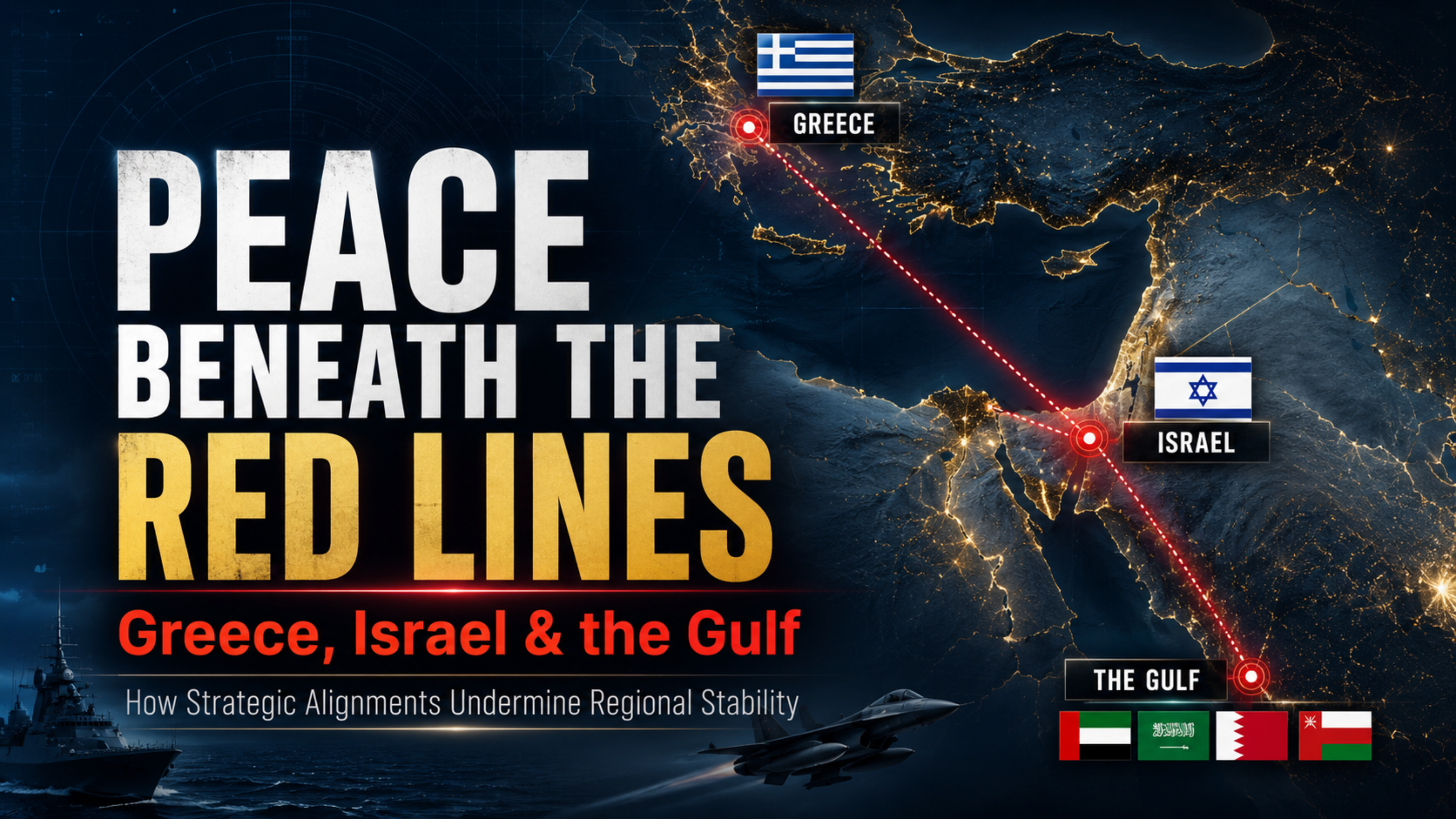

Greece, Israel, and the Gulf: How Strategic Alignments Undermine Regional Stability
A
fundamental shift is reshaping the Eastern Mediterranean and Gulf security
landscape, one where the pursuit of tactical advantage threatens broader
regional stability and the possibility of meaningful peace. Athens has
transformed itself into an instrument of Israeli regional policy with
unprecedented depth, integrating defense systems, doctrines, intelligence
networks, and military personnel to a degree no other European state approach.
This fusion of strategic identities comes at a critical moment: when the
international community faces mounting pressure to establish frameworks for
lasting peace in a region fractured by war and mistrust.
Between 2016
and 2021, Greece first engineered an anti-Turkey coalition drawing together
Israel, Cyprus, France, Egypt, Saudi Arabia, and the UAE. The architecture
crumbled when its premise did: the 2017 Gulf crisis resolved, and regional
powers normalized ties with Ankara. Yet from 2023 to 2026, Athens launched a
second, more aggressive push, positioning Greece as a bridge extending Israeli
security interests into the Gulf and simultaneously countering Turkey's
emerging strategic weight in the region.
Greece's
Achilles' Shield air defense programme a $3.5 billion effort, integrates three
Israeli systems into a multi-layered network. An additional $750 million
commitment for precision rocket artillery from Israeli firm Elbit Systems
positions advanced weapons along Greece's Turkish frontier. Israeli companies
train Greek fighter pilots. Israeli Aerospace Industries' acquisition of the
Greek firm Intercom Defense facilitates local production and technology
transfer. Military officers rotate through each other's command structures—a
level of integration that suggests fusion rather than partnership.
When a
nation becomes a major customer of another's weapons systems, hosts its
training facilities, absorbs its doctrine, integrates its officers into command
hierarchies, and openly coordinates defense policy against a third party, its
own foreign policy begins carrying its ally's imprint. Information, access, and
political weight move reflexively between the two capitals. What lands on a
Greek desk does not necessarily stay there?
Amid this
strategic realignment, Pakistan emerges as a counterweight. Turkey, emerging
from the Gaza conflict with credibility across Arab and Islamic constituencies,
now positions itself as a serious regional actor. Netanyahu's publicly declared
hexagon of alliances comprising Greece, Cyprus, India, and Israel explicitly
defines itself against an opposing alignment of Saudi Arabia, Turkey, Pakistan,
and Egypt. This configuration directly implicates Pakistan in a geopolitical
contest fundamentally about the region's future orientation.
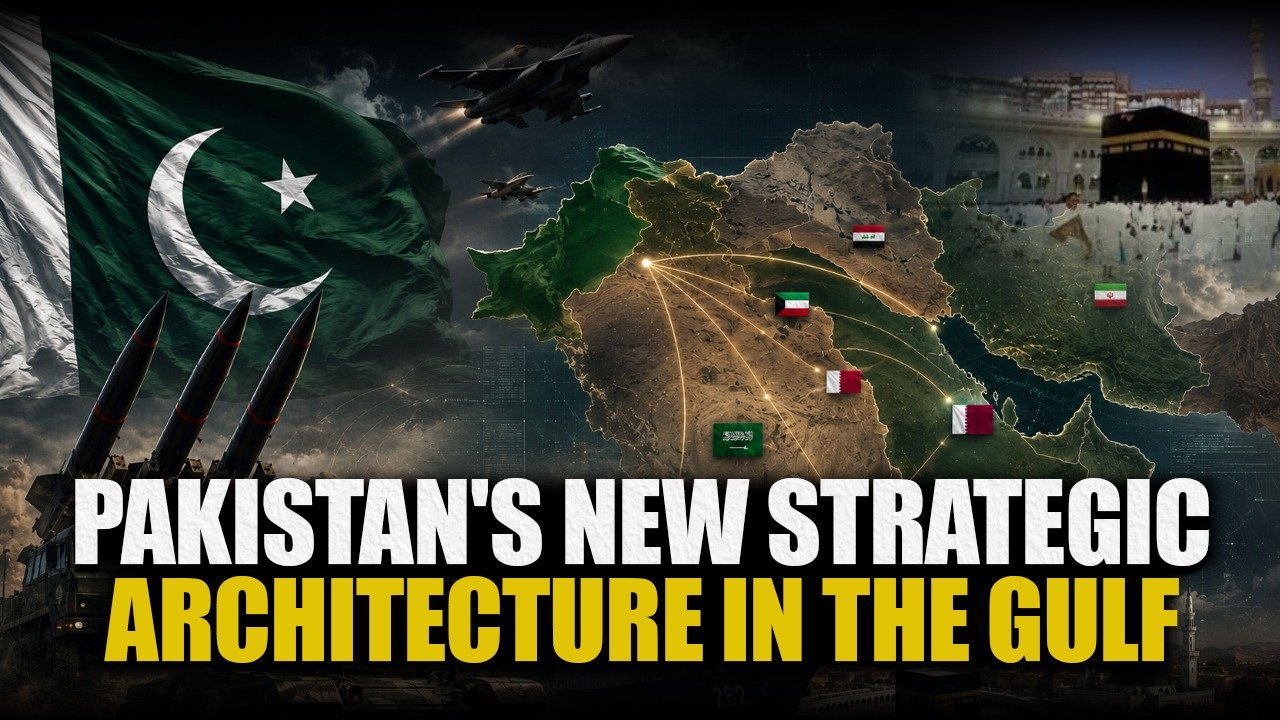
Pakistan's
strategic role as a potential mediator for regional peace becomes more critical
and more complicated—when major powers are building competing blocs. Turkey's proposed
axis of stability, grounded in regional ownership and coordination among Saudi
Arabia, Pakistan and Egypt directly contradicts the Greece-Israel architecture
designed to constrain Turkish influence and extend Israeli reach into the Gulf.
When the
US-Israel-Iran conflict erupted in February 2026, Greece rushed to offer Gulf
states defense and security assistance. Greek Defence Minister Nikos Dandies
toured the UAE and Qatar in March and April, followed by visits to Saudi
Arabia—timed alongside a conflict in which Greek military facilities served as
logistical conduits for strikes that triggered Iran's retaliatory missile
attacks.
A nation
dependent on Israel for its own air defenses, now posturing as a security
provider for the Gulf during regional war, appears to offer something it does
not truly possess—unless what is being offered is, in effect, connectivity with
another state's systems, intelligence, and strategic agenda.
The
contradiction is sharp: Greece and Israel define their alliance explicitly by
whom it is designed to contain. Meanwhile, Gulf states are quietly moving
toward the very power that alliance aims to constrain. When officials in Riyadh
and Abu Dhabi sign cooperation accords in Athens, knowing these same officials
are defining anti-Turkish defense arrangements in Jerusalem, a critical question
emerges and the answer reveals itself in the fine print.
The emerging
configuration suggests that genuine regional peace cannot be built through
military blocs, integration of defense systems around a single strategic
vision, or alliances defined primarily by opposition to other powers. Instead,
peace requires frameworks grounded in inclusive dialogue, mutual recognition of
legitimate security concerns, and institutions where all major regional actors have
voice. Turkey's proposal for an axis of stability while imperfect, at least
gestures toward this principle regional ownership, coordination among key
powers including Pakistan, and an architecture not explicitly designed to
contain any single state. Whether Gulf decision-makers recognize this
distinction will determine not merely the balance of power, but whether the
region moves toward durable peace or toward the multiplication of red lines
that make conflict increasingly inevitable. The fine print matters. Gulf
capitals should read it carefully before the next round of handshakes.
Analysis
Note: This article examines the strategic shifts in the Eastern Mediterranean
and Gulf regions between 2016 and 2026, focusing on how alliance architectures
impact the possibility of durable peace. Pakistan's positioning as a potential
mediatoralongside Turkey, Saudi Arabia, and Egypt remains central to any
future regional stability framework.
_6784.jpg)