Top Stories
Building Bridges Through Words Understanding Militant Ideologies in Modern Contexts Security: Beyond Walls and Weapons Upcoming Events: Connecting Ideas and People Previous Milestones: Reflecting on Our Journey Fatwas: Reclaiming the Spirit of Ethical Guidance Role of NATO in Conflict Resolution Washington Peace Deal Between Congo and Rwanda Social Justice and Equality in the Qur’ān: Implications for Global Peace The Qurʾānic Concept of Human Equality: An Analysis against Racism and Ethnic Discrimination in Contemporary Societies Reinterpreting Dhimmitude: A Reconsideration of Its Social and Political Functions in the Modern Context How China Is Playing the Long Economic War Ukraine Peace Efforts Advance Cautiously Despite Partial Alignment Among Parties How Pakistan-Libya Military Relations Strategic Outreach, Economic Stakes and Geopolitical Implications Aleppo Clashes as Syria and Kurdish-Led SDF Agree to Ceasefire Across the Border, Pakistani Ulema Stand Against Afghan Girls\' Education Ban Pakistan announce 500 fully-funded scholarships for Bangladeshi students in 8 programs How theTaliban regime threat for reginal peace Women Left Behind in Khyber Pakhtunkhwa’s Education System Sudan’s Civil War: Anatomy of the World’s Largest Humanitarian Crisis Changing Security Architecture in Central Asia Pakistan Leads India on Economic and Peace Indicators in 2026 : Gallup Survey Submerged Classrooms, Long-Term Learning Loss Pakistan Security Report 2025: Terrorism Trends and the Peace Deficit HEC’s MAKTAB Initiative Signals a New Era for Higher Education Southern Yemen Faces Tensions and Urgent Need for Peace IUT Strengthens Education Integrity in Bangladesh Pakistan’s Arms Sales Contracts (2024–25) and the Peace Dimension Pakistan\'s Contribution to UN Peacekeeping Operations for Global Peace Pakistan Enhances Educational Cooperation with Sri Lanka through Scholarship The Growing Defense and Economic Nexus of the Muslim World Charter of Trump’s Board of Peace Pakistan & Myanmar Prioritize Education Strategic Saudi defense agreements are redefining the Middle East\'s security architecture What would be the consequences of the U.S.–Iran Conflict on Pakistan? How Indian Cricket Politics Affect Regional Peace The Kashmir issue remains a central peace and stability in South Asia American Weapons in Afghanistan Are Destabilizing Pakistan Global Education Coalition sixth annual meeting A New Chapter for Pakistan’s Universities: Leadership, Stability, and Vision under the New HEC Chairman The Evolution of the IMCTC into a Global Security Pillar Reintegration Initiative: Analyzing the 2026 IMCTC Engagement in Pakistan Psychosocial Warfare and the IMCTC Peace Journalists Initiative (2026) The Concept of ‘Ummah’ in the Qurʾān: Transcending Race, Tribe, and Ethnicity HEC Reforms Regulation, Defends Academic Freedom Pakistan’s Evolving Role in Fostering Peace and Security on the African Continent Recontextualizing Pakistan’s Role in the Board of Peace War in the Middle East: Measuring the Cost The Silent Bridge: Pakistan’s Strategic Neutrality and the Quest for Middle Eastern Stability The Geography of Escalation: Living in an Age of Permanent Crisis Mapping the Educational Crisis in the Middle East Conflict The Blind Alley of “Epic Fury”; A War with no End game A Pakistani Voice Against Digital Islamophobia: A Landmark Academic Contribution World Eye on Pakistan for Middle East Peace Leading with Truth, ICEP’s Analysis Outlasted the Skeptics on Middle East Crisis World Powers Push for Deal U.S. Presents 15-Point Plan and Iran Responds with 5 Conditions Pakistan and Türkiye Open New Chapter in Academic Cooperation with Strategic Initiatives Pakistan at the Crossroads of Global Trade as a Logistics Revolution Unfolds Why Ethical Dialogue necessary in a Diverse Pakistan for a Peacebuilding Initiative Pakistan\\\'s Game-Changer Role for World Peace Entrepreneurship Education Is Shaping Pakistan\\\'s Economic Future Dr. Jamil Akhtar Featured in Prestigious Brill Encyclopaedia (2026) A Milestone in Global Interfaith Scholarship Peace Light in a Dark Night WAR RESHAPES PAKISTAN’S ECONOMY AND OPEN DOORS FOR INTERPRENEURS From Gaza to Lebanon: ICC, UN, and the Unanswered Duty to Prosecute Can Pakistan turn a temporary ceasefire into lasting middle east peace? Bridging the Gap: Confronting Education Inequality in Pakistan Hierarchical Culture In Pakistani Organizations \"How It Kills Innovation — and What Leaders Can Do About It\" Can Diplomacy Survive the Iran Crisis? Peace Efforts in an Age of Permanent Escalation Why are Peace Talks a US strategic priority? Features of Intellectual Property in the Age of Artificial Intelligence (In the Context of World Intellectual Property Day) A Global Forum for Peace, Governance, and a Better World (France\'s Landmark Contribution to International Dialogue) IS UAE WANT A \\\'CURRENCY SWAP\\\' WITH THE USA Energy War by Sea: The Hormuz Blockade Proves Oil is Still a Weapon The End of Strategic Dependence In Europe? Pakistan\'s Strategic and Structural Evolution from Crisis to Consolidated World Peace Silent Deterrence: Hangor-Class SSP-2800 and Undersea Strategy of Pakistan Inside the $9 Billion Prediction Market Revolution Pakistan at the Crossroads: Between Fragile Stability and the Weight of Structural Crisis WHY DIALOGUE FAILS IN CONFLICT ZONES; A LESSON FOR POLICY MAKERS The Crisis of American Legitimacy in the Post-Unipolar Era THE OIL CLUB UAE JUST QUIT Inside OPEC’s Biggest Defection in Decades — and What It Means for the World The Kashmir Dispute: International Institutional Failure and Humanitarian Consequences The $100 Billion Event the World Refuses to Understand How is Eid-ul-Adha A School of Peace? 250 Million Children Classrooms Zero Learning Ethical Dialogue: The Art of Speaking with Intention Ethical Dialogue: The Moral Weight of an Honest Word Skills in Their Hands, Books in Their Bags Ethical Dialogue : Honoring the Voice of the Other HEC Honors Top Pakistani Scientists and NRPU Grant Recipients at Punjab University What\'s the 14 Point of Peace deal that will be signed in Geneva When Words Carry Power: The Unequal Conversation Why Humanitarian Crises Gain Attention Only When Politicized : An International Law Perspective The Ethics of Saying Nothing The Strait of Hormuz Crisis: Energy Security in an Era of Regional War Ethical Dialogue: The Forgotten Half of Every Conversation Why is Homework Still a Thing In Modern Education Peace Beneath the Red Lines Ethical Dialogue: The Wisdom of Not Being Certain HEC\'s 47th Commission Meeting Charts Reform Path for Higher Education Sector PERIDOT: Franco-Pakistani Research Collaboration Program WINDS OF CHANGE Ethical Dialogue: Persuading Without Deceiving HEC Conducts Scholarship Test Across Bangladesh The significance of the \"same DNA\" statement Phone-free campuses could become the next step in education reform Ethical Dialogue: When Dialogue Becomes a Weapon HEC hosted a Quality Leadership Session in Faisalabad Women\'s Role in Peace-building in Somalia Modernizing the Indus Waters Treaty for the Climate Change Era How Will Pakistan Prevent Another \"Ever Given\" at Bab al-Mandab? HEC Chairman Leads Strategic Higher Education Engagements in Lahore and Karachi A Nation Cannot Prosper While Its Children Suffer NIPIS\'26 Welcomes Largest-Ever International Cohort of 50 Interns from 15 Countries The Bermuda Triangle of Promises: U.S. and Iran in Negotiations Pakistan\'s New Strategic Architecture in the Gulf Pakistan Unveils First International Defense Technology Incubation and Investment Platform Selective Justice Under the UN: India\'s Record in a Disputed Territory Married Off Instead of Educated: How Child Marriage Quietly Empties Pakistan\'s Classrooms Between Unemployment and Extremism: Can Vocational Training Break the Cycle for Pakistan\'s Youth? Winning Battles, Losing Peace: Why Military Force Has Failed in Sudan Kashmir Seven Years After Article 370: Development, Rights, and Regional Challenges HEC-NAHE Launches Strategic Planning & Leadership Excellence Workshop for University Leaders Could the Iran-US Conflict Escalate Into a NATO Crisis? Quality Education - Dawn of Tomorrow Beyond the Indus Water Treaty : Re thinking Pakistan’s water security after India’s suspension Can Justice truly exist without Morality? Climate Change as a Non-Traditional Security Threat in Pakistan HOW DOES SOCIAL MEDIA INFLUENCE STUDENTS’ ACADEMIC PERFORMANCE? How Article 370 Pushed the Kashmir Dispute Out of Delhi\'s Courts and Into International Arbitration Digital Literacy as Pakistan’s Best Armour Against Online Extremism Beyond direct talks: why backchannel mediators are crucial for modern crisis de-escalation? How Medical Education Can Promote Peace and Reduce Conflict in Pakistan? The Age of Narrative Warfare The Role of Youth in Community-Level Peacebuilding Digital Islamophobia in India after 2024 Election Article 140-A: The Constitutional Solution Pakistan Keeps Ignoring HEC Pushes AI Revolution in Pakistan’s Higher Education Sector If Iran Joins the Makkah Pact, Pakistan\'s Balancing Act Gets Harder Why Trump Refused Saudi Arabia’s Call for Direct Action Against the Houthis Is India’s BRICS Achievement Really a Diplomatic Victory? Makkah Defence Alliance Is Defensive, Says DG ISPR Ethics of Dialogue: The Courage to Speak When It Costs Something Can Kashmir’s Ecological Crisis Become a Regional Climate Security Threat? Pakistan-Türkiye Higher Education Ties Strengthened Through NUST Engagement Kohat Attack and the Fragile Path to Pakistan-Afghanistan Talks From Insurgents to Stakeholders: The Transformation of the Houthis in Yemen Stitches of Struggle: Why Kashmir’s Home-Based Women Artisans Are Left Behind in the Global Luxury Economy Soft Power without Hollywood: How China Is Making Culture a Strategic Asset The Rise of Ittehad-ul-Mujahideen Pakistan: A new challenge to Pakistan’s militant landscape The New U.S- Iran Maritime Standoff - Who Controls Hormuz
Conflict

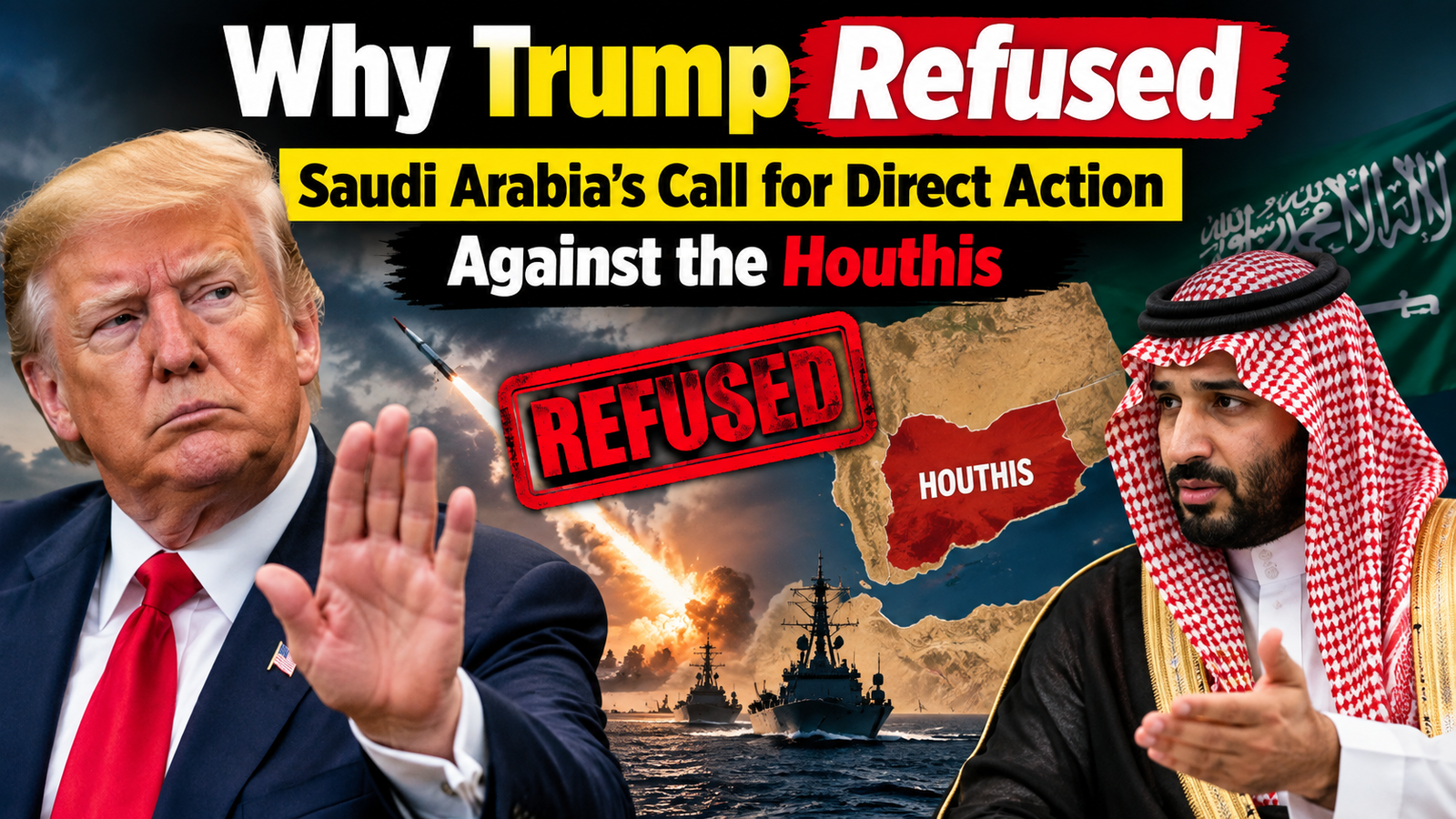
Why Trump Refused Saudi Arabia’s Call for Direct Action Against the Houthis

The latest escalations in Yemen highlight a crucial change in Washington's security dynamic with Riyadh. Saudi Crown Prince Mohammed bin Salman is said to have made a desperate appeal to U.S. President Donald Trump on Thursday for direct U.S. military strikes against the Iran-backed Houthis. Trump refused to consider the request and U.S. officials said there are no plans for direct U.S. military action against the group at this time.

It coincides with a critical period in Saudi Arabia's history. On Yemen's west coast the Houthis have come into possession of crucial territory such as Mokha and Mayun Island which is close to the Bab al-Mandab Strait. Their achievements have made them closer to one of the world's most vital maritime choke points and added to the dangers for Saudi Arabia's energy supplies and foreign trade.

1.      Strategic prioritization is the first explanation. The Trump administration is preparing to shift its military resources to Iran and the Strait of Hormuz, and not to Yemen, U.S. officials say in the latest reporting. Washington seems to not want to escalate the current battle to a more widespread regional conflict.

2.      The second is that of the previous U.S. campaign against the Houthis. The United States has already found that airstrikes can inflict some costs on the movement without killing its capacity to fight. In the last campaign, Washington finally struck a ceasefire deal with Houthis in 2025. It showed Trump that he favored an exit over military action if the situation doesn't provide him the strategic victory he desires.

3.      Avoiding another open-ended Middle Eastern commitment is the third factor. If the Saudi and Houthis fight turns into another U.S. military intervention in Yemen, American direct assistance could prove to be the difference in Saudi Arabia. Trump is likely to figure that supporting the ability of the Saudi government to fend off the Houthis and keeping the sea routes open is more valuable to Washington than taking on the responsibility for fighting the Houthis on land.

In addition, there is an issue of burden sharing. Saudi Arabia is a well-developed regional military power, has a well-developed defence relationship with the United States and is a very rich country. Perhaps Washington will look to Riyadh to take on a heavier burden in defense when the country's immediate territory and interests are at risk.

This reescalation is one of the most significant since the 2022 truce. The Houthis have advanced toward strategic points along the Red Sea shoreline and found more ground to maneuver in Bab al-Mandab a chokepoint in between the Red Sea and the Gulf of Aden. The Houthis also have proven their capability in using missiles and drones against Saudi interiors. Houthi forces attacked the Saudi cities of Abha, Jizan, Najran and Khamis Mushait toward on September 8. The attacks reportedly targeted oil and economic infrastructure, injuring over 70 persons.

Riyadh's military response has included airstrikes in Yemen against Houthis' positions including one on Mokha airport following the Houthis' seizure of it. The Saudi response shows that the Saudi leaders have calculated that if they do not stop the Houthis' advance, it will eventually pose a threat to Saudi territory, oil infrastructure and sea lanes.

However, air power is a tough one. Saudi Arabia has a wide array of military forces but the Yemen war of the past showed how difficult it was to conduct an air campaign primarily against the Houthis. The movement has withstood years of Saudi military pressure and gained considerable experience in asymmetric warfare, drones, missiles and dispersed military infrastructure.

Trump's refusal does not necessarily mean that the United States is leaving Saudi Arabia. Washington is still worried about the situation and is still coordinating with the Saudi capital, U.S. officials have said. Admiral Brad Cooper commanding U.S. Central Command (CENTCOM), has been briefing in Saudi Arabia. U.S Central Command (CENTCOM) chief Admiral Brad Cooper has been in Saudi Arabia for talks.

Washington can provide support to Saudi Arabia without engaging in a battle on Saudi Arabia's behalf against the Houthis. This could be a key hallmark of the changing U.S.-Saudi security ties. Riyadh can still get American intelligence, arms, diplomatic and defensive support and Washington puts an end to any offensive military action that would put American troops at risk of a broader regional war. But the situation is not the same for Saudi Arabia. The kingdom has been investing in military modernization and developing its relations with the big powers over the years, but this most recent crisis has shown that security partnerships do not necessarily equate to automatic military intervention.

 In this case Iran is the main player in the crisis. The Houthis are Allegedly allied with Tehran and have been given considerable political and military backing from Iran. As they gain more sway along the Red Sea, they have ramifications that extend beyond Yemen's conflict. But by directly attacking the Houthis, Washington could create yet another battlefield in the broader U.S.-Iran conflict. Riyadh, however, would want the Houthis to be weaker to have less leverage to use against Saudi Arabia.

For Riyadh it’s a tough call. Ramping up the airstrikes could stall the Houthi advance, but could also fuel the conflict. A negotiated deal might bring an end to the violence at the moment, but it may give the Houthis more strength. More pressure on Washington can be achieved by asking for increased American involvement but there is the risk of revealing the boundaries of the U.S. security commitment.

The key one isn't just why Trump didn't strike the Houthis. It's about the implications for Saudi Arabia's future security strategy. The episode indicates that Riyadh might have to enhance its military and diplomatic capability in autonomy, while preserving its strategic ties with Washington. The focus for the U.S. seems to be how to keep the Red Sea crisis from turning into another open-ended conflict and how to safeguard vital sea lanes and curb the broader regional one. Trump's rejection can, then, be interpreted not as a rejection of Saudi Arabia, but as a warning about the extent to which U.S. will intervene on the country's behalf. If the Houthis are making progress towards the Bab al-Mandab and Saudi airstrikes are ongoing, then that may be one of the most pivotal moments in the evolving security landscape of the Middle East.