
For several decades, residents of Jammu and Kashmir have lived
under the shadow of conflict, fear and political unrest. The recurrent cycles
of violence, telecommunications disruptions, and widespread chaos, movement
bans and the closing of schools and businesses have all disrupted their daily
lives of Kashmiris and being a Kashmir as a suffering one between India and
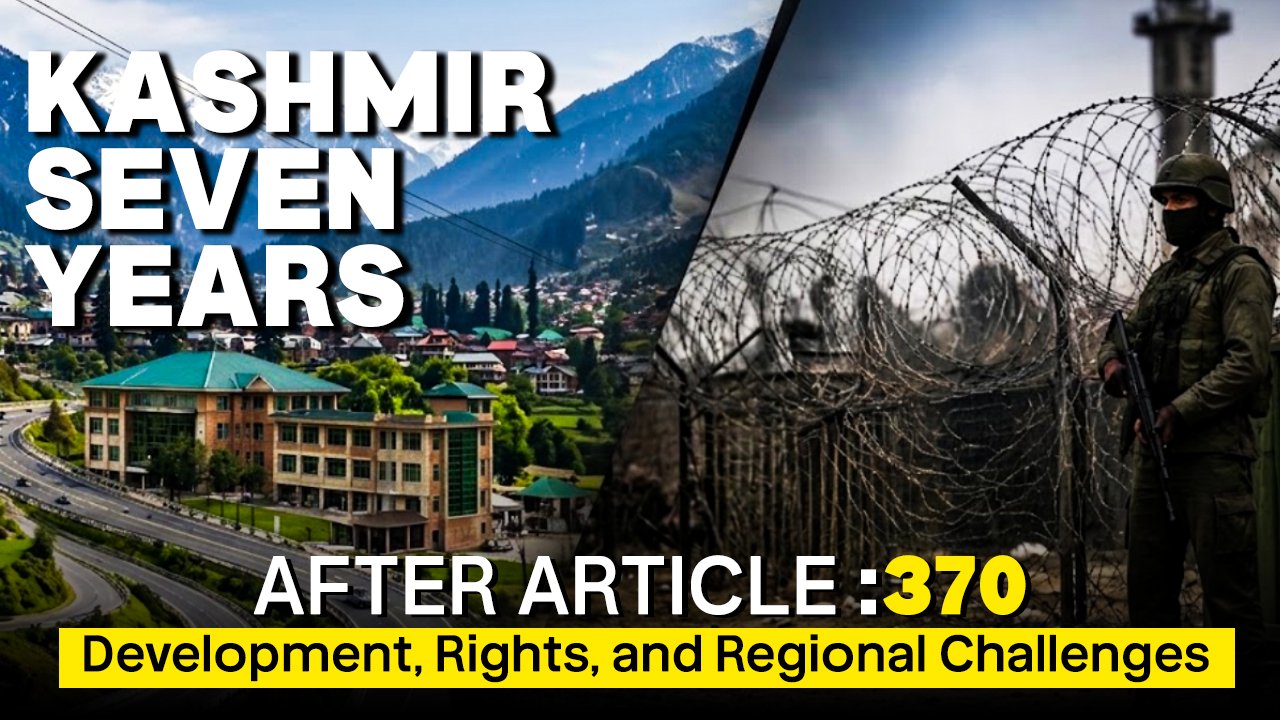
Pakistan. On 5th August 2019, the government of India revoked
Article 370 that was introduced in 1949 and transformed the disputed region of
Jammu and Kashmir into two Union Territories. The act which India claimed was
necessary for development of Kashmir and its people. But from 2019 to the
present, one question arises that: Has Article 370 brought peace and stability,
or has it amplified political concerns and humanitarian challenges in the
valley? Article 370 that granted Jammu & Kashmir special autonomous status
which gave the right to have its own constitution and legislature. With the
revocation, the Indian constitution became fully applicable in the territory
and Parliament assumed greater legislative powers.
India’s stance was that the change would improve governance and continue to promote development, the special status restricted economic progress, that encouraged terrorism and separatism. Indian officials also claimed that the revocation of Article 370 would increase employment opportunities that improve infrastructure and bring long term stability. But after the revocation Kashmiris suffered from many difficulties, which brought loss of lives, infrastructure destruction, internet shutdowns, blockade of roads, schools and all businesses. Some senior political leaders like Farooq Abdullah, Omar Abdullah and Mehbooba Mufti were also among those who were detained in the initial months after August 5.
According to Human Rights Watch, high speed mobile internet was
suspended for about 500 days, and it is one of the longest internet shutdown in
the world. Report stated that the
restrictions affected school classes, online business, hospitals, banks, journalists,
the economy, and vulnerable populations were particularly hard hit. Human
rights groups have also raised concerns about the prevailing situation in the
region. According to Amnesty International’s 2022, “We Are Being Punished by
the Law”, reports noted a review of 1,346 habeas corpus petitions filed with
the High Court of Jammu and Kashmir and Ladakh noted, and the figure had
increased by 32% in the region since 2019. Further pointed out that, on 4
August 2022, only 14 of the 585 habeas corpus petitions filed during that year
had been disposed of by the court, that is raising concerns regarding delays in
judicial review. According to National Crime Records Bureau (NCRB) revealed a
12% increase in the use of the Unlawful Activities (Prevention) Act (UAPA) in
the region after the August 2019 decision.
Amnesty argued that, such reliance on pre- emotive detention, and anti-
terror laws, all raise concerns about the access to justice and the protection
of human rights.
In light of these concerns Amnesty International stated: “The Indian authorities must end their campaign of harassment and intimidation against dissenting voices. The people of Jammu and Kashmir must be able to exercise their right to fully participate in the decision making about their future in the run up to, during and after elections.” The Indian government claims that has brought the constitutional changes that had led to significant improvements, including security, tourist activity, road infrastructure and investment opportunities. Officials argue that full integration of Jammu and Kashmir to the Indian Union created the environment for economic development and governance.
The United Nations also expressed concerns over the humanitarian
situation after the revocation. The constitutional changes in Jammu and Kashmir
also created issues under international law. The UN also raised human rights
concerns that prevailed after the revocation of the article. The Secretary
General of the UN Antonio Guterres spoke on August 7, 2019, about the tensions
in Kashmir, “We are following with concern the tense situation in
Indian-controlled Jammu and Kashmir and call on all parties to exercise maximum
restraint. It Is important that the human rights of the population are
protected and all efforts are made to prevent actions that could escalate
tensions.
UN Human Rights Office and High Commissioner for Human Rights
(OHCHR) had published reports in 2018, ‘The human rights situation in Kashmir’.
Based on allegations from July 2016 and April 2018,” The report claims to
documents about the atrocities allegedly committed on both sides of the Line of
Control. The report expresses concern about the alleged rights abuses and want
accountability.
The state of Kashmir Is still characterized by two competing
narratives even seven years after the revocation of Article 370, one focusing
on accession, security and progress According to Indian government and the
other reflecting concerns relating to fundamental freedoms, representation and
human rights. The prospect for long term peace requires ensuring security and
development along with rebuilding public faith and enhancing both democratic
structures and individual liberties while facilitating inclusive political
dialogue among all participants. Seven years after the revocation of Article
370, the future of Kashmir remains uncertain. Lasting peace will depend on
protection of human rights not on security and economic development.
_6784.jpg)