
In March 2021 a
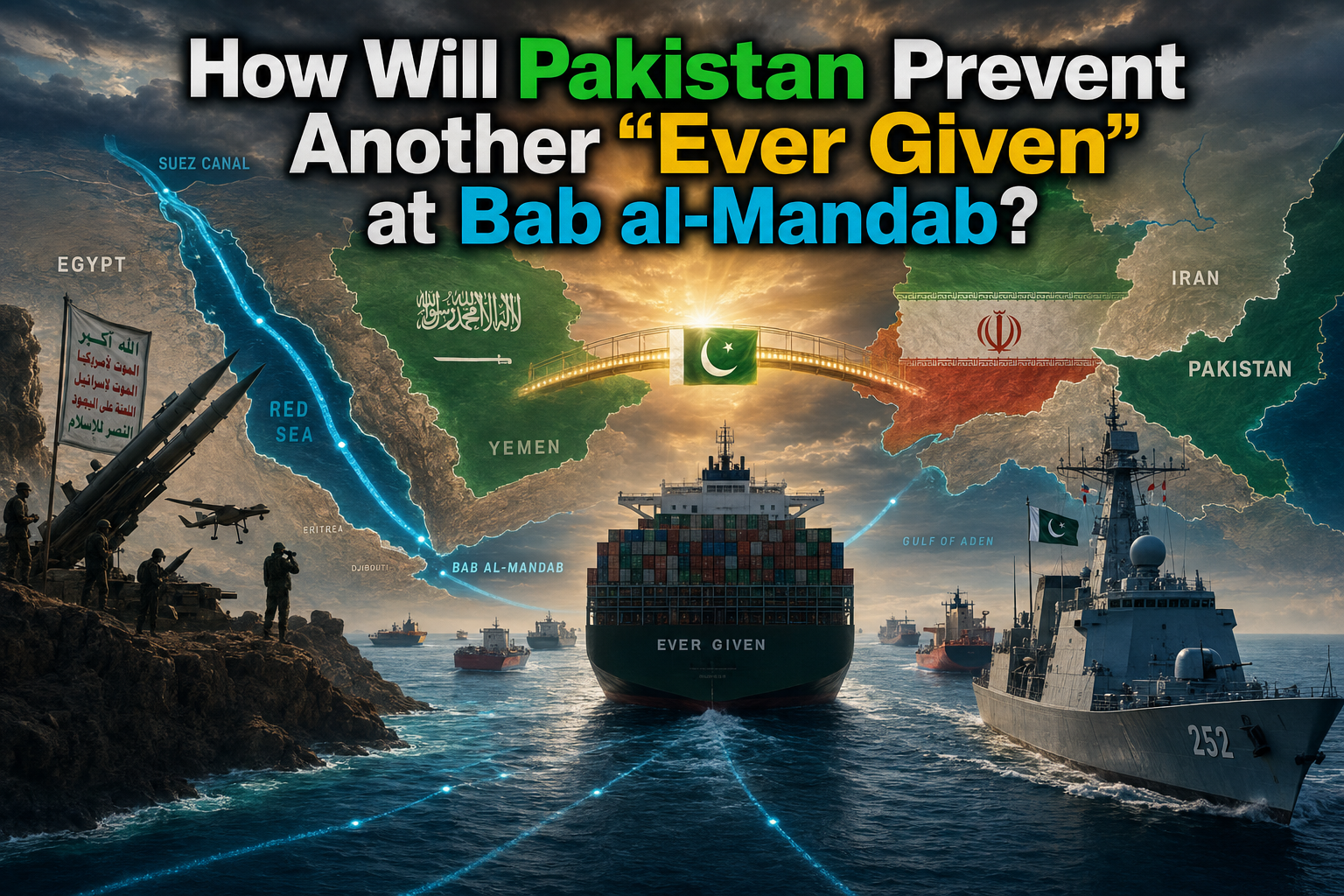
single 400-metre container ship, the Ever Given, wedged itself sideways across
the Suez Canal and shut down one of the world's busiest trade arteries for six
days. About $9.6 billion in global trade was estimated to be languishing every
24 hours it remained there and hundreds of ships were waiting on both sides of
the canal or around the continent of Africa. This crisis was a fluke. Today a
second choke point just south of Suez – the Bab al-Mandab Strait – is no longer
accidental, but intentional Yemen's Houthis have declared a naval blockade
against Saudi Arabia and ships have begun to turn back. The question that comes
to mind is if the region is veering toward another 2021 paralysis or even more
severely if Pakistan bound to Saudi Arabia by a mutual defense pact and to Iran
by decades of neighbourly ties can defuse the crisis without dragging itself
into war.
Bab al-Mandab is
not a backwater. It is the funnel which allows goods and energy to flow from
the Red Sea via the Suez Canal to markets in Europe and Asia and is the only
route through which 12 per cent of the world's seaborne oil trade passes
annually transporting almost a trillion dollars' worth of goods. The problem is
not just that the vessel has grounded it is that they are forcing it to ground.
The Houthis a week ago officially declared a state of maritime blockade against
Saudi Arabia, accusing it of blocking Yemen and striking the Sanaa airport and then stationed missiles and drones near
the strait in response. Not only have at least seven oil tankers already turned
around to avoid passing through the strait, but shipping-intelligence firm
Kpler noted that the traffic through Bab al-Mandab had dropped 34 percent just
one day after the blockade was announced. Saudi Arabia, on the other hand has
been directing an increasing percentage of its crude through the port of Yanbu
on the Red Sea which shipped about 240,000 barrels per day a year ago but now
handles some 3.5 million bpd imports — how much more Riyadh is rerouting around
the threat instead of waiting to see if it comes to pass.
But Pakistan is
not a silent bystander in this equation. The attack on one is an attack on the
other as per the Strategic Mutual Defence Agreement signed with Saudi Arabia in
September 2025, the most binding formalization of the defense relationship which
goes back to late 1960s when Pakistani troops were deployed in Saudi Arabia.
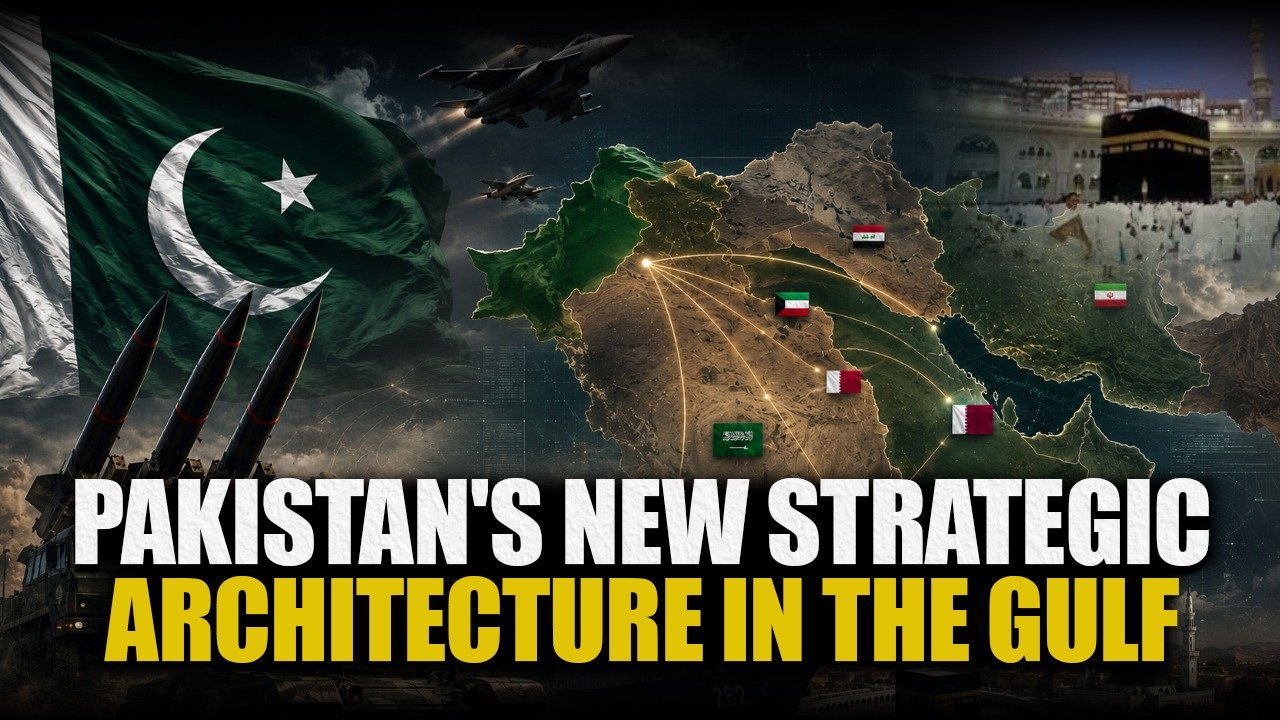
That has since turned into reality: Pakistani forces have recently deployed
8,000 soldiers, two squadrons of drones and a Chinese-provided HQ-9 air-defense
system in addition to thousands of troops already in Saudi Arabia, among 16
JF-17 fighter jets. In addition Pakistani warships have also reportedly been
deployed, with Pakistani troops already standing on the Saudi-Yemeni border so
that Islamabad's forces are not on the periphery of any escalation but in the
immediate zone.
But on naval
capability local military experts are not alarmist but wary about how much
further this might go. A Saudi retired air force general, on the Houthis' own
capabilities said that the movement can stage a threat on shipping but at the
moment it has not reached the level it once had to close such a strait. That's
also what matters in Pakistan's calculus: its naval and air assets in the Gulf are
being positioned as an advisory, deterrent and training presence and not a
posture of war against Yemen a distinction Islamabad is trying hard to maintain
as deterrence and provocation don't sit well together in a live crisis.
The complicating variable
is Tehran. Pakistan has a 900-kilometre border with Iran and is the only
regional player to have a working relationship with both Washington and Tehran
at the same time. But Pakistani officials were involved in previous ceasefire
talks and a memorandum of understanding between the United States and Iran made
in Islamabad this year hosted the first direct talks between Washington and
Tehran since 1979 and despite the ceasefire collapsing and fighting again
breaking out have persisted with the shuttle diplomacy. Just this week, Iran's
interior minister met the Pakistani prime minister and the army chief in
Islamabad, which both sides announced in public statements that Pakistan's
mediation process is open. Pakistani analysts see this as a near one-of-a-kind
scenario of being trusted by Tehran to mediate and at the same time having
treaty obligations to Riyadh.
Here lies the
only real proof of Pakistan's non-military outcome apart from their words of
course. Pakistan has consistently opted to condemn attacks from any quarter,
including the Iranian attacks on the Gulf states and Saudi or American attacks
against Iran. Pakistan has repeatedly taken a noncombatant position in
condemning attacks from all directions when it has taken an oath to defend Saudi
Arabia. Even as the Houthi crisis escalated Pakistani authorities have
maintained that de-escalation and dialogue are the policies in force, and
retired military officials have spoken out that Islamabad is sticking to the
policy of restraint for the time being. The foreign office has even stated that
its diplomatic push "remains relevant" and could still be the basis
for a new round of negotiations after the first ceasefire collapsed. Creating a
lasting peace in the region is a huge benefit to Islamabad, and this is
especially true for a state whose finances are tied closely to the remittances
of its citizens working in the Gulf, and to regional stability overall.
A balanced
account of this crisis should recognize the analysts who are not smart about
Pakistan's situation but rather a dormer. Critics allege that the same S.M.A.
which is a source of leverage for Pakistan is the source of its entrapment. The
pledges of the Houthis' offensive against Saudi Arabia may force Islamabad to
choose a side in the conflict compromising its position as Iran's trusted
mediator. Some regional analysis has been more forceful, arguing that
Pakistan's position as a Saudi security ally and US-Iran mediator is an untenable
one and that of course may end up in a shootout with its troops along the
Yemeni border. Other analysts put it even more starkly: as the Pakistani
military begins to play a larger role in the Gulf, the nation's influence is
rising, but so too is its vulnerability; and, in private conversations,
Pakistani officials concede that they have less leeway to maneuver the more the
crisis continues.
But against the
track record of diplomacy the more consistent message that has emanated from
Pakistan's conduct in the last few months is about de-escalation not
confrontation. It is because of Pakistan's simultaneous credibility with
Riyadh, Washington and Tehran that it did not take the final step from the
mediator to the combatant even when treaty commitments and deployments of
troops put pressure on it. For Pakistan there is no better course of action and indeed no more consistently defined than to continue to serve as the last bridge
between the warring factions in Bab al-Mandab without joining in with the
fighting. Islamabad's concerns about peace in the Red Sea are more than a
diplomatic goal they are regularly put forth at the highest levels as the
country's primary strategic priority.

_6784.jpg)