These are
the recurring issues in Pakistan's education debate out-of-school children,
teachers' shortage, curriculum reforms examination system funding. Another
issue is quietly threatening learning in classrooms nationwide the unchecked
use of smartphones. Students' mobile phones have become part and parcel of the
most prestigious private schools in Karachi, Lahore, colleges and universities
in Islamabad and Peshawar. Digital technology is a means of making information
and learning available, but it has also created an unprecedented degree of
distraction. Notifications disturb lessons, social media takes up more of
students' time than teachers do and engagement in the classroom has been
compromised by screen time.
With the
process of education system modernization in Pakistan driven by the National
Education Policy Framework, the Single National Curriculum (SNC) reforms and
the Digital Pakistan project there is a need to consider an idea that is
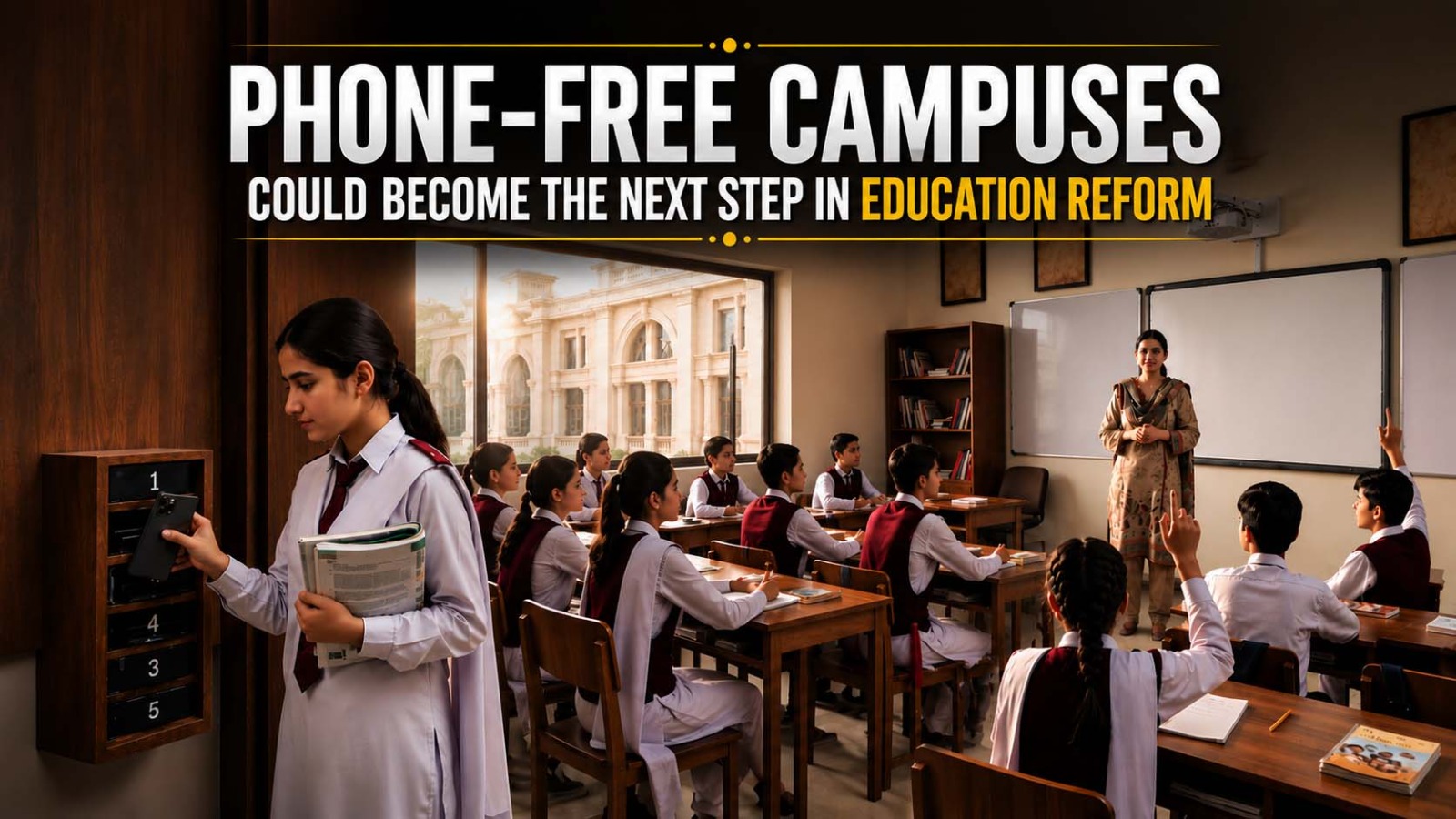
spreading across the globe phone free campuses. In her article “It Turns the
School Community Around” Teachers Reflect on Phone-Free Campuses published in
Education Week Sarah D. Sparks chronicles how schools around the country have
made a phone-free campus a reality by stepping in to limit students' access to
smart phones during school hours. Students' attention is captured, and
classrooms are more serene teachers report as school communities find a sense
of real human connection once more.
Indeed, much scholarly work has been done on the country's learning crisis and it is a fact of life. Students' difficulties with foundational literacy, numeracy and critical thinking skills have consistently been identified in national and international assessments. While the debate on the curriculum content or the examination reform is often in the public agenda more attention is given to what is happening in classrooms every day. No matter how good a program is if students are distracted when they're either thinking about a lesson or their phone it won't work. This is an emerging trend among teachers in all parts of Pakistan. Students use social media during lectures, message under their desks, use AI apps to finish tasks without learning concepts, and become distracted after just a few minutes of teaching. Great time is lost in the classroom when a student is reminded to put away their phone, rather than learning what was being taught. This is not a negative comment on technology. However, Pakistan should still invest in digital education, artificial intelligence, computer programming, and online learning to equip the youth for the evolving global economy. The challenge is to make sure that technology does not supplant attention and curiosity and meaningful engagement in learning.
Technology is not prohibited. Rather, they create structured boundaries. Digital devices remain in the students' possession when they are deliberately used in lessons, however in the course of regular lessons phones are stored away. This basic distinction enables schools to benefit from the advantages of technology without the disadvantages. The encouragement of face-to-face communication is one of the more interesting trends that Sparks has pointed out. At recess, the students do not focus on their screens anymore and they converse, debate, engage in physical activities and make friends. Classroom relationships and sense of community are improved.
The lesson is especially pertinent in the Pakistani context where schools have historically been a key component in nurturing social values, teamwork and civic responsibility. Education is not just the imparting of knowledge it's also building character, empathy and communication. It's actually these qualities that grow strong when people interact with one another, not when they scroll and scroll. There's a mental health component as well. As in most countries across the globe Pakistani teens are becoming more exposed to the pressures of social media, such as experiencing cyberbullying, experiencing anxiety, digital addiction and unhealthy comparison. Constant notifications will deprive students of the opportunity to reconnect with their environment their peers and themselves and that's a good thing to have.
Critics say that parents should be able to get to their kids in emergencies. This issue should be taken into consideration and is not insurmountable. For decades, there was a good level of school functioning via administrative communication channels. Where necessary, parents can continue to reach out to students through school offices, and/or for genuine emergencies, there is an organized institutional response, rather than relying on individual mobile phones. Others contend that today's students must learn to use technology responsibly rather than avoid it. This is true. Digital citizenship must continue to be a part of the modern classroom. Teaching responsible use of technology does require teaching when to not use technology, however. The ability to focus without the distraction of digital devices is a 21st-century skill in and of itself.
With increasing evidence of the negative impact of excessive smartphone use on concentration academic achievement and student well-being, several countries such as France, Italy, parts of Australia and some parts of the United States, have implemented some restrictions on the use of smartphones during school hours. Pakistan does not have to implement these models in their entirety but can draw lessons from their experience. Education reform is frequently linked to a huge investment in buildings and staff development or the overhaul of curriculum. But some of the better reforms are very simple indeed. It isn't a massive financial investment it just takes time clear policies, school leadership and teacher support parental engagement and consistency to create distraction-free classrooms.
Provincial Education Departments Examination Boards and the Higher Education Commission in Pakistan should think about implementing pilot phone free campus programs in selected public and private educational institutions. The effects on the classroom participation academic achievement student behavior and mental health of their implementation should be carefully assessed before they are implemented more broadly. Such reform if implemented, could be one of the most feasible and economical ways to enhance classroom learning. Pakistan cannot afford further lost generation of students. In a world that is becoming more competitive attention itself is one of the most valuable resources in education as the country strives to enhance educational quality and prepare the nation's youth for a more competitive world. The classroom should be a forum for ideas to compete, not notifications. A phone-free campus doesn't mean that the digital future is being rejected it's about investing in the thinking ability engagement and learning of the digital future. When education reform means better learners then minimizing digital distractions may be one of the shrewdest reforms that Pakistan can make.



_6784.jpg)