The
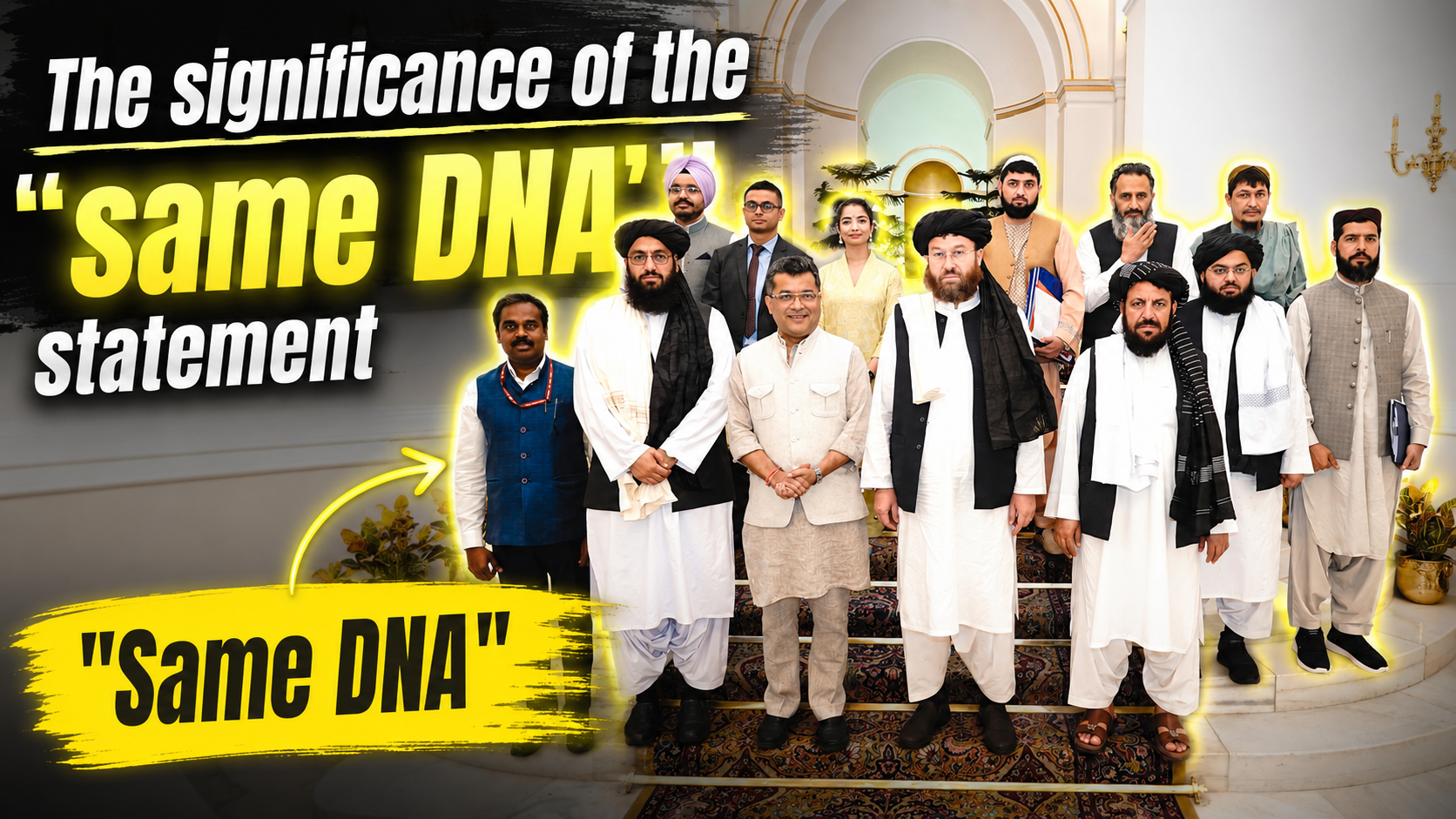
assertion that Afghanistan and India "have the same DNA" is just a
diplomatic measure, sometimes, when a minister of agriculture, irrigation and livestock
Mawlawi Attaullah Omari makes it in front of a trade audience in New Delhi this
week. The words are heard differently when read from Pakistan a nation on the
border with Afghanistan where the border has seen decades of instability and
refugee movements and where a resurgent TTP insurgency is sweeping through.
The
underlying purpose of Omari's visit, his first to India was agricultural
cooperation, in the fields of wheat seeds modernization of livestock and the
fact that 80 per cent of the Afghan population was dependent on agriculture for
their livelihood. He met the Minister of Agriculture of the Union Government
Shivraj Singh Chouhan twice and the two discussed a broad range of bilateral
cooperation on connectivity trade education and healthcare among others. On the
surface this appears as a typical neighborly affair. In reality it was the
newest and most publicly emotional sign of a relationship that New Delhi has
been cultivating with the Taliban regime over the past few months despite
refraining from officially recognizing the government.
That seeming
paradox is something to meditate on. India has not acknowledged Taliban as the
legitimate government of Afghanistan, which is followed by majority of the
world. But it is home to the Taliban's ministers, is talking about trade
corridors and now it's receiving international flattery for its shared “DNA”
from a government that gained power by force, and remains the focus of
international concern for its human rights abuses against women and minorities.
Meanwhile the same Indian government under the BJP, had come under criticism
from members of its own Muslim minority as well as civil society and
international human rights groups for its own actions against Muslims such as
the citizenship laws widely regarded as discriminatory and communal language
being used by some party leaders. That's an uneasy balance between Pakistan and
most of the rest of the world the warmth shown to an Islamist government in
Kabul while Pakistan's domestic policies are accused of leaving Muslim citizens
and rights groups feeling marginalized at home
But for
Islamabad it is more about strategy than rhetoric. Pakistan has levelled
repeated accusations against the Afghan Taliban for not controlling the
militant group known as the Tehreek-e-Taliban Pakistan which has been behind a
spate of attacks on Pakistani soldiers and civilians in recent years. Pakistani
officials have taken it one step further claiming that Indian intelligence has
sponsored proxies in Afghanistan against Pakistan which New Delhi and Kabul
deny, but which has become common knowledge in Pakistan's security
establishment. Therefore each new India-Afghanistan handshake in New Delhi is
viewed in Islamabad not as a new development in a region's economy but as a
tightening grip a historically challenging neighbor honing influence in a
neighbor that Pakistan has worked so hard for decades to stabilize at a high
cost.
The
Islamabad Center for Education and Peace (ICEP) does not share the uncritical
optimism of some analysts regarding this new partnership. The language of
"shared DNA" used in New Delhi this week doesn't necessarily pose a
problem in ICEP's view as cultural and civilizational ties between the two
countries are a historical reality that do not pose any threat to anyone. What
worries ICEP is the diplomatic hug which has been at least lavishly extended to
the Pakistani government and the conspicuous silence on Islamabad's
well-meaning complaints on security issues at various regional forums. In
keeping with ICEP's ongoing research on ethical persuasion and enduring peace
ICEP's stance is that any rhetoric that fails to hold up to full disclosure in
this case the unanswered question of whether Kabul's soil is being used against
Pakistan doesn't serve to promote the kind of regional trust that can endure
beyond the duration of one press conference. If someone is living on the basis
of warm words and security issues of a third neighbor are not being discussed
it is not peace building, but selective diplomacy and selective diplomacy often
does not result in peace. ICEP urges all three capitals to take the necessary
steps from verbal to concrete and measurable commitments on cross-border
militancy and not let the goodwill gesture take the place of the difficult
arduous efforts of the trilateral security dialogue.
This is the
conundrum that regional peace builders are now faced with. The trade seed
technology and market access that India is providing are genuinely needed by
Afghanistan and isolation of Kabul is doing nothing for the people from the
food shortage in Afghanistan. Pakistan on the other hand has legitimate
concerns regarding cross-border militancy which could not be ignored. But a
diabolical lexicon based on common "DNA" and civilizational
connections selectively invoked towards one neighbor and not yet entirely
resolved in terms of domestic minority relations, is not much to make Pakistan
feel rest easy regarding this young relationship. Language is important for
diplomacy exactly because it conveys something more than the words in any trade
communiqué.
As in all
claims in this region the only true test is who says they feel most at home in
whose country but what is done in their name? Is the Indian government speaking
out and consistently pushing the Pakistanis on anti-Pakistan militant hideouts
in Kabul as it expects to do against those threatening its own interests? Does
the Taliban government give Pakistan the same assurances of border security
that it extols rhetorically to New Delhi today? Islamabad's response is so far
that the warm rhetoric in Delhi has not yet turned the temperature down along
their borders of Khyber Pakhtunkhwa and Baluchistan where TTP attacks have not
slowed down significantly.
This does not mean that there is anything wrong with India-Afghanistan
engagement is legitimate between two sovereign states they can have what they
want. However regional peace cannot be achieved through a single bilateral
friendship it relies on the extent to which all three capitals are prepared to
discuss the security issues raised by each rather than just exchanging
compliments and hopes. But until now Pakistan's doubts about the "same
DNA" talk is not paranoia. It is a lesson learned over many years on the
border and where conflicts over the region have been left unsolved by a series
of trade delegations that are meant to be washed in the wash racks. It is a
lesson learned over many years on the border where conflicts over the region
have been left unsolved for a lot longer than any photo op can make up for. A
more balanced account would also highlight another side of the story India's
and Afghanistan's that sees the outreach as more of a humanitarian and economic
approach than a hostile one against Pakistan and Kabul's denials of the
presence of anti-Pakistan militants and the assertion that it would not allow
its territory to be used against any other neighbor.
_6784.jpg)