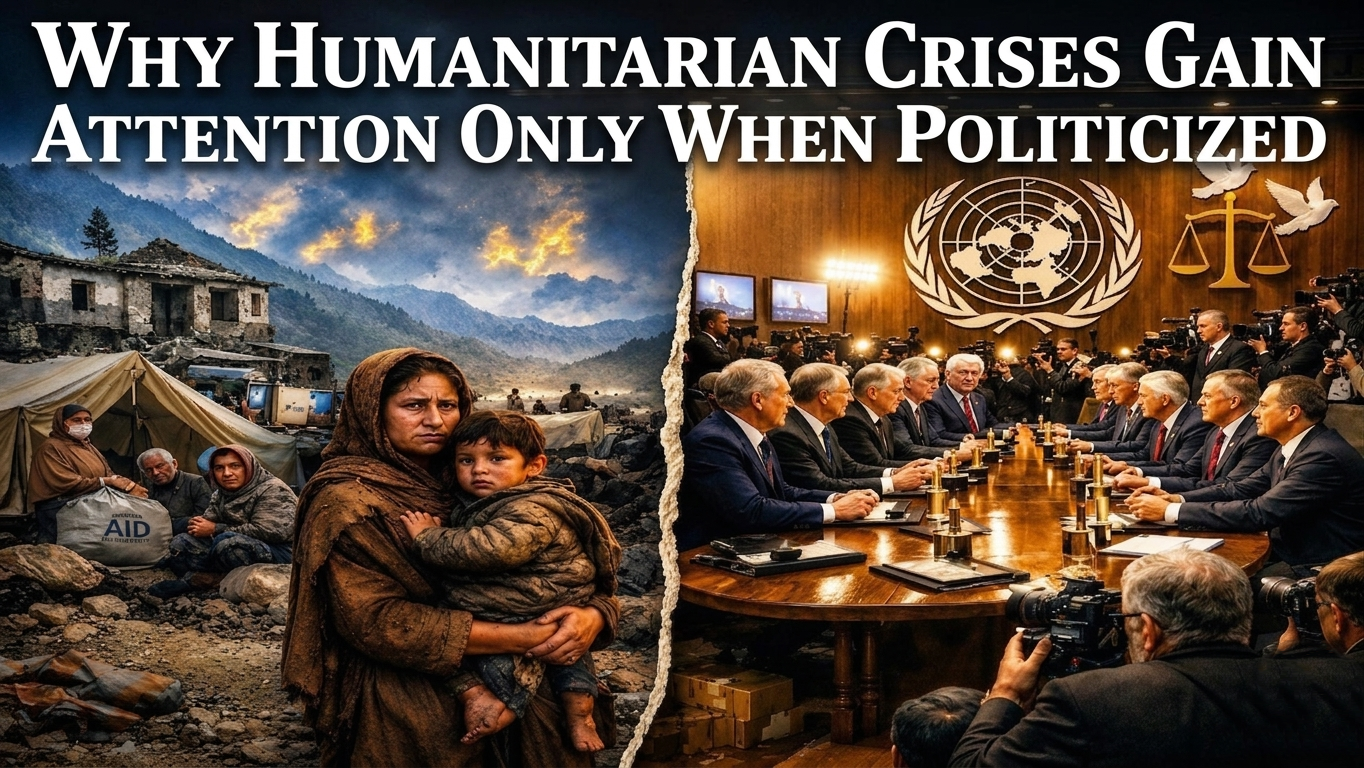
Suffering is another constant aspect of human experience, but not all sufferings receive the same level of attention and care. Indeed, around the world, many people have lived through violence, displacement, poverty, and insecurity for years without any international attention until these became matters that involved politics and security. This troubling trend can be seen in places such as Khyber Pakhtunkhwa, specifically in regions affected by militancy and displacement like Swat and Federally Administered Tribal Areas (FATA). There, civilians lived under years of violence and insecurity as their houses were razed to the ground, their schools closed, and their lives uprooted; nevertheless, no attention was paid to their humanitarian crisis until it became a matter of national and international security. In particular, the military campaign against the militants in Swat between 2007 and 2009 created an internal displacement crisis in Pakistan, one of the largest in its history.
An important example of this is the Kashmir
dispute. For many years now, the people of Kashmir have suffered through
humanitarian issues characterized by armed conflict, militarization,
curtailment of their freedoms, abductions, and displacement. In spite of this
suffering in terms of breaches of basic human rights and international
humanitarian law, the world continues to show interest in this conflict at
different levels of intensity for various political and strategic reasons,
rather than due to humanitarian concerns. The issue of Kashmir reveals the
general ineffectiveness of the international community in respecting and
upholding values reflected in international laws such as the Geneva
Conventions, whose main focus is civilian protection, and UN resolutions which
emphasize a peaceful solution and the protection of human rights. There is
always a violation of IHL and human rights law in situations of conflict such
as those of Kashmir and Swat. Despite the fact that states parties to these
conventions are supposed to offer protection regardless of whether the conflict
is political or otherwise, there remains inconsistency in the implementation of
these values.
A crisis
that is linked to issues of national security or political interests will be
covered more extensively than others that may be less significant politically,
highlighting the uneasy connection that exists where political concerns
override humanitarian obligations. It is required under international law that
the suffering needs to be responded to without bias and with humanitarianism.
The principles of humanitarianism require the process
to be neutral and non-political in nature, but in actuality, humanitarianism
and diplomacy are intertwined. For
instance, the problems faced by the families in Swat or the Kashmiri population
that finds itself at the receiving end of constant warfare do not need any
political perspective for humanitarian assistance to be extended to them. It
has been stipulated under international law that the civilian population and
aid should be provided without political motives. The element of media adds
another dimension to the situation. In the era of media, the media dictates the
urgency of situations. Crises that occur suddenly and generate media attention
receive temporary prominence and then fade out after losing media focus.
Consequences of selective empathy are dire. The
populations which have been ignored by the world’s bodies develop a sense of
distrust for both the bodies in question as well as their actions. They see
their suffering as pertinent only because of the threat they pose to the
political structure in place. Thus, the cycle continues leading to instability
and prolongation of conflicts. To counter this trend, one needs to accept the
non-compromising distinction between humanitarian duty and political
pragmatism. It is the responsibility of all stakeholders to acknowledge this
fact and ensure that international bodies and states alike follow international
law without fail and provide aid and assistance without any political
considerations but from an ideological standpoint.Media coverage needs to
continue regardless of political significance while military operations should
be combined with rehabilitation, education provision and civil protection of
the people in need of assistance. More importantly, humanity in general needs
to develop empathy and come to the rescue before things get political.
There
exist international laws with mechanisms intended to provide safeguards for the
safety of civilians, ensuring that humanitarian aid is granted, and helping in
the resolution of conflicts in a peaceful manner. However, the lack of
enforcement by the international community of these values ensures continued
conflicts, as well as a global mistrust of international laws. It should be
noted that allowing situations where human tragedies lead to humanitarian
interventions only goes against the essence of human rights. The conflicts in
Swat, Kashmir, and elsewhere call for immediate action to adhere to the law and
respect human lives.
In a nut shell, the
problem here isn’t whether the world has the necessary legal instruments to
deal with humanitarian emergencies; it has such instruments. The problem lies
in whether or not the world has enough political determination to treat all
situations on an equal basis. Until such a time when the humanitarian problem
takes precedence over politics, thousands of individuals shall suffer violence
and injustice in silence. Swat and Kashmir are reminders that humanity needs to
have its worth recognized regardless of any political considerations. A more
humane international system will have to intervene prior to such crises turning
political.
Disclaimer: The views expressed in this article are solely those of the author and do not necessarily reflect the position of ICEP.
_6784.jpg)