Top Stories
Building Bridges Through Words Understanding Militant Ideologies in Modern Contexts Security: Beyond Walls and Weapons Upcoming Events: Connecting Ideas and People Previous Milestones: Reflecting on Our Journey Fatwas: Reclaiming the Spirit of Ethical Guidance Role of NATO in Conflict Resolution Washington Peace Deal Between Congo and Rwanda Social Justice and Equality in the Qur’ān: Implications for Global Peace The Qurʾānic Concept of Human Equality: An Analysis against Racism and Ethnic Discrimination in Contemporary Societies Reinterpreting Dhimmitude: A Reconsideration of Its Social and Political Functions in the Modern Context How China Is Playing the Long Economic War Ukraine Peace Efforts Advance Cautiously Despite Partial Alignment Among Parties How Pakistan-Libya Military Relations Strategic Outreach, Economic Stakes and Geopolitical Implications Aleppo Clashes as Syria and Kurdish-Led SDF Agree to Ceasefire Across the Border, Pakistani Ulema Stand Against Afghan Girls\' Education Ban Pakistan announce 500 fully-funded scholarships for Bangladeshi students in 8 programs How theTaliban regime threat for reginal peace Women Left Behind in Khyber Pakhtunkhwa’s Education System Sudan’s Civil War: Anatomy of the World’s Largest Humanitarian Crisis Changing Security Architecture in Central Asia Pakistan Leads India on Economic and Peace Indicators in 2026 : Gallup Survey Submerged Classrooms, Long-Term Learning Loss Pakistan Security Report 2025: Terrorism Trends and the Peace Deficit HEC’s MAKTAB Initiative Signals a New Era for Higher Education Southern Yemen Faces Tensions and Urgent Need for Peace IUT Strengthens Education Integrity in Bangladesh Pakistan’s Arms Sales Contracts (2024–25) and the Peace Dimension Pakistan\'s Contribution to UN Peacekeeping Operations for Global Peace Pakistan Enhances Educational Cooperation with Sri Lanka through Scholarship The Growing Defense and Economic Nexus of the Muslim World Charter of Trump’s Board of Peace Pakistan & Myanmar Prioritize Education Strategic Saudi defense agreements are redefining the Middle East\'s security architecture What would be the consequences of the U.S.–Iran Conflict on Pakistan? How Indian Cricket Politics Affect Regional Peace The Kashmir issue remains a central peace and stability in South Asia American Weapons in Afghanistan Are Destabilizing Pakistan Global Education Coalition sixth annual meeting A New Chapter for Pakistan’s Universities: Leadership, Stability, and Vision under the New HEC Chairman The Evolution of the IMCTC into a Global Security Pillar Reintegration Initiative: Analyzing the 2026 IMCTC Engagement in Pakistan Psychosocial Warfare and the IMCTC Peace Journalists Initiative (2026) The Concept of ‘Ummah’ in the Qurʾān: Transcending Race, Tribe, and Ethnicity HEC Reforms Regulation, Defends Academic Freedom Pakistan’s Evolving Role in Fostering Peace and Security on the African Continent Recontextualizing Pakistan’s Role in the Board of Peace War in the Middle East: Measuring the Cost The Silent Bridge: Pakistan’s Strategic Neutrality and the Quest for Middle Eastern Stability The Geography of Escalation: Living in an Age of Permanent Crisis Mapping the Educational Crisis in the Middle East Conflict The Blind Alley of “Epic Fury”; A War with no End game A Pakistani Voice Against Digital Islamophobia: A Landmark Academic Contribution World Eye on Pakistan for Middle East Peace Leading with Truth, ICEP’s Analysis Outlasted the Skeptics on Middle East Crisis World Powers Push for Deal U.S. Presents 15-Point Plan and Iran Responds with 5 Conditions Pakistan and Türkiye Open New Chapter in Academic Cooperation with Strategic Initiatives Pakistan at the Crossroads of Global Trade as a Logistics Revolution Unfolds Why Ethical Dialogue necessary in a Diverse Pakistan for a Peacebuilding Initiative Pakistan\\\'s Game-Changer Role for World Peace Entrepreneurship Education Is Shaping Pakistan\'s Economic Future Dr. Jamil Akhtar Featured in Prestigious Brill Encyclopaedia (2026) A Milestone in Global Interfaith Scholarship Peace Light in a Dark Night WAR RESHAPES PAKISTAN’S ECONOMY AND OPEN DOORS FOR INTERPRENEURS From Gaza to Lebanon: ICC, UN, and the Unanswered Duty to Prosecute Can Pakistan turn a temporary ceasefire into lasting middle east peace? Bridging the Gap: Confronting Education Inequality in Pakistan Hierarchical Culture In Pakistani Organizations \"How It Kills Innovation — and What Leaders Can Do About It\" Can Diplomacy Survive the Iran Crisis? Peace Efforts in an Age of Permanent Escalation Why are Peace Talks a US strategic priority? Features of Intellectual Property in the Age of Artificial Intelligence (In the Context of World Intellectual Property Day) A Global Forum for Peace, Governance, and a Better World (France\'s Landmark Contribution to International Dialogue) IS UAE WANT A \\\'CURRENCY SWAP\\\' WITH THE USA Energy War by Sea: The Hormuz Blockade Proves Oil is Still a Weapon The End of Strategic Dependence In Europe? Pakistan\'s Strategic and Structural Evolution from Crisis to Consolidated World Peace Silent Deterrence: Hangor-Class SSP-2800 and Undersea Strategy of Pakistan Inside the $9 Billion Prediction Market Revolution Pakistan at the Crossroads: Between Fragile Stability and the Weight of Structural Crisis WHY DIALOGUE FAILS IN CONFLICT ZONES; A LESSON FOR POLICY MAKERS The Crisis of American Legitimacy in the Post-Unipolar Era THE OIL CLUB UAE JUST QUIT Inside OPEC’s Biggest Defection in Decades — and What It Means for the World The Kashmir Dispute: International Institutional Failure and Humanitarian Consequences
Peace

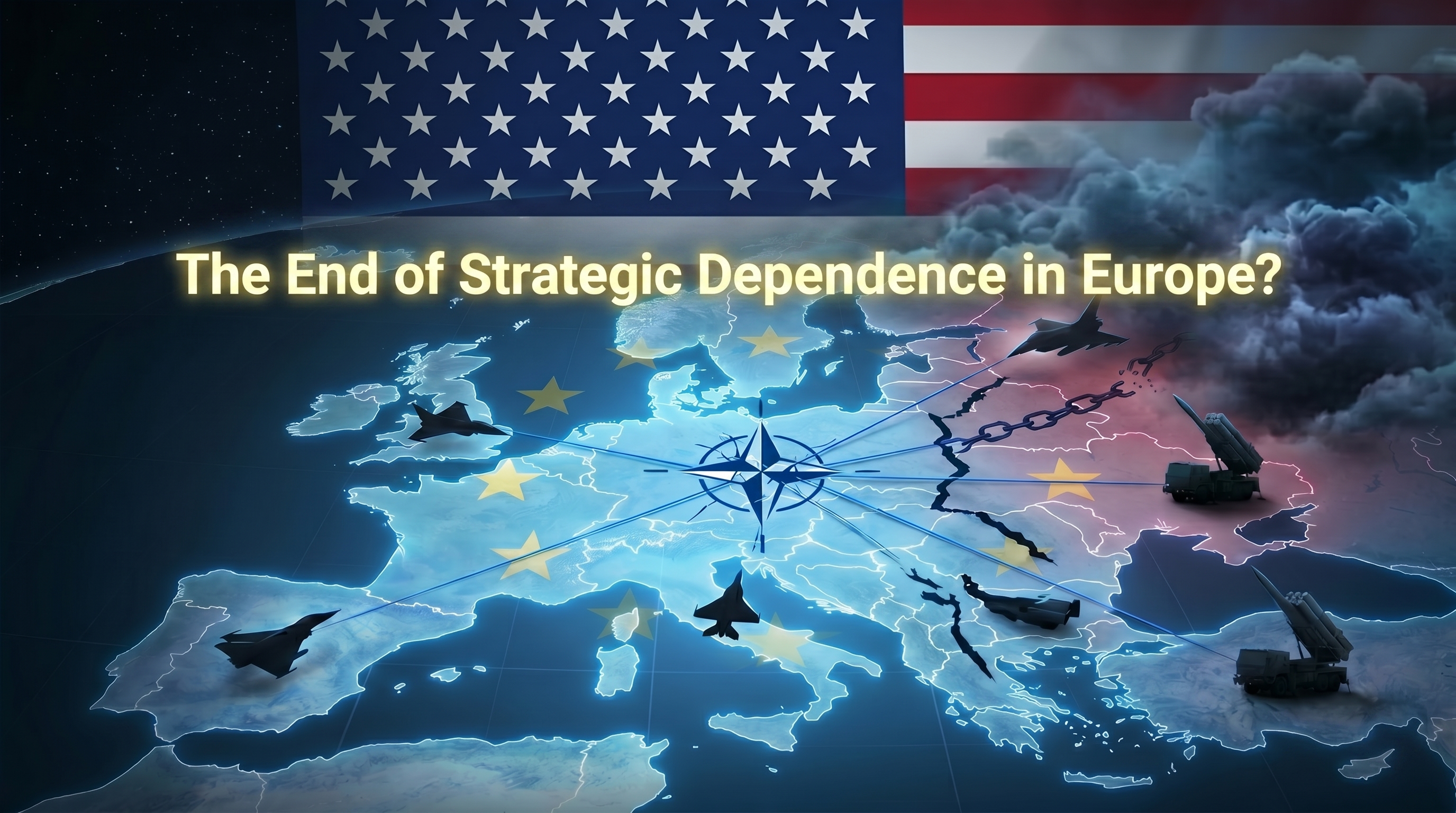
The End of Strategic Dependence In Europe?

The more Europe questions how it can protect itself, the more pressing the question of how Europe can defend itself. On 7 May 2026, the Stockholm International Peace Research Institute (SIPRI) hosted a panel at the German Forum on Security Policy in Berlin entitled "Military Assistance as an Instrument of Security Policy: Europe in Strategic Comparison to its Competition and the USA. It brought the leading researchers to discuss the issue of how the European Union is repositioning itself as a security actor at a time when American strategic priorities are changing, and traditional multilateral structures are straining.

Since its inception in 1966 to commemorate the 150 the anniversary of the continuous peace in Sweden, SIPRI has grown to be one of the most respected think tanks in the world regarding issues of conflict, armaments and disarmament. Headquartered in Solna, Sweden, it is a fully independent international research institute, with no government or political interference, offering information, analysis and recommendations, entirely based on open sources. SIPRI is most commonly known by its annual Yearbook - a complete evaluation of world armaments and international security that has become an indispensable resource to policymakers and researchers around the world. Its records on military expenditure and weapons trafficking are regarded as the ones of worldwide authority. It is exactly this reputation of independence and credibility that makes the voice of SIPRI at policy forums such as the German Forum, so consequential.

The German Forum on Security Policy is an annual conference organized by the Federal Academy of Security Policy (BAKS) and brings together government officials, military leaders, and academic experts to tackle the most pressing security challenges faced by Germany. The 2026 edition was held at Sachsenhausen Palace in Berlin on a tumultuous backdrop - the continuing effects of the Russian war in Ukraine, the strains of burden-sharing in the NATO alliance, and the growing sense of uncertainty about the extent of American involvement in European security. The SIPRI panel lasted one hour, between 11:00 and 12:00, and was held in German. It was also livecast to communicate with international viewers. The discussion was chaired by two SIPRI researchers: Pieter D. Wezeman, a Senior Researcher and a globally recognized authority on arms transfers, and Katarina Djokic, a Researcher specializing in European security and defense policy, and the SIPRI contact in the event.

The most prominent part of the panel was the findings of a Stiftung Mercator-funded research project entitled "Safeguarding Common Interests: The EUs Military Assistance to Partner Countries." The project provides a logical approach to the analysis of the role and use of military assistance as a foreign and security policy tool by the EU, in terms of scale, geographic orientation, legal forms and legal frameworks, and strategic reasoning.

The discussion has been based on four themes, which are interrelated. First, the panel discussed the development of EU military aid - how the bloc has evolved since its early reputation as a primarily civilian power, into one increasingly willing to provide weapons, training, and defense capacity to the partner countries, most visibly through the European Peace Facility during the Ukrainian conflict.

Second, scholars have provided a strategic comparison with competitors and the USA, evaluating how the military assistance architecture of Europe compares to Washington and its peers in China and Russia, which have pursued their own security partnerships across Africa, the Middle East and across Central Asia.

Third, the panel discussed the pressure of US strategic reorientation - how changes in US foreign policy are driving Europe to the limits of its reliance on Washington, and what a more independent European security posture must look like in the future.

Lastly, the participants talked about the increasing role of robust alliances. Bilateral and regional security relations are becoming increasingly strategic as multilateralism wanes and bilateral and regional security relations grow in strategic importance. The inquiry is whether the EU is capable of forging partnerships that are not only reactive, but also coherent and long-term.

The importance of the panel lies in its introduction of independent, evidence-based research into the policy discussion at the most opportune moment. Instead of being motivated by political expediency, the discussion was rooted in empirical findings - a quality that is becoming more and more rare and precious.

The study challenges the European policymakers to become more strategic thinkers. In far too many cases, EU defense efforts have been at best reactionary to crises, and not the products of long-term vision. Mapping the military assistance of Europe against the help of its rivals and its most important ally, the project by SIPRI contributes to the formation of the analytical basis of a more coherent and proactive European security strategy.

The results should inform scholarly discourse and policy discussions in EU institutions and member states in the future. The questions posed by that one-hour panel in Berlin, of what the military can contribute, what strategic independence may be needed, and what the future of European security is, will continue to occupy the center of the most important debates in Europe of this century.