
The constant geopolitical earthquakes have
sent fierce shock-waves across the globe. Apparently, there is an old saying: “Amateurs
talk strategy, professionals talk logistics.” In the threshold of today’s
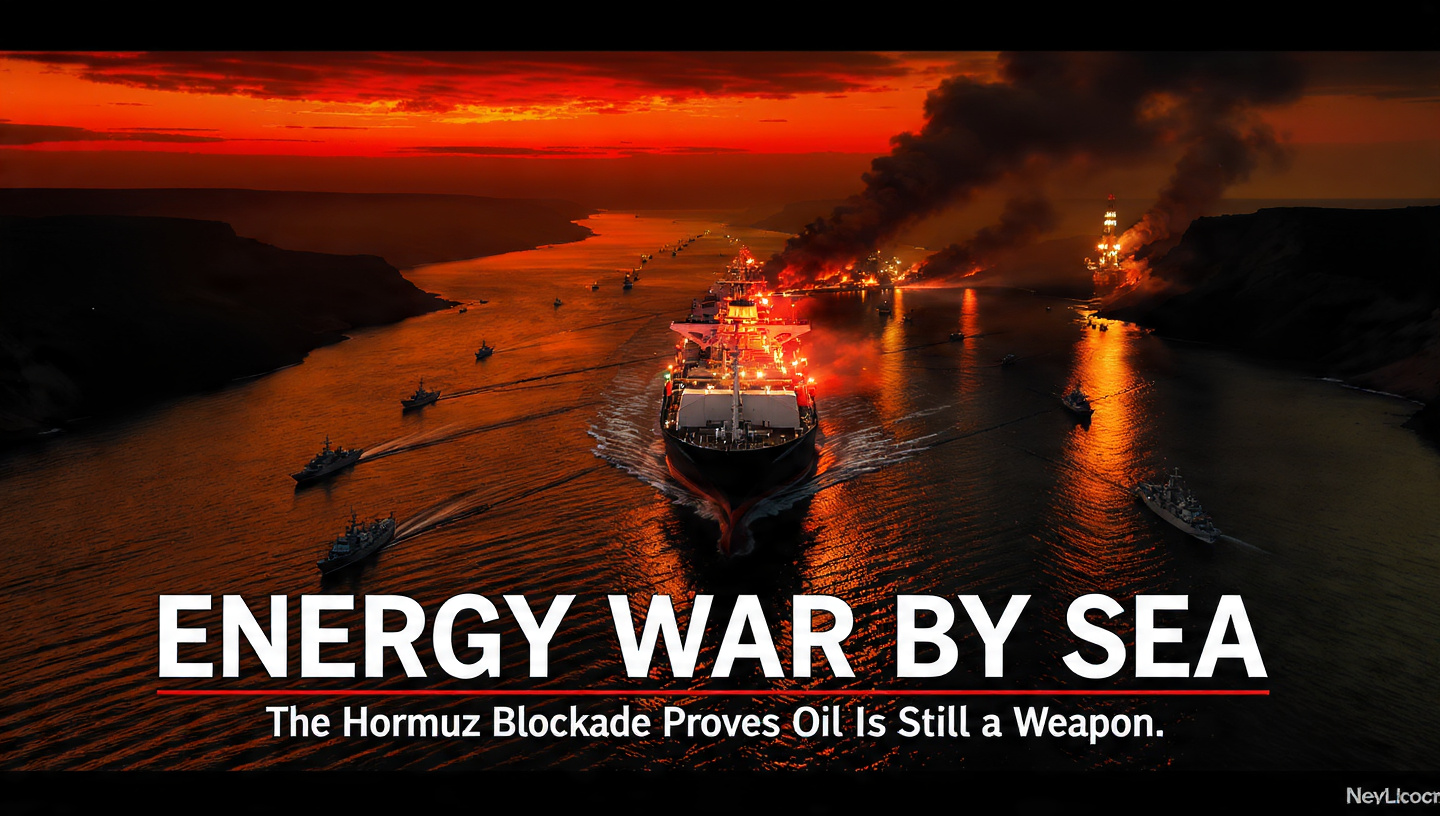
world, that logistics chain flows through oil and nowhere is it more visible
than in the Strait of Hormuz. While policymakers speak of green transitions and
sustainable futures, a single disruption in this narrow maritime corridor can
shake the global economy within hours. Suffice it to say, the world has been
clouding with grave uncertainities. And it is a stark reminder that oil,
despite all predictions of its decline, remains one of the most powerful
instruments of geopolitical influence.
Without any qualms,
the Strait of Hormuz is not just a water passage; however, it is the beating
heart of the global energy system. According to the U.S. Energy Information
Administration, nearly 20 to 21 million barrels of oil pass through this
chokepoint every day, representing around one-fifth of global petroleum
consumption. This includes exports from major Gulf producers such as Saudi
Arabia, Iraq, the United Arab Emirates, and Kuwait. Consequently, if Hormuz blocked,
the world slows down. History witnessed that even minor disruptions or threats
in the region have triggered immediate spikes in oil prices. Yet reflecting the
fragile nature of global energy security.
The concept of using
oil as a weapon is not new. The 1973 Arab oil embargo demonstrated how energy
resources could be leveraged for political objectives, leading to economic
crises in many Western nations. Today, the dynamics are more complex. Iran,
which borders the Strait of Hormuz, has repeatedly signaled that it could block
or disrupt shipping routes in response to external pressure or sanctions. Regrettably,
this dynamic is now being reflected in the ongoing US–Iran war.As it is alluded
that “Markets run on confidence, not
certainty.” The mere perception of risk in Hormuz is enough to send shock-waves
across global economies. As of
April 2026, the effective blockage of the Strait of Hormuz during the US-Iran
conflict has caused global oil prices to surge, with Brent crude
frequently rising above $90 to $100 per barrel, representing a significant increase
from previous levels. Simultaneously, leading to inflationary pressure
worldwide. Transportation costs rise, production becomes expensive, and the
burden ultimately falls on ordinary consumers. This interconnectedness shows
how a regional conflict can quickly transform into a global economic issue.
For Pakistan, the
implications are particularly severe. The country relies heavily on imported
energy, with approximately 80–85% of its oil needs met through imports as per the State Bank of Pakistan, 2024. A
disruption in the Strait of Hormuz significantly increasing import bills,
further straining foreign exchange reserves. Furthermore, Higher fuel prices directly
effecting into increased electricity tariffs that is fueling inflation in a country already facing
economic conundrums. In such a scenario, the phrase “when elephants fight,
it is the grass that suffers” becomes painfully relevant, as developing
economies bear the brunt of geopolitical tensions they do not control.
Globally, the impact
would extend far beyond South Asia. Strait of Hormuz has been unsettling the
geopolitical choreography of the world. At this point in time, the world is
unable to immune the far-reaching repercussions of its outright closure. According
to the International Energy Agency, nearly 90% of crude oil flowing
through the Strait of Hormuz is destined for Asian markets,
underscoring the region’s heavy dependence on Gulf energy. Including major
nations such as China, India, Japan, and South Korea . The current Hormuz blockade
is not only affecting their energy supplies but also disrupting global supply
chains, given their central role in manufacturing and trade.
In 2025–2026
estimates, China imported roughly 10–11 million barrels per day (mb/d)
of crude oil, with about 40–45% coming from the Gulf. In the same vein,
India relies on imports for
over 85% of its oil needs, a large share transiting Hormuz. Based on reports, fossil fuels still account
for nearly 80% of global energy consumption. Ultimately, highlighting the
continued dependence on oil despite the growth of renewable energy sources.
Critically it can be
argued that the Strait of Hormuz exemplifies the concept of a strategic
chokepoint in international relations. The immediate squeeze inflicted on the
global vital chokepoint has forced ships to remain at anchor. Control over such
a narrow and vital route provides significant leverage. Iran’s ability to
threaten closure acts as a deterrent against external pressure, while the
United States and its allies maintain a strong naval presence to ensure freedom
of navigation. This creates a delicate balance of power, but tensions always remain
persistently high as we can witness now.
As for as Pakistan
is concerned, the lessons are clear and urgent. Energy security can no longer
be treated as a secondary concern. Diversifying energy sources, investing in
renewable energy, and improving domestic production are essential steps.
Projects under the China-Pakistan Economic Corridor (CPEC), including Gwadar
Port, offer potential alternatives but are not yet capable of replacing
traditional supply routes. Long-term planning, regional cooperation, and
balanced diplomacy are crucial to reducing vulnerability.
In a nutshell, the
Strait of Hormuz stands as a powerful symbol of how geography and resources
continue to shape global politics. The idea that oil has lost its strategic
importance is, at best, premature. As long as the world remains dependent on
fossil fuels control over energy routes will remain a key source of power. As
the saying goes, “forewarned is forearmed.” For countries like
Pakistan and the wider international community, understanding this reality is
the first step toward building a more secure and resilient future. Yet fears
abound.

_6784.jpg)