Women’s
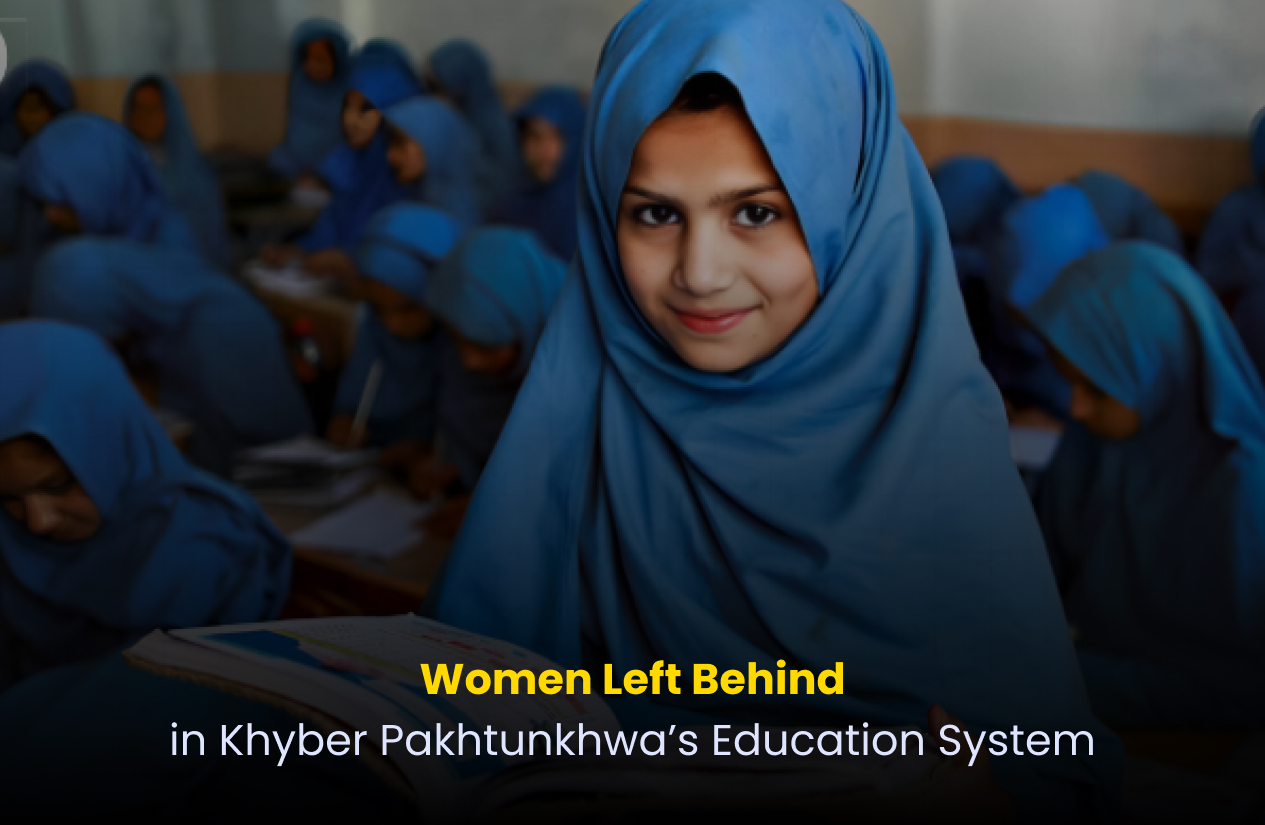
education in Khyber Pakhtunkhwa (KP) presents a paradox that Pakistan can no
longer afford to ignore. While official statistics show gradual improvements in
school enrolment, deeper indicators reveal that gendered educational inequality
remains entrenched. Nationally, Pakistan’s literacy rate hovers around 60
percent, but female literacy lags behind at nearly 52 percent, compared to
around 68 percent for males. In KP, this gender gap is sharper in rural,
merged, and mountainous districts, where cultural norms, weak service delivery,
and insecurity intersect. The real challenge, therefore, is not access alone it
is retention, quality, and transition of girls across educational stages.
A Stark Reality Check: Numbers That
Demand Attention
Recent
UNICEF and government-backed estimates paint a troubling picture. KP continues
to carry a heavy burden of out-of-school girls, especially at the middle and
secondary levels. Around 34 percent of school-age children in KP are out of
school, with girls disproportionately affected. Census-aligned data indicates nearly
3 million girls in KP are currently not attending school, exceeding the number
of out-of-school boys. These disparities underline an uncomfortable truth:
where a girl is born in KP largely determines whether she will be educated.
Provincial averages often mask district-level deprivation, particularly in
merged districts and hard-to-reach regions.
Beyond Enrolment: Why Girls Are Still Falling Behind
Despite
improved enrolment figures at the primary level, girls in KP are systematically
pushed out as they grow older. This is driven by a combination of institutional
weaknesses and socio-economic realities.
·
Acute shortages of female teachers, especially in rural and
tribal districts, directly limit girls’ participation.
·
Girls’ schools are more likely to be closed, understaffed,
or merged due to lack of personnel.
·
Poor facilities including lack of boundary walls,
sanitation, and safe classrooms discourage families from continuing girls’
education beyond early grades.
At
the same time, deep-rooted socio-cultural norms continue to shape
educational outcomes:
Policy Signals That Offer Hope:
While
challenges persist, KP has taken some notable steps that deserve recognition and
expansion.
Yet
these initiatives remain fragmented and limited in scale. Without sustained
political commitment and province-wide expansion, their impact will remain
symbolic rather than transformative.
What Needs to be Done?
Analytical Reflection
Women’s
education in Khyber Pakhtunkhwa reveals a structural contradiction between
policy ambition and lived reality. While enrolment figures and isolated
initiatives create an impression of progress, they fail to address the layered
forces that systematically exclude girls as they move up the education ladder.
The persistence of district-level disparities, chronic shortages of female
teachers, and socio-economic pressures indicate that the problem is not one of
awareness or intent, but of governance capacity and prioritisation. Education
reforms in KP have largely remained supply-focused, building schools, launching
schemes without adequately confronting demand-side constraints such as
household economics, safety, and deeply embedded gender norms. This disconnect
explains why gains at the primary level collapse at middle and secondary
stages. Unless policy shifts from symbolic inclusion to structural
transformation grounded in local realities and backed by sustained political
will, women’s education in KP will continue to reflect inequality rather than
resolve it.


_6784.jpg)