
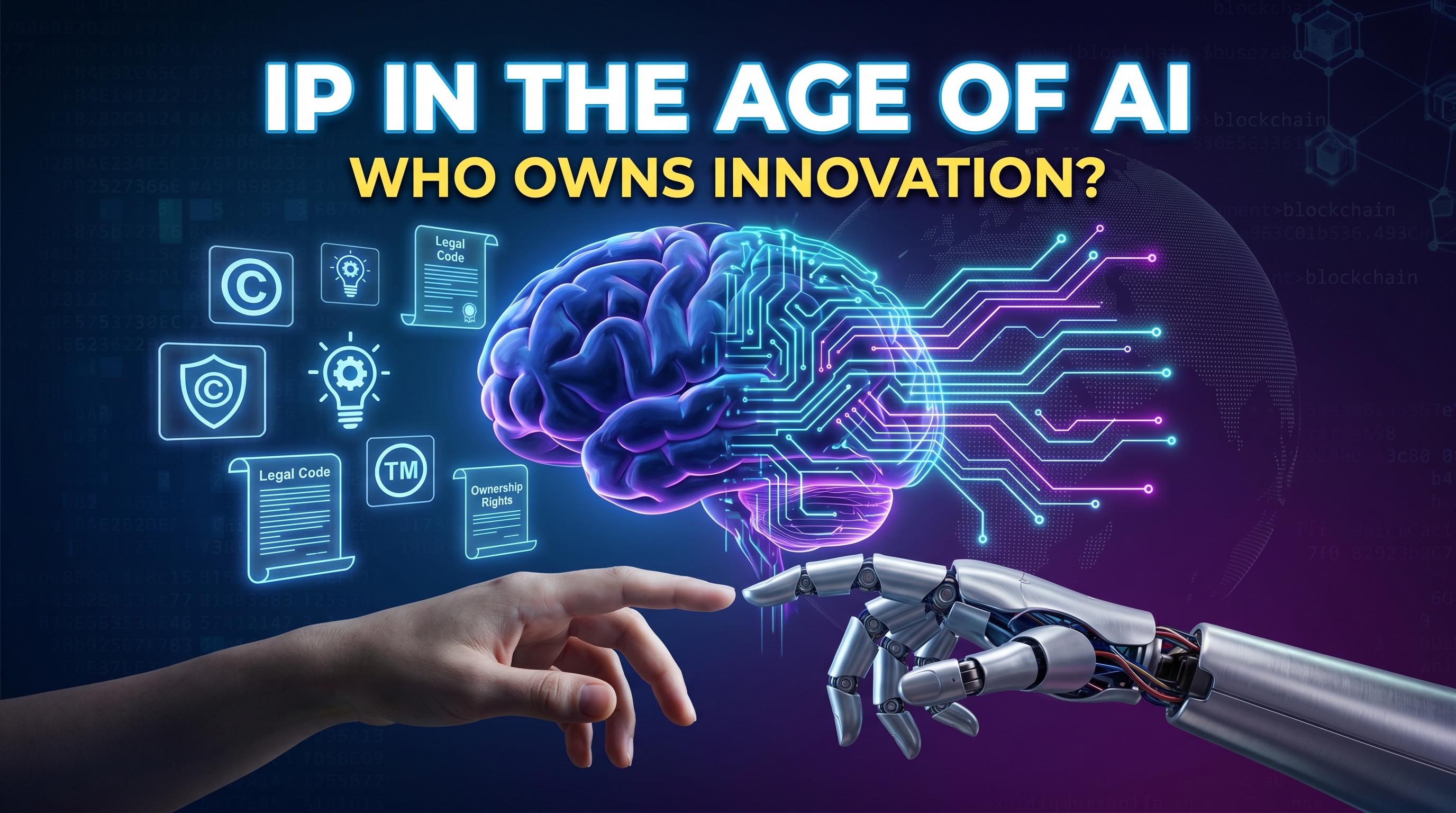

Marked every year on 26 April World Intellectual Property Day, the conversation around intellectual property is increasingly focused on the disruptive role of Artificial Intelligence in ownership, innovation, and accountability. Historically, intellectual property as the legal framework to protect intangible creations of human intelligence has remained a pillar of innovation economies. It covers a broad range of rights, such as copyrights, patents, trademarks and industrial designs, which aim to provide creators with recognition and reward for their efforts. Organizations like the World Intellectual Property Organization are crucial in setting global standards and fostering a balance between innovation and public interest.
Fundamentally, intellectual property is intangible. Its value is attributable to ideas, expressions, and innovations that don't have a physical presence yet have considerable commercial and cultural value. This intangibility is intimately tied to the concept of exclusivity, in which the intellectual property owner or author is given a legal right to the exclusive use, reproduction and distribution of the intellectual creation for a limited time. This exclusivity is limited in time and the duration of protection is carefully balanced with the fact that after a period of time intellectual creations fall into the public domain, becoming part of the public knowledge.
Another characteristic is territoriality, suggesting intellectual property protection is usually limited to a specific territory. This presents a challenge in an ever-increasingly digital global world, where information flows across borders with the speed of light. This is complemented by the transferability of intellectual property, enabling its licensing, assignment or exploitation for commercial gain, which converts creative works into trade goods. The rights are further supported by legal safeguards and enforcement mechanisms, which offer redress for infringement and ensure the system's credibility and viability. Finally, the whole system is set up to encourage innovation, by providing incentives for individuals and organisations to work in creative and technological fields.
Yet, the advent of Artificial Intelligence has started to change these fundamental features dramatically. AI is able to produce sophisticated creations - from art, music and complex technical platforms - often with little to no human input. This raises questions about the traditional notion of creativity as a uniquely human trait. This blurs issues of ownership. For instance, if a new work is created by an AI system, should the ownership rights be attributed to the program developer, or to the person who activated the system? Should such works be protected or not, given the lack of human authorship?
This also applies to the idea of originality, a key requirement for most intellectual property rights. Existing legal regimes assume originality to be a result of human intellectual endeavor and creative intention. In contrast, AI is based on algorithmic methods and machine learning, which begs the question of whether its creations can ever achieve originality or are merely complex combinations of pre-existing content. This question is further complicated in the context of copyright, where AI systems are often trained using large data sets that can contain copyrighted materials. This can have profound implications for issues of infringement, fair use, and rights infringement.
The use of AI in the field of patents also raises similarly important questions. Although AI can help to generate new ideas and streamline the design process, the majority of jurisdictions still insist on a human inventor. This poses a conceptual tension between the world of technology and the law, leading to calls for change. A few countries have started to consider whether AI-assisted inventions should be accepted, but there is no international agreement on the matter.
AI also impacts intellectual property enforcement. AI's ability to generate content quickly and at a large scale makes it simpler to copy, manipulate and copy, and distribute works on a mass scale, making enforcement more difficult. And the global nature of digital technologies challenges the concept of territoriality, requiring more international collaboration and legal harmonization.
Nonetheless, AI can also be harnessed to improve the intellectual property system. AI can be used to automate tasks such as patent searching, infringement analysis and rights management, enhancing efficiency and lowering costs. So, the question is not whether AI should be incorporated into the IP system, but how this can be done in a manner that does not undermine the core goals of the system.
On the occasion of World Intellectual Property Day, as the world celebrates the importance of intellectual property, it is clear that the law needs to adapt to technological change. There needs to be a balance between maintaining the incentives for human ingenuity and recognising the role of AI in the creation of knowledge and innovation. This could include the emergence of blended forms of ownership, more precise rules for AI-driven content, and strengthened global cooperation.
Finally, intellectual property continues to be a critical tool for encouraging innovation, protecting creative output and expression. However, the emergence of Artificial Intelligence calls for a reappraisal of its key attributes, especially ownership, originality and enforcement. The question remains, however, whether the law will be able to keep up with these developments, and ensure that the advantages of technological advancement can be enjoyed without the rights of human creators being undermined.



_6784.jpg)