GENEVA — A landmark
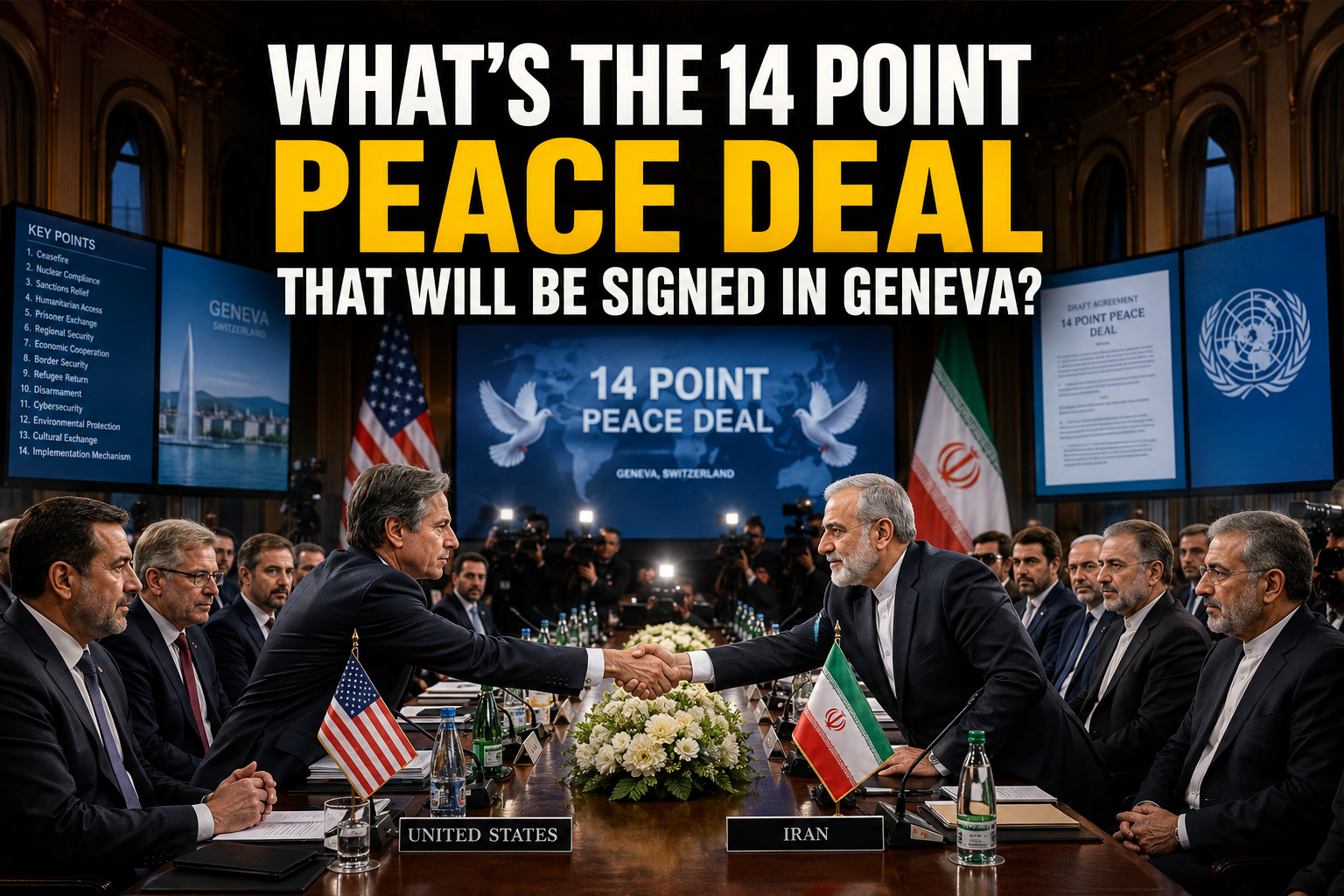
peace deal to end over 100 days of war between Iran and the United States will
be officially signed in Geneva this Friday, courtesy of Pakistan and Qatar. The
announcement is an important milestone in the most critical military clash in
the modern Middle East.
The Strait
of Hormuz, which has been effectively closed to international shipping by Iran,
will be reopened for all traffic by June 19 by U.S. President, Donald Trump
said on Monday. Meanwhile, Tehran announced the lifting of the American naval
blockade on its ports was to be done immediately. In a meeting with Pakistan's
Prime Minister Shahbaz Sharif on Tuesday, a series of preparatory meetings was
scheduled for this week to pave the way for the meeting and signing ceremony.
The
14-point framework
The precise
contents of the deal are not publicly known, but Iranian media reported that
the draft agreement includes 14 points that encompass a wide variety of
military, economic and diplomatic matters.
According to
Mehr news agency, the key points included in the agreement are:
1. An immediate and
permanent stop to military activity on all fronts – including Lebanon –
2. The easing of
the Iranian ports and coastlines blockade by the United States since April 13
3. The withdrawal
of U.S. troops from the vicinity of Iran
4. Unlocking $24
billion in the frozen Iranian assets during the 60-day negotiation period, half
of which will be unlocked prior to the start of the talks
5. Any ban on the
export of Iranian oil and petrochemical products and their derivatives will be
lifted.
6. The suggestion
of a plan to reopen the Strait of Hormuz under Iranian plans in 30 days.The
proposal of a plan to reopen the Strait of Hormuz under Iranian plans in 30
days.
7. Oman to
introduce "maritime service" fees in the Strait of Hormuz; it is
co-administered with Oman
8. A 60-day
negotiating period about Iran's nuclear program and existing UN and US
restrictions
9. Iran's
enrichment program and its stockpile of highly enriched uranium to be on the
top of the agenda items
10.Excluding Iran's
missile program and its backing for regional resistance groups from the talks
11.Discussions on
reconstruction and economic development after the war.
12.Development of a
compliance-monitoring system
13.Iran's preferred
method to be dilute its highly enriched uranium stockpile in Iran.
14.Up to 20 years
of possible suspension on uranium enrichment with President Trump saying he is
considering 15 years.
The Supreme
National Security Council of Iran made it clear that if the United States fails
to meet its preliminary obligations under the framework by ending the naval
blockade and releasing the frozen funds, then any final negotiations will not
take place.
The most
important part of the agreement, perhaps in terms of commerce, is the Strait of
Hormuz, which is a major route for the world's energy supply. President Trump
said it would be "toll free," but Iran's Fars news agency reported
Tehran had managed to get “maritime service fees” in the final moments of
negotiations. The agency said an informed source told it that the designation
of "maritime services" is an indicator that the Americans have
accepted paying fees to Iran.
Foreign
Minister Araghchi said that charging tolls could not be legal in international
law, but in the future, service fees would be charged, which would require
"cooperation" with Oman in administering the strait. He said Iran has
"a clear determination" to change the administration of the Strait of
Hormuz as it is "an Iranian instrument of deterrence.
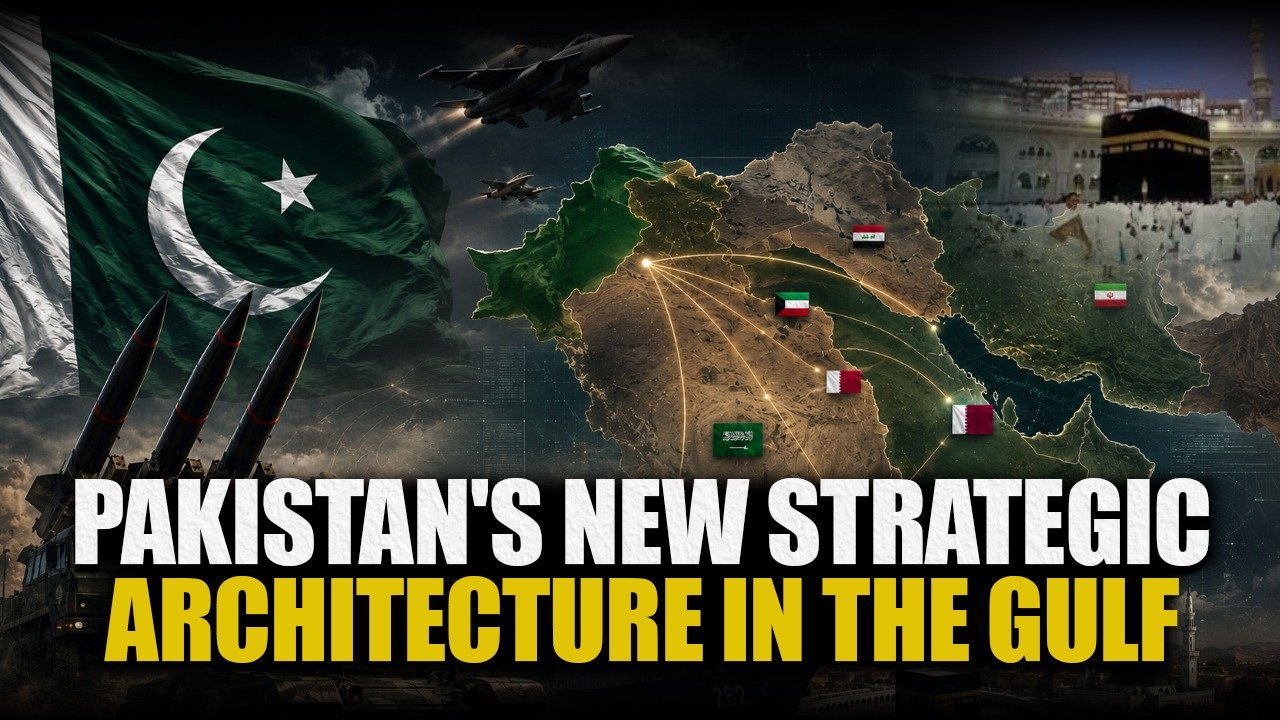
The
co-mediation of the accord by Pakistan in conjunction with Qatar has attracted
a lot of eyes. The Prime Minister's statement of the deal highlighted
Islamabad's rising role as a diplomatic player in a region where it has been playing
strategic games both with Iran and the Gulf states. Islamabad's ability to
broker a dialogue between Washington and Tehran is one of the major successes
of Pakistan's foreign policy in the last few decades.
Islamabad
Centre for Education and Peace
The Geneva
framework is a watershed moment in regional stability. A negotiated route to a
resolution, though precarious, is far better than further escalation, after
over a hundred days of hostile action. Pakistan's role as a co-mediator is
indicative of both the faith that both sides had in Islamabad, as well as the
development of the Pakistani foreign policy as a bridge-building state. This is
an opportunity for the wider Middle East to restart humanitarian and trade routes,
relieve some of the energy market pressures and pave the way for a more gradual
de-escalation. It is a pragmatic compromise to include Iran's missile program
and regional relationships in the backlog of the initial negotiating agenda and
make this deal feasible in the near term, while deferring tougher issues. Now,
Pakistan needs to put this diplomatic capital to good use. Islamabad now has a
chance to promote inclusive reconstruction, protection of civilian populations,
and a multi-lateral solution to the nuclear issue, without being embarrassing
to Iran, and ending a war in the process. Peace is not simply the lack of war,
it also means establishing the necessary institutions and good will to make a
reversion to war unnecessary. “There is no doubt that we are witnessing another
cardiac arrest. There’s no doubt that we are having another cardiac arrest,”
Dr. Jamil Akhtar , Director of Policy Research, Islamabad Centre for Education
and Peace, said.
U.S. Vice
President J.D. Vance said he hopes the ceasefire will mark "a new era with
the Iranians" and Iran's deputy foreign minister Kazem Gharib Abadi said
the withdrawal of military operations was expected to occur "soon. The
first round of technical talks is to start this week while the formal signing
ceremony will be held in Geneva on Friday.
_6784.jpg)