
By :Samra Khaksar
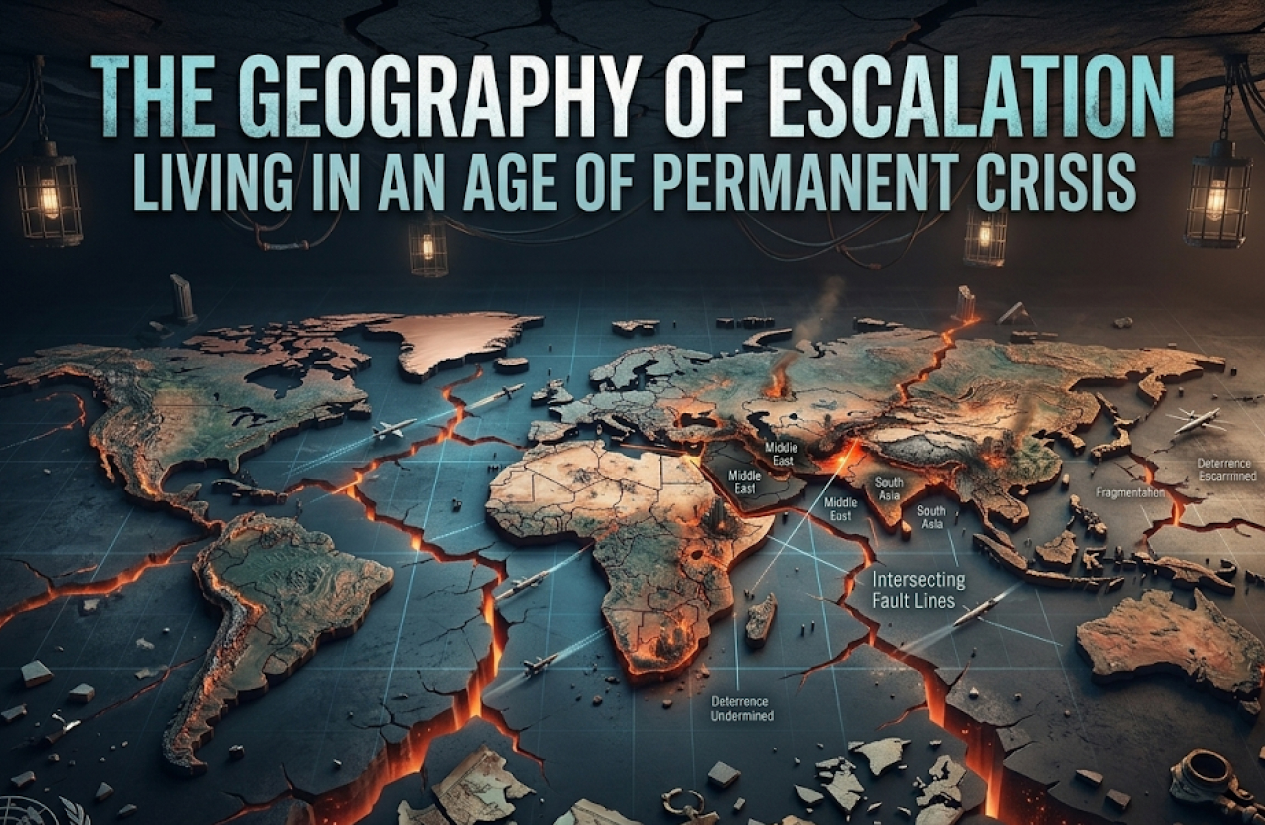
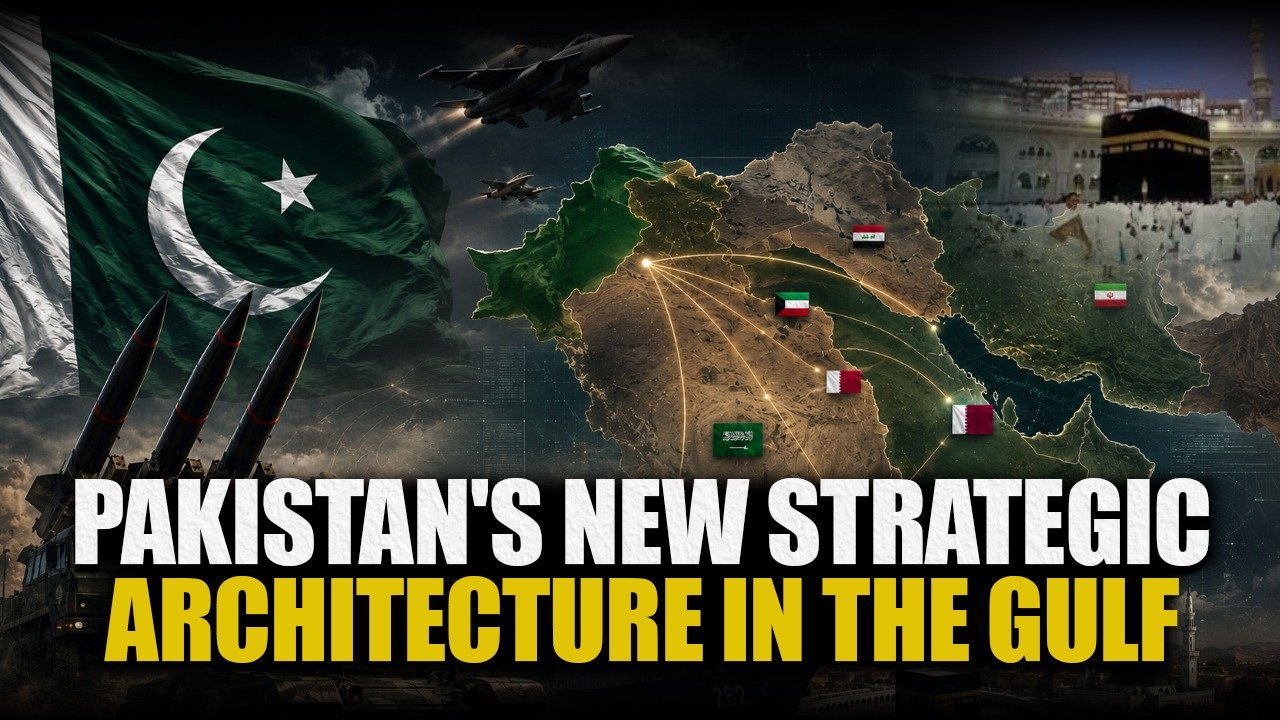
The world does not announce the coming of disorder by proclamation; it manifests itself through perceptible patterns, escalation, repetition, and a progressive measure of the normalization of the events which would have been considered impossible in the past. Presently, we seem to be moving between South Asia and the Middle East, to the international system, which does not look like a rules-based order but rather like a map of intersecting fault lines, each of which can blow up.
The warming up of the Pakistani-Afghanistan conflict, the widening of the conflict between Iran and Israel and the United States and the moving towards the open deployment of cross-border attacks indicate more than single-incident security. Such changes are indicators of a structural transformation of the power exercise mechanisms and restraint perception.
The first 29 years after the Cold War, world politics were under a unipolar moment as it is defined by scholars. The US had unmatched military access, international organizations operated with a fair level of coherence, and interstate conflicts among established states were deterred and restricted by economic interdependence. There was conflict, and it was usually contained, whether it was a proxy war, a counterinsurgency operation, or an orchestrated intervention. That architecture has now become strained in appearance.
A major change here is the undermining of deterrence as a stabilizing force. Deterrence used to work as escalation involved foreseeable and disastrous consequences. This has changed in modern times, however, with regard to the nature of warfare. State actors use precision strikes, drones, cyber attacks, and targeted assassinations as well as hybrid operations, to exercise force to an extent that is less than that of full-scale war. This brings about what can be called manageable escalation,--measures bold enough to indicate strength but not so bold as to bring about an immediate general war.
This threat is not so much a looming international war as a false calculation. The application of cross-border operations in South Asia is the demonstration of a strategic environment wherein states are more inclined to be preemptive rather than patient. The transition from proxy warfare to direct signaling among state actors in the Middle East indicates a thin line between shadow warfare and open confrontation. Every action is considered a defiance every reaction is placed as a necessity, which further escalates the security dilemma.
The decentralization of power is also important. The world after the Cold War was characterized by asymmetry, a single superpower and many regional actors who adapted to the situation. The modern world is not as hierarchical. The regional powers have more military capabilities, strategic autonomy and diversified partnerships, which make them less predictable. Strategic risk-taking is more prevalent when there are a group of actors who feel that they can influence the results. In addition, the international system normative framework is becoming weak. Sovereignty and non-intervention, which were traditionally two key principles, are being redefined in terms of security demands. Transnational strikes, preemptive ideologies and limited actions become normalized as policy tools. Exceptional measures become normal after some time, which changes acceptable behavior.
Psychological adaptation is another characteristic of the current moment. The global markets respond to the missile exchanges temporarily before stabilizing. Flight cancellations interfere with travel, but soon are converted into logistical figures. International condemnation is more of a reiterative performance and leads to the crisis, reaction, and normalization cycle. The phenomenal has been routinized. It is a historical warning not to relax. The First World War was not started by rulers who wanted the world to be destroyed in every part; it experienced the effect of alliances, nationalism, not planning its strategies wisely and thinking that it could do little and still contain the consequences. Once the escalation chains had been initiated, it was hard to revert.
In contrast to 1914, today the world is equipped with nuclear deterrence, instantaneous communication and economic interdependence like never before, which has brought a limitation that comes along with the increasing nationalism, fractured alliances and accelerated technological militarization. Nuclear arms can prevent a great power total war, but will not stop limited conflicts, proxy buildups, and brinkmanship. Whether a global war is imminent or not is the less important question, but is the instability itself becoming institutionalized? Is this the beginning of a multipolar equilibrium of the rival powers balancing each other by careful interaction, or is it a condition of fragmented order where mistrust supplants coordination?
Disintegration is more perilous. In a fragmented system, the crisis-management systems are weakened, strategic communication performance becomes worse, red lines are blurred, and states push boundaries more often, thinking that their opponents would exercise rational restraint. But rationality in times of trial is seldom ideal. It is especially high in countries located on the geopolitical crossroads. The factors of strategic depth, regional security, economic vulnerability and alliance politics overlap, making policy decisions more significant in a setting where international assurances are less assured. The era of unopposed supremacy is gone. The question of what will substitute for it is still disputed. The powers are becoming more diffuse, the norms are becoming thin, technology is accelerating the rate of escalation, and diplomacy is finding it difficult to keep up. The world map is becoming more like a grid of pressure points, and not of stable borders. The question here is Are we beginning to see the incremental birth of a new strategic equilibrium, or the normalization of the world where permanent crisis is now the new normal state of international affairs?

Author Bio: Samra Khaksar is a student of Strategic Studies at National Defiance University. The author is a researcher at Kashmir Institute of International relations and also worked as a research intern at Institute of Strategic Studies Islamabad (ISSI) where her work focuses on security and conflict dynamics. The author is also a Member of HEAL Pakistan, a non governmental organization.
_6784.jpg)