Pakistan remains one of the largest
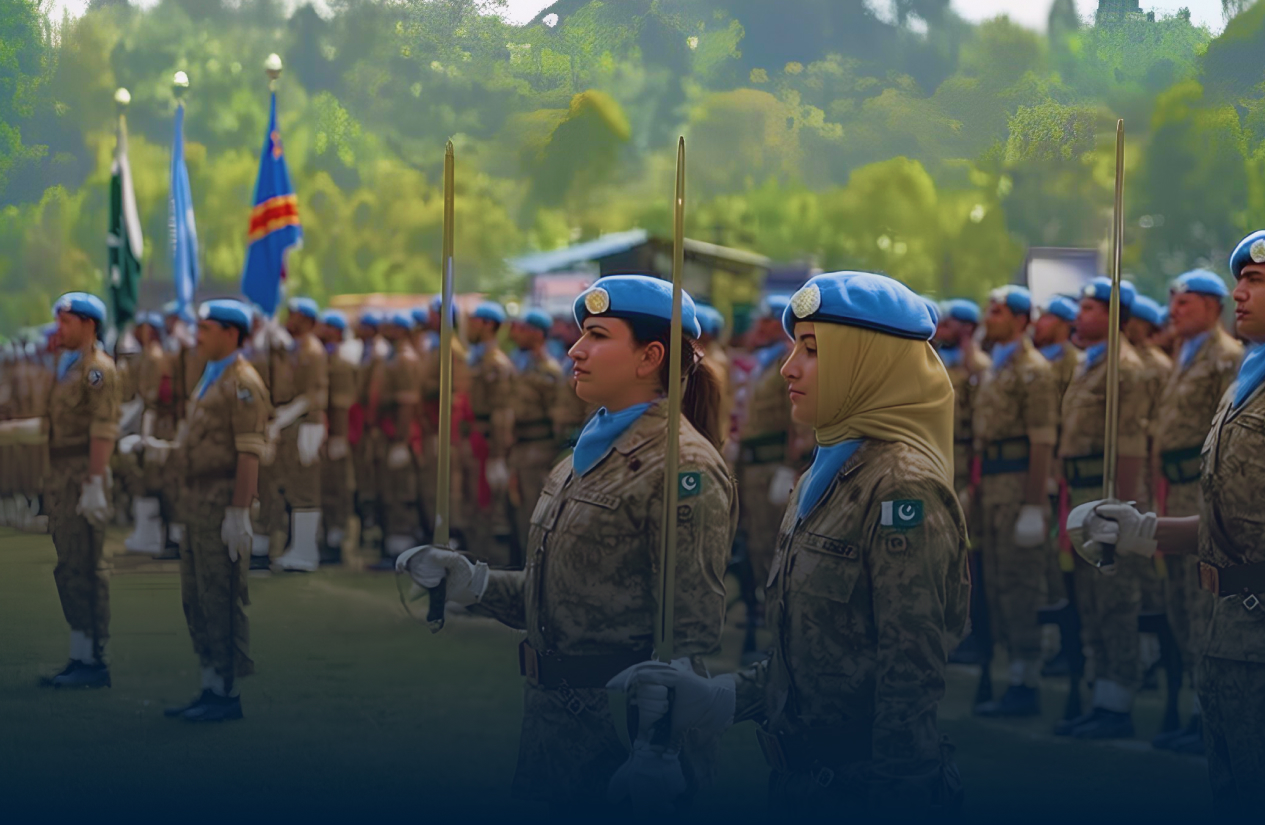
contributors of personnel to UN peacekeeping missions around the world, and
more than 2,600 military and police personnel are currently serving in six of
the active UN missions.
Having joined the United Nations
soon after its independence in 1947, Pakistan provided UN peacekeepers for the
first time in 1960 when troops were sent to the Congo. Over the ensuing seven
decades, Pakistani peacekeepers have served with great distinction in 48 UN missions/operations
spanning 29 countries—thus situating Pakistan as one of the most steadfast and
dependable contributors to world peace.
A
Legacy of Service and Sacrifice
More than 235,000 Pakistani
peacekeepers—both military and police personnel—have taken part in UN
peacekeeping missions across the globe, official figures suggest. These
officers have been deployed in some of the most insecure parts of the world,
promoting peace, humanitarian assistance, and conflict resolution.
Pakistani peacekeepers have laid
down their lives in the line of duty: 181 individuals who lost their lives
defending civilians and implementing UN mandates. Their heroic deeds are still
remembered by the international community.
Championing
Inclusion and Gender Balance
Pakistan has also shown commendable
progress in the diversity in peacekeepers' ranks. The country has provided more
than 500 women peacekeepers to different missions and was one of the first
countries to achieve the United Nations’ target for deployment, which is 15
percent female staff officers. Pakistani women peacekeepers have received
global acknowledgement for their performance and were instrumental in the
engagement and protection of communities.
Current
Deployments
Today, Pakistani soldiers and police
are among the top contributors to crucial UN peacekeeping assignments in
countries from the Democratic Republic of Congo, South Sudan, Central African
Republic, and Cyprus to Western Sahara and Somalia. The deployments show
Pakistan’s steadfast commitment to peace and stability in volatile war zones.
International
Recognition and Future Commitment
Pakistani government officials have
reiterated Pakistan’s commitment to the principles of peacekeeping as a UN
member. In recent comments, national officials have stressed Japan's commitment to reinforcing its peacekeeping roles and making them more applicable to
current international security challenges. Pakistan is also home to the United
Nations Military Observer Group in India and Pakistan (UNMOGIP), established by
the Security Council in 1949, as one of the oldest UN military observer
missions.
Experts and diplomats say the
Pakistani peacekeepers have earned a reputation for professionalism and discipline,
with UN officials as well as leaders across the world showing respect. Their
function is considered to contribute significantly to upholding international
peace and protecting vulnerable populations in areas affected by war and
instability.
Islamabad
Center for Peace and Education
Pakistan has a long history of
participation in U.N. peacekeeping missions, which is indicative of its strong
commitment to international peace and humanitarian ideals. For years, Pakistani
peacekeepers have served with distinction in some of the most dangerous corners
of the world—exemplifying professionalism, compassion, and sacrifice. Their
action not only serves to uplift the image of Pakistan in the comity of nations
but also reconfirms our firm belief that peace is created through service and cooperation as well as respect for human dignity. At the Islamabad
Center for Peace and Education (ICPE), we are confident that Pakistan’s sustained commitment to peacekeeping only reinforces our position as a bridge builder between nations—advocating for principles of peace, inclusivity, and hope
for greater collective security in the world.


_6784.jpg)