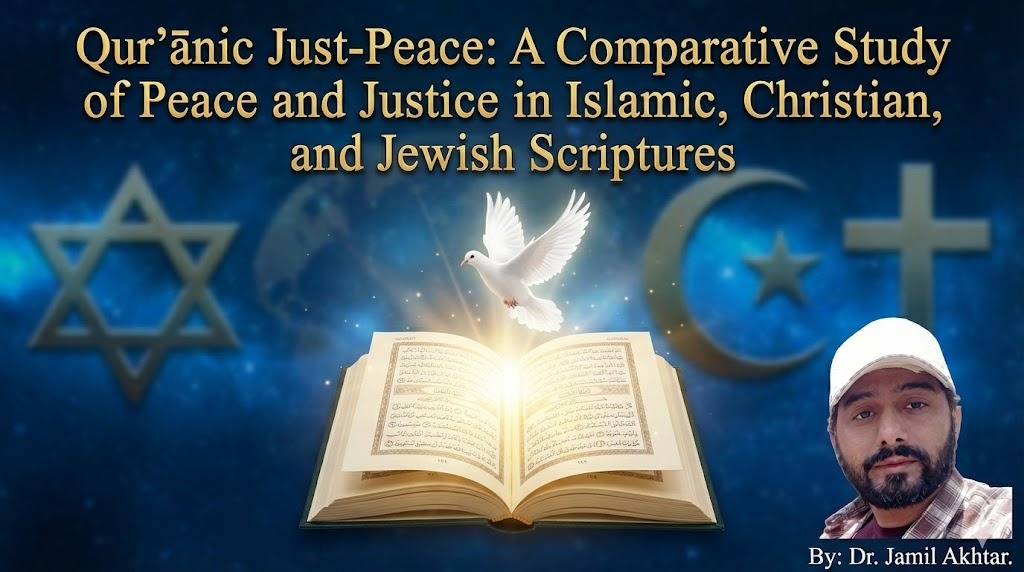
The research examines the concept of just peace as described in the Qurʾān and conducts a comparative evaluation of the scriptures of Judaism and Christianity to identify points of convergence and difference in their ethical and theological understandings of peace and justice. It argues that Islam also provides an integrative model in which justice (ʿadl), mercy (raḥma), and social rectification (islāḥ) cannot exist outside of peace (salām), thus suggesting a paradigm that is also normative and operational. The study foreshadows a similar moral basis by comparing the Qurʾānic principles with Jewish ideals of shalom and prophetic justice as well as Christian moral obligations to reconciliation and eirene, taking into account contextual differences. Based on current scholarship and empirical research into scriptural ethics and peace-building, this paper highlights the empirical implications for current interfaith efforts, demonstrating how the idea of justice-based scriptural paradigms provides a stable and transformative foundation for world peace, coexistence, and the protection of human dignity. Keywords: Abrahamic Scriptures, Comparative Religious Studies, Interfaith Ethics, Islamic Peace-building, Justice and Peace, Qurʾānic Just-Peace.