The journey of exploring historical narratives often leads us to the
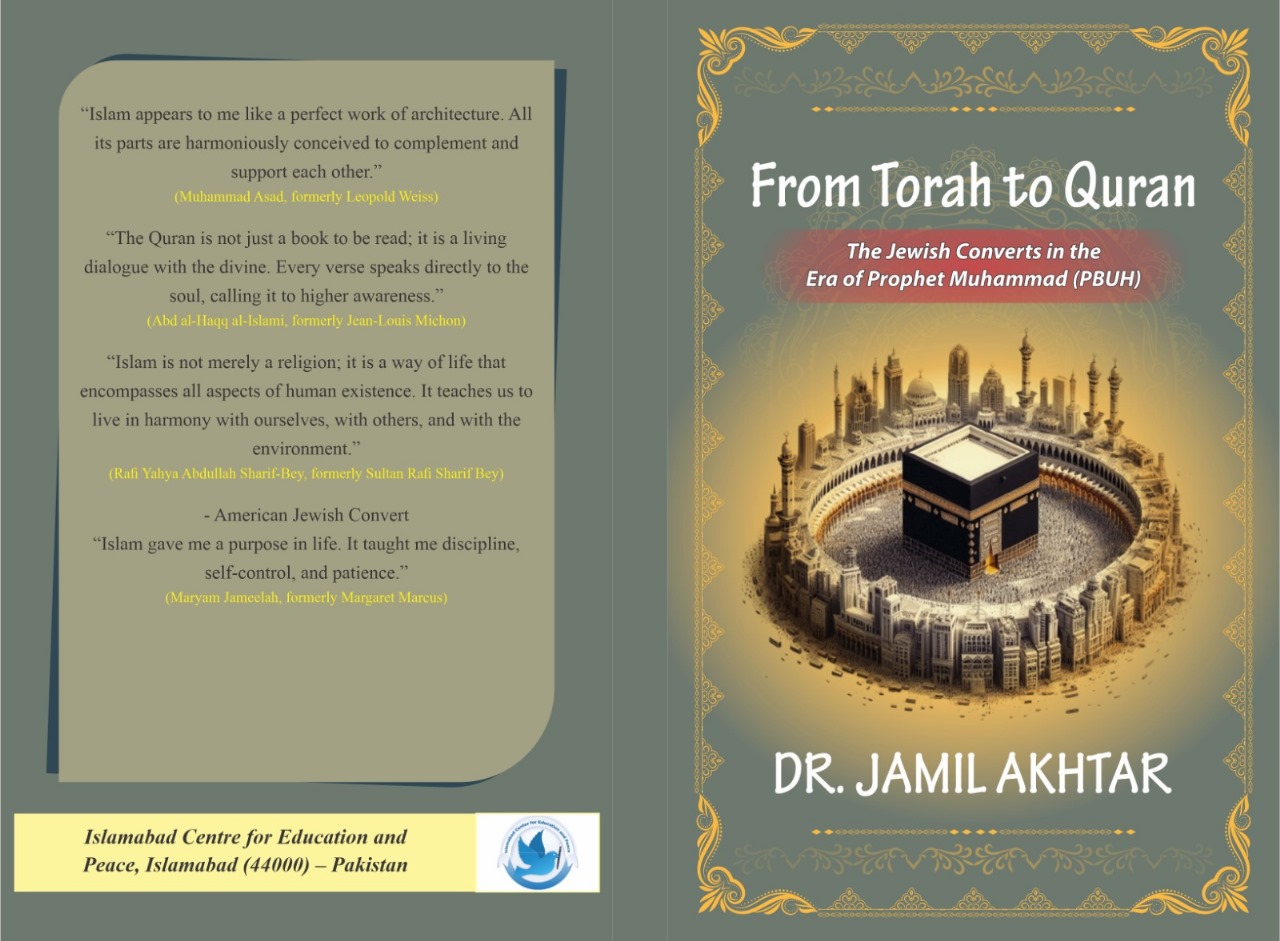
intersections of faith, culture, and human relationships. This book represents
an endeavor to delve into a pivotal
period of history, uncovering the profound spiritual transformations that
occurred during Prophet Muhammad’s (PBUH) life. It focuses on the experiences
of Jewish converts to Islam in seventh-century Arabia. This subject not only sheds light
on the complexities of interfaith interactions but also carries
profound lessons for contemporary coexistence and dialogue. The advent of Islam brought transformative changes to
the Arabian Peninsula, where diverse communities—Arab pagans, Christians, Jews,
and others—interacted in a dynamic socio-political
environment. Jewish tribes, in particular, held
a significant position in the cultural, economic, and religious landscape of
pre-Islamic Medina. These tribes were
not merely passive observers of the rise of Islam but were active participants
in shaping its early history. The conversion of some Jews to Islam during this
time is an often-overlooked yet essential aspect of the broader narrative of
Islamic history. By exploring these conversions,
we gain insights into the spiritual, intellectual, and socio-political factors
that influenced individuals to embrace Islam and how their contributions shaped
the nascent Muslim community.
This book aims to fill an important gap in the
historiography of early Islam. While much attention has been given to the
interactions between Muslims and Jews during the Prophet’s era, less focus has
been placed on the personal journeys of Jewish individuals who embraced Islam and their subsequent roles in the
community. These stories are not merely of historical curiosity but are windows
into the nature of faith, the universality of Islam’s
message, and the complexities of religious and cultural transformations.
The subject matter presented here is deeply rooted in primary Islamic sources,
including the Qur’an, Hadith literature, and early Islamic historical texts
such as those of Ibn Ishaq, Ibn Hisham, and Al-Tabari. These classical sources
are complemented by contemporary scholarly works that provide fresh
perspectives and critical analyses. Where gaps exist in historical
documentation, interpretive analysis has been incorporated, guided by Islamic principles
and contextual understanding.
One of the central themes of this work is the role of
interfaith dialogue and coexistence in the Prophet’s era. The Constitution of
Medina, a groundbreaking document of its time, serves as a testament to the
Prophet’s vision for a pluralistic society where communities of different
faiths could coexist peacefully. Within this framework, the experiences of
Jewish converts are particularly significant, as they navigated the dual
identity of being both part of the Jewish tradition and members of the emerging
Muslim ummah. Their stories illustrate the Prophet’s inclusive approach and highlight
the spiritual, ethical, and intellectual dimensions of Islam’s engagement with
other faiths. Another important focus of this book is the exploration of the
challenges and conflicts faced by Jewish converts. By its very nature,
conversion is a profound and often tumultuous process involving a shift in
religious belief and a redefinition
of social and cultural identity. For Jewish converts during the Prophet’s era,
these challenges were magnified by the political and tribal dynamics of the
time. The broader Jewish community’s reactions, the Muslim community’s
responses, and the converts’
struggles to reconcile their past with their new faith are themes that
resonate deeply with the complexities of human experience.
Equally significant are the contributions of Jewish
converts to the early Islamic
community. These individuals
brought with them a rich heritage of knowledge, scholarship, and skills that enriched the Muslim community in
various ways. Their understanding of the Torah and Jewish traditions often
facilitated deeper interfaith dialogue and provided valuable insights that
shaped Islamic scholarship. The intellectual legacy of these individuals
underscores the importance of diversity within the Muslim ummah and the
potential for cross-cultural and interfaith contributions to enrich a
community. The contemporary relevance of this study cannot be overstated. In an
age where interfaith tensions and
misunderstandings often dominate discourse, the historical narratives of
Jewish- Muslim relations in the Prophet’s era offer valuable lessons. They remind
us of a time when faith communities, despite their differences, could find
common ground and coexist in mutual respect. These lessons are particularly
pertinent in fostering interfaith dialogue today, promoting understanding, and
countering prejudice.
This book is the culmination of years of research,
reflection, and dialogue. It has been shaped by countless hours of engagement
with primary sources, scholarly works,
and critical discussions. I am deeply indebted to my mentors, whose guidance
has been invaluable in refining my
understanding and approach to this subject. Their encouragement and
intellectual rigor have been instrumental
in the development of this work. I must also acknowledge the role of the
Department of Study of Religions at the International Islamic University Islamabad
in nurturing my academic pursuits. The department’s commitment to promoting
critical scholarship and fostering interfaith understanding has been a source
of inspiration throughout this journey. The academic environment it provides
has been pivotal in shaping the perspectives and methodologies that underpin
this book.
Finally, I hope that this book will serve as a bridge
between the past and the present, illuminating the rich
history of Jewish-Muslim relations and offering pathways for meaningful
interfaith dialogue. It is a humble contribution to the broader discourse on
religious coexistence and the universality of Islam’s message. While the
historical narratives presented here are deeply rooted in the context of
seventh-century Arabia, their lessons transcend time and space, speaking to the
shared humanity that underpins all faith traditions. I invite readers to
approach this work with an open mind and heart, seeking not only to understand the past but also to draw inspiration for
the present and the future. May it serve as a source of knowledge, reflection,
and inspiration for all who seek to understand the beauty and complexity of
faith and human relationships. (Aameen)
24-May-2024